
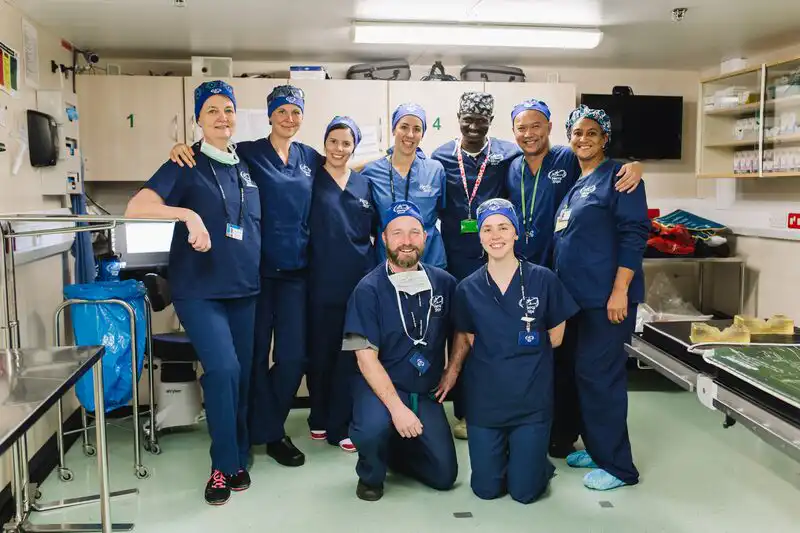
Volunteering abroad as a nurse with Mercy Ships provides anaesthetist healthcare professionals the opportunity to make a significant impact in underserved communities. By joining this humanitarian mission, you not only advance your skills in anaesthesia but also directly contribute to saving lives in developing countries. Mercy Ships operates hospital ships that travel to areas with limited access to healthcare, offering free surgeries and essential medical treatment. As a volunteer, you’ll be part of a dedicated team, providing anaesthesia support during surgeries and ensuring proper post-operative care for patients in need.
This experience offers both professional and personal growth. Volunteering with Mercy Ships allows you to work in resource-limited environments, gaining invaluable experience in global surgery and learning to adapt to diverse healthcare systems. Through training and support, Mercy Ships prepares you for the challenges of volunteering abroad, ensuring you can offer the highest level of care. This life-changing opportunity allows you to enhance your career while making a lasting difference in the world.
Why Volunteer with Mercy Ships?
Mercy Ships operates medical aid vessels that travel to developing countries, offering free, life-saving healthcare to communities with limited access to medical services. These ships bring essential surgeries, consultations, and treatments to those who would otherwise be unable to receive them. As an anaesthetist nurse volunteer, you will join a dedicated team, providing anaesthesia, pain management, and post-operative recovery care. Your role will be crucial in ensuring that patients are safe and comfortable throughout their surgical journey.
Volunteering with Mercy Ships gives you a unique opportunity to work in global surgery, gaining invaluable experience in challenging environments. You’ll be exposed to a wide range of medical conditions, enhancing your skills in anaesthesia and patient care. This hands-on experience, combined with the ability to make a real difference in people’s lives, makes volunteering with Mercy Ships an incredibly rewarding and impactful opportunity for healthcare professionals.
Who Can Volunteer with Mercy Ships?
Mercy Ships offers volunteer opportunities for a wide range of healthcare professionals, particularly those with expertise in anaesthesia, nursing, and critical care. The organisation relies on the support of qualified nurse volunteers and anaesthetists to assist with the many medical procedures performed on board their vessels. Volunteers are essential for providing anaesthesia and perioperative care to patients in need of surgery, ensuring they receive safe and effective care throughout the entire surgical process.
To be eligible for volunteering with Mercy Ships, you must have the appropriate qualifications, including a nursing degree or certification in anaesthesia. Mercy Ships specifically seeks volunteers who have experience in perioperative care, regional anaesthesia, general anaesthesia, and sedation. If you are a registered nurse with anaesthesia training and a strong commitment to making a difference, volunteering with Mercy Ships offers an excellent opportunity to use your skills in a rewarding and impactful way.
How to Apply: The Mercy Ships Volunteer Process
The first step is to submit an application, which includes your CV, relevant certifications, and references. Ensure you have your anaesthesia nurse certification or equivalent qualifications readily available, as well as proof of your professional registration with a recognised body such as AHPRA in Australia.
After submission, the Mercy Ships team reviews your application to assess suitability for available roles. This includes your qualifications, experience, and ability to adapt to resource-limited environments. If successful, you will move forward to interviews and preparation for placement. Mercy Ships provides guidance throughout to ensure you are ready for your volunteer experience.
Mercy Ships Volunteer Roles for Anaesthetists and Nurses
Anaesthetists and anaesthetist nurses are vital members of the surgical team aboard Mercy Ships, providing essential care to patients in need. As an Anaesthetist Nurse Volunteer, you will assist in administering both general anaesthesia and regional anaesthesia, ensuring patients are safely sedated for a variety of procedures. In addition, the role of Post-Anaesthesia Care Nurse is critical, as you will monitor and manage patients as they recover from anaesthesia, ensuring a smooth and safe recovery process.
Mercy Ships also offers opportunities for Pain Management Nurses, who focus on providing effective pain relief during and after surgery, as well as Critical Care Nurse Volunteers. In this role, you will support patients in intensive care units, caring for those with complex medical needs. For those with experience in paediatric anaesthesia, positions are available to ensure children undergoing surgery receive the best possible care, making sure that anaesthesia is safely administered throughout the surgical process.
Requirements for Volunteering with Mercy Ships
To volunteer with Mercy Ships, applicants must have a degree in nursing or anaesthesia, along with relevant certification, Australian applicants must maintain current AHPRA registration. This ensures that volunteers are adequately trained to handle the responsibilities of their role, which may include administering anaesthesia, assisting in surgeries, and providing post-operative care. In addition, volunteers must have solid experience in anaesthesia and a comprehensive understanding of anaesthesia procedures, as these are crucial for ensuring the safety and comfort of patients during their surgeries.
Volunteers must also be prepared to work in challenging environments with limited resources. Mercy Ships operates in developing countries, where medical facilities may be under-equipped, requiring flexibility and resourcefulness. Additionally, volunteers must be ready to travel for extended periods, typically between two to six months, and adapt to new cultural environments. The ability to work as part of a diverse, international team is essential to ensure the successful delivery of medical care in these complex settings.
Training and Preparation for Volunteering Abroad
Before embarking on your volunteering journey with Mercy Ships, you will undergo comprehensive training to ensure you are fully prepared for the challenges of working in low-resource settings. This training will cover a wide range of topics, from the practical aspects of providing medical care with limited equipment to understanding the cultural and social dynamics of the regions you will be serving. The aim is to equip you with the skills and knowledge needed to adapt to the unique challenges of medical missions abroad.
In addition to medical training, Mercy Ships offers detailed orientation to help you settle into your role aboard the vessel. This preparation focuses on your specific responsibilities, safety protocols, and the expectations of your volunteer position. By the end of the training, you will feel confident in your ability to contribute effectively to the team and make a meaningful impact on the communities you will serve during your time abroad.
What to Expect During Your Volunteer Experience
While volunteering as an anesthetist nurse aboard a Mercy Ships vessel, you will be immersed in a collaborative environment with a diverse team of healthcare professionals. You will be involved in all stages of patient care, from pre-operative assessments to assisting in anesthesia during surgical procedures. You will also support patients through post-operative care, ensuring they recover safely after surgery. Your role will be essential in helping provide high-quality care to patients who have limited access to healthcare services.
In addition to refining your technical skills, this experience will expose you to new practices in global surgery and anesthesia. Working in a resource-limited setting, you will face unique challenges that require creative solutions and adaptability. The opportunity to collaborate with specialists from various backgrounds will broaden your knowledge of medical practices in different cultures and environments. This hands-on experience will not only deepen your expertise but also allow you to contribute meaningfully to global healthcare efforts.
Benefits of Volunteering with Mercy Ships
Volunteering with Mercy Ships offers exceptional professional development opportunities. By joining their international medical teams, volunteers gain hands-on experience in anesthesia and surgery, learning from a diverse group of skilled professionals. This exposure helps volunteers sharpen their medical expertise and enhances their understanding of global healthcare challenges. Working in such a dynamic environment provides unique growth for both seasoned and emerging healthcare providers.
On a personal level, volunteering with Mercy Ships is incredibly fulfilling. Volunteers witness firsthand the profound impact they have on patients who would otherwise not have access to life-saving medical care. This connection with the people they serve brings a deep sense of purpose. Additionally, volunteering offers cultural exposure, allowing individuals to live and work within new communities and experience different healthcare practices. The opportunity to network with professionals from around the world also strengthens career prospects and builds lasting relationships. Ultimately, Mercy Ships offers a rich, life-changing experience.
Funding Your Volunteer Experience
Mercy Ships offers volunteers the invaluable benefit of covering food and lodging aboard their vessels, but volunteers are still responsible for their travel expenses and personal costs. To help cover these additional expenses, many volunteers organize fundraising events or reach out to friends, family, and communities for donations. This proactive approach enables them to focus on their mission without worrying about financial constraints.
To further support volunteers, Mercy Ships provides a variety of tools and resources designed to make fundraising more efficient and effective. These resources include guidelines, templates for donation letters, and tips for hosting successful fundraising events. With these aids, volunteers can successfully raise the necessary funds to support their experience, allowing them to dedicate their energy and time fully to the work that will make a lasting impact on those in need.
Challenges of Volunteering Abroad
Volunteering abroad, particularly in developing countries, can present several challenges. One of the primary difficulties is working in resource-limited environments. Volunteers may encounter limited medical equipment, poor living conditions, and a high volume of patients. These circumstances often demand quick adaptation and resourcefulness to provide the best possible care under difficult circumstances.
Another challenge is cultural sensitivity. Working in unfamiliar cultural settings requires volunteers to respect and adapt to local customs and healthcare practices. Understanding the community’s needs and perspectives can be a steep learning curve, but it is essential for building trust and providing effective support. Additionally, the emotional toll can be significant. Witnessing severe medical conditions and the struggles faced by underserved populations can be overwhelming. Despite this, the rewarding experience of seeing patients recover and knowing that your work has made a difference offers an invaluable sense of fulfillment and personal growth.
Post-Volunteering: What’s Next?
After completing your time with Mercy Ships, many volunteers experience significant personal and professional growth. The skills you’ve developed, both in patient care and working in challenging environments, can open doors to further opportunities in humanitarian work.
Mercy Ships also provides valuable alumni networking opportunities that allow you to stay connected with former volunteers. This network can be a great resource for career advancement, sharing experiences, or continuing to contribute to Mercy Ships’ mission. Whether you seek to stay involved with the organisation or explore new paths in healthcare, your time with Mercy Ships can be a meaningful stepping stone toward a fulfilling future in global humanitarian efforts.
Final Thoughts …
Volunteering with Mercy Ships as an anesthetist nurse offers a once-in-a-lifetime opportunity to make a meaningful difference in the world while advancing your career in global anesthesia. The anesthetist guide to volunteering abroad provides you with all the necessary steps, from understanding the application process to preparing for a rewarding career in medical volunteering. By joining Mercy Ships, you are not just providing medical care — you are changing lives.
If you are a nurse volunteer from Australia or any other Western country, consider joining this incredible movement of healthcare professionals dedicated to providing humanitarian medical aid and making a lasting difference. Start your journey today and be a part of the solution to healthcare inequality worldwide.
FAQs
What are the essential requirements to volunteer as an anaesthetic nurse with Mercy Ships?
Volunteers must have at least two years of post-qualification experience in anaesthesia or perioperative care and hold current AHPRA registration to ensure clinical competence.
What is the minimum commitment period to volunteer abroad as an anaesthetist or ODP?
The minimum commitment is generally two weeks, though longer placements of two to six months are preferred to maintain continuity of care.
Can Australian Operating Theatre Nurses or Anaesthetic Nurses apply?
Yes, AHPRA-registered Australian anaesthetic and theatre nurses are welcome to apply if they are clinically active and meet experience requirements.
What financial costs are involved for a volunteer anaesthesiologist or nurse on the hospital ship?
Volunteers cover their own travel, personal expenses, and a monthly crew fee that contributes to meals and accommodation on board.
Can a qualified anaesthetic nurse volunteer without prior experience working in developing countries?
Yes, while prior experience in resource-limited settings is beneficial, it is not essential. Training and supervision are provided on board.
What is the application process and how long does it take to join a Mercy Ships volunteer surgical team?
Applicants complete an online form, submit credentials, undergo medical screening and an interview. The process can take several months, so early application is advised.
Are there specific medical or health restrictions for nurses wishing to volunteer overseas with Mercy Ships?
Yes, volunteers must be in good physical health due to maritime regulations. Some pre-existing medical conditions may prevent approval.
What kind of training or induction is provided for international volunteer anaesthetic staff before serving?
On-board induction includes ship orientation, safety training, and cultural awareness, ensuring volunteers adapt smoothly to the working environment.
Do anaesthetist nurses need Advanced Cardiac Life Support (ACLS) certification to serve with the charity?
Yes, ACLS or PALS certification is strongly preferred, as it ensures readiness for emergency situations during surgery.
What is the typical daily role and duties of an anaesthetist nurse volunteer on board a Mercy Ship?
Duties include patient assessment, preparing anaesthetic drugs and equipment, assisting with anaesthesia, and maintaining accurate records throughout surgery.
Is fluency in English required for anaesthesiologists or anaesthetic nurses volunteering abroad?
Yes, English fluency is mandatory, as it ensures clear communication for patient safety and teamwork on board.
Does Mercy Ships cover the cost of travel insurance for overseas volunteer anaesthetists?
No, volunteers must arrange and pay for their own travel and medical insurance before departure.
What type of anaesthesia is commonly administered by volunteer anaesthetic staff on the ships?
A range of anaesthesia types are used, including general and regional, depending on patient needs and available resources.
Can specialist nurse anaesthetists volunteer for short-term medical missions?
Yes, Mercy Ships actively recruits specialist anaesthetic nurses for short-term roles to support continuity of surgical services.
Do I need a specific visa to volunteer as an anaesthetic nurse in Africa with the ship?
Mercy Ships handles the visa process and necessary clearances, but volunteers must hold a valid passport for the entire duration.
What opportunities are available for training local healthcare staff for anaesthetic nurse volunteers?
Volunteers often mentor and train local anaesthetic staff, contributing to long-term capacity-building in host nations.
Will my Australian nursing qualification be recognised?
Yes, AHPRA-registered nurses are accepted. Proof of registration and professional standing must be provided during the application process.
Are there roles for critical care or post-anaesthesia care nurses on the hospital ship?
Yes, Mercy Ships offers roles for PACU and critical care nurses to assist in patient recovery and perioperative care.
How does Mercy Ships select the developing countries where the hospital ship operates?
Host countries are chosen based on surgical need, stability, and formal invitation from the government, focusing primarily on African nations.
Can families or married couples volunteer together if one is an anaesthesiologist?
Yes, families and couples can volunteer together for extended terms. The ships offer suitable accommodation and on-board schooling for children.
Recent Comments