
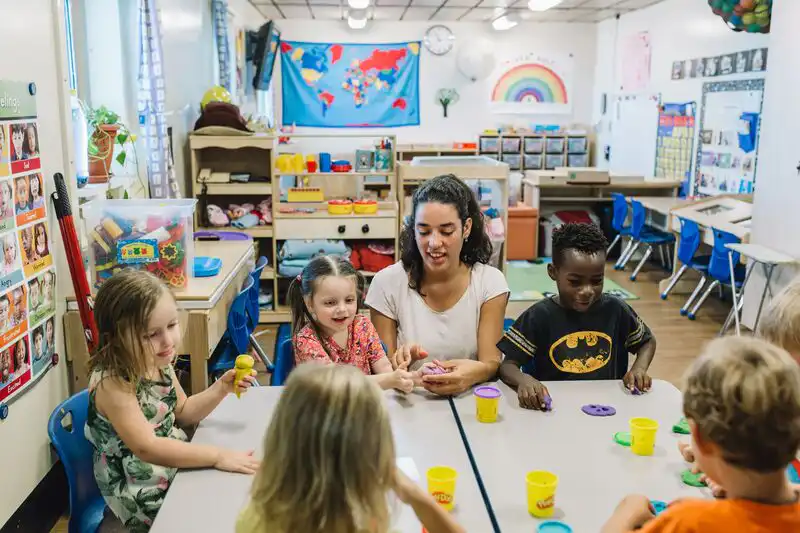
Imagine a school playground where the backdrop isn’t gum trees and suburban fences, but the bustling energy of a West African port and the vast, blue expanse of the Atlantic. Here, the laughter of children from a dozen nations mingles with the distant hum of a working hospital ship. This is the Mercy Ships Academy, a fully accredited school floating on the sea, and it is powered by the passion and expertise of volunteer teachers, many of them from Australia.
These educators have traded their familiar classrooms for a role of profound, yet often unseen, importance. They are not just teaching; they are providing the foundational support that allows the entire life-saving mission of Mercy Ships to function. This is the story of how Australian teachers, by educating the children of the crew, become the quiet heartbeat of a global mission that brings hope and healing to thousands.
The Engine Room of Hope: Why a Hospital Ship Needs a School
Mercy Ships operates a floating city comprising the world’s largest civilian hospital ships, crewed by volunteer surgeons, nurses, engineers, and maritime professionals dedicated to providing free, world-class surgical care. But what enables a world-class surgeon or a specialist anaesthetist to commit to a 10-month field service, far from home? The answer is family. And the answer for their family is the Mercy Ships Academy.
This floating school is the engine room of the community. Without it, these highly skilled professionals could not volunteer long-term, as they would be unable to bring their children. The Academy is the essential piece of infrastructure that allows parents to focus on their critical work in the operating theatres, wards, and engine rooms below, confident that their children are receiving an excellent, stable, and nurturing education. Australian teachers are the ones fuelling this engine, making their contribution not with a scalpel, but with a lesson plan and a deep commitment to the next generation.
The Australian Advantage: A World-Class Standard on the Water
Australian educators are uniquely suited for this remarkable challenge. Armed with high standards of training and a global reputation for adaptability and compassion, they bring more than just subject knowledge. They bring a deep understanding of how to create a supportive, dynamic, multicultural classroom where students from over 60 different nations can thrive.
Onboard, they deliver a robust, internationally accredited curriculum (ACSI and MSA-CESS) designed to ensure students can seamlessly transition back to schools in their home countries or onwards to university. But more than that, they cultivate a sense of stability and community for children living a life of constant change and cultural immersion. Their professionalism and compassion are the anchors for these young global citizens, making the ship not just a temporary residence, but a true home.
A Classroom Unlike Any Other: Learning and Living the Mission
Step inside the Mercy Ships Academy (we even made a video for you), and you’ll find the vibrant, organised hum of a great school. Australian teachers lead classes in maths, literature, science, and history, but the lessons extend far beyond the whiteboards into a world of lived experience.
- Global Citizenship is Lived, Not Taught: A student from New Zealand might be working on a project with a classmate from Sweden, while their parents, a Kiwi engineer and a Swedish nurse, work together one deck below. Cultural understanding is absorbed daily.
- Humanitarianism in Action: Students witness the direct impact of their parents’ work. They see patients arrive with life-limiting conditions like cleft lips or debilitating tumours and later leave transformed, fostering a unique sense of purpose and global awareness that can’t be taught from a textbook.
- A Richer Curriculum: A lesson on marine biology can be supplemented by looking out the porthole at the ocean. A social studies class is enriched by weekend interactions with the local culture of the host nation, from its markets to its music.
Australian teachers don’t just manage a classroom; they steward this unique educational ecosystem where learning is inextricably linked to service and a vibrant global community.
The Ripple Effect: How One Teacher Helps Heal Thousands
While their primary role is educating the children of the volunteer crew, the impact of an Australian teacher on Mercy Ships ripples out with incredible force. Every equation they explain, every story they read, and every student they encourage is a direct link in a powerful chain of healing. The logic is simple but profound:
- One teacher enables dozens of families to serve.
- Dozens of families enable hundreds of crew to function.
- Hundreds of crew enable thousands of free, life-changing surgeries.
This is the tangible, indirect impact. The teacher in the Academy is as vital to the mission’s success as the sterile technician in the operating room. They are the unseen heroes ensuring the entire structure of hope and healing remains strong and sustainable.
Your Next Chapter? An Invitation to Teach at Sea
For Australian educators with a sense of adventure and a heart for service, Mercy Ships offers an unparalleled opportunity for personal and professional growth. The Academy is continually seeking qualified teachers for all grade levels to volunteer for a full academic year. It is a significant commitment that requires fundraising to cover crew fees and stepping far outside one’s comfort zone.
However, the rewards are immeasurable. This is a chance to use your professional skills to support a world-renowned humanitarian organisation, to invest in a remarkable community of “third-culture kids,” and to be part of a story much larger than yourself. It’s an opportunity to create a legacy that extends far beyond the four walls of a classroom and across the oceans.
FAQs
Why is it essential for Australian teachers to support education on a hospital ship?
It is vital because medical and maritime crew members can only commit long-term to the mission if their children have access to consistent, high-quality education provided by qualified teachers on board.
What specific educational programmes do Australian teachers deliver for Mercy Ships?
Australian teachers work within the Mercy Ships Academy, delivering a full international curriculum from Early Years through to High School for the children of the multinational crew.
Is the Mercy Ships Academy an internationally recognised school?
Yes. The Academy is a fully accredited international Christian school, ensuring academic continuity and global recognition for students transferring to other schools or universities.
How does the curriculum account for the children’s transient lifestyle?
The curriculum is internationally focused, offering multiple academic tracks to accommodate students from different countries, providing stability and seamless educational transitions.
Do Australian teachers assist with vocational or medical training in the African ports?
While their primary role is classroom teaching, some teachers assist in onshore training or community education programmes, such as teacher development or health education.
Are there non-teaching support roles available for educational professionals on Mercy Ships?
Yes. Opportunities exist for roles like Librarian, Technology Specialist, and administrative assistants, supporting the overall educational mission of the Academy.
How does an Australian teacher apply to volunteer with Mercy Ships?
Teachers apply through the official Mercy Ships website, completing an online application, medical evaluation, and mandatory child safety screening.
What is the minimum length of commitment required for a volunteer teacher?
A minimum commitment of one full academic year, typically August to June, is required to ensure educational stability for the students.
Is there a cost for Australian teachers to volunteer on a Mercy Ship?
Yes. Teachers cover their travel expenses, insurance, and a monthly crew fee that includes room and board on the ship.
Are background checks a mandatory part of the application for teachers from Sydney or other Australian cities?
Yes. All teaching and Academy staff must hold a valid Working with Children Check or equivalent criminal record clearance before joining.
Do the teachers receive a salary while serving on the Mercy Ships?
No. All teachers are unpaid volunteers who donate their time and professional expertise to support the ship’s humanitarian mission.
What academic subjects do the Australian teachers typically teach?
Subjects include Mathematics, English, Science, Social Studies, French, Bible, and Physical Education, across various grade levels.
What is the daily schedule like for a teacher in the Mercy Ships Academy?
The school day generally runs from morning until mid-afternoon, including seven lessons, morning recess, lunch, and planning periods.
Do the teachers interact with the local African schools and teachers?
Occasionally, yes. Teachers and students may participate in joint educational projects or cultural exchanges with local schools.
Where is the Mercy Ships Academy located when the ship is in Africa?
The Academy is located on board the hospital ship itself, providing a safe and structured learning environment while docked in port.
What are the living conditions like for teachers on the ship?
Teachers live in shared cabins with communal bathrooms. Accommodation is compact but comfortable, fostering a close-knit crew community.
What is the student-to-teacher ratio like in the Academy?
Class sizes are small, offering a low student-to-teacher ratio that allows for personalised learning and strong teacher-student relationships.
What kind of resources and technology are available in the Academy classrooms?
The Academy is well-equipped with modern technology, including computers, internet access, interactive whiteboards, and a comprehensive library.
Can teachers bring their own families or a spouse?
Yes, provided their spouse or family members are also accepted for volunteer roles on board. Family cabins are available for those eligible.
How does the Academy handle students with special educational needs?
A Special Programs Assistant supports children with mild to moderate learning needs, ensuring every student has access to tailored learning assistance.
What opportunities are there for cultural immersion in the host country?
Teachers can explore local communities, attend cultural events, and visit markets or landmarks during their time off, enriching their volunteer experience.
Is there professional development or support for teachers onboard?
Yes. Teachers receive support from the principal and curriculum coordinator, along with peer collaboration and ongoing professional mentorship.
Recent Comments