
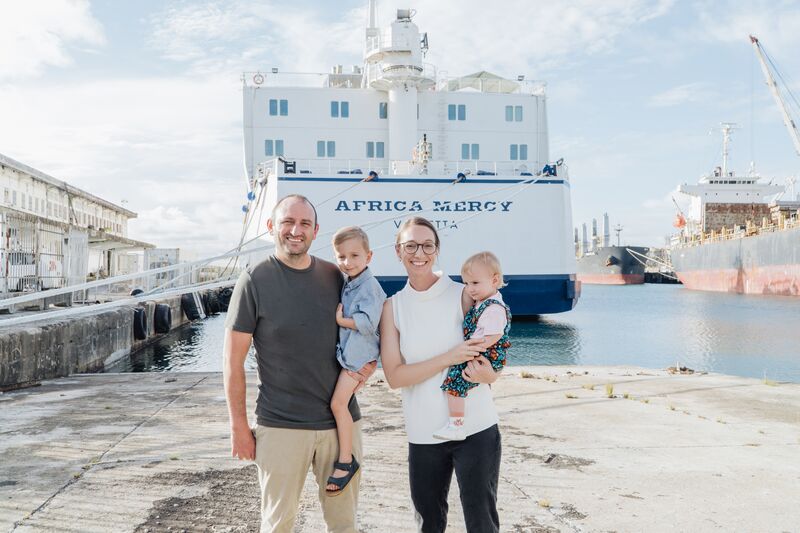
Deciding to volunteer overseas as a family is not something most Australians take lightly. It changes routines, disrupts comfort zones, and asks every family member to give something of themselves. For those considering Mercy Ships, it is also one of the most meaningful things a family can do together. But good intentions alone are not enough. The families who thrive in a volunteer setting are the ones who prepare carefully, talk honestly, and go in with realistic expectations.
This guide covers the practical and emotional groundwork that Australian families need to lay before departing for a humanitarian placement, from health checks and packing to children’s schooling, community living, and coming home again.
Understanding What Serving with Mercy Ships Actually Involves
Before booking anything or telling the kids, take time to understand what the placement looks like day to day. Mercy Ships Australia deploys volunteers to work on or around hospital ships that deliver free surgical care to people in developing nations, primarily across Sub-Saharan Africa. The work spans clinical roles, ship operations, administration, teaching, catering, engineering, IT, chaplaincy and more.
For families, this range of roles matters. Not every volunteer is a surgeon or a nurse. Many Australians serve in technical, domestic or support roles that keep the ship running. Each role shapes daily life differently. Clinical staff may work long shifts near the operating theatres. Teachers staff the onboard Academy, which educates the children of other crew members. Engineers keep the ship’s systems running. Understanding where your role fits within that wider community helps set realistic expectations before you leave.
Life on a hospital ship also means shared spaces, structured schedules and close daily contact with an international group of volunteers. Families who understand what life on the ships is like, before applying tend to feel less surprised once they arrive. Preparation is not just logistical. It is also about getting your head around a very different way of living.
Having Honest Conversations Before You Apply
Families often make the mistake of letting one or two people carry the excitement while others feel uneasy and unheard. Start the conversation early and make space for everyone to respond honestly. Children especially need a chance to ask questions, share concerns about leaving friends, and understand what the move means for them.
Keep the explanation age-appropriate. Younger children often respond well to simple, concrete ideas: “We’re going to live on a big ship and help people who need operations they can’t afford.” Older children may want more detail about schooling, friendships and what daily life will look like. Teenagers may have the most to process. Letting them voice concerns, rather than rushing past them, makes a meaningful difference to how they settle once you arrive.
For parents, honesty also means acknowledging your own uncertainty. Mixed feelings about leaving Australia, worries about finances, or questions about whether your family is ready are all reasonable. Addressing them together, rather than suppressing them, creates a stronger foundation for the placement.
Dealing with the Application Process
The Mercy Ships application process requires time and attention. Families need to review available roles, assess which opportunities suit their circumstances and skills, and gather documentation before applying. Some placements are short-term, lasting a few weeks to a few months. Others involve a longer commitment of six months to a year or more. The length of service affects planning for everything from schooling to property management at home.
Medical professionals need evidence of qualifications and registration. Technical volunteers may need to demonstrate relevant work experience. All family members who plan to serve need to be assessed individually, and Mercy Ships evaluates family applications with the whole household in mind. Start early and ask questions through the application process rather than assuming answers.
Sorting Out the Practical Paperwork Before You Leave
Leaving Australia for a humanitarian placement involves more admin than most families expect. Passports need to be valid for well beyond the placement end date. Visa requirements vary by destination. Travel insurance needs to cover the specific nature of your role and location, including medical evacuation. The Australian Government’s Smartraveller website is a solid starting point for official overseas travel advice, including guidance for Australians volunteering abroad.
Beyond travel documents, consider what needs managing at home. Mortgages, rental properties, vehicle registrations, insurance policies, school enrolments and business obligations all need attention before departure. Leave copies of key documents with a trusted person in Australia. Set up access to online banking and check that your phone plan works in the destination country, or arrange a local SIM. A thorough pre-departure checklist reduces the number of fires you are trying to put out from the other side of the world.
Preparing Health and Medical Needs for the Whole Family
Health preparation for overseas volunteering should begin at least six to eight weeks before departure. Book an appointment with a GP or travel medicine clinic and discuss destination-specific health risks, recommended vaccinations, malaria prevention and any existing medical conditions. Children may need a different vaccination schedule from adults, so factor in lead time for multiple doses.
Pack a comprehensive medical kit that includes regular prescriptions (with enough supply for the full placement plus extra), relevant medical records, glasses prescriptions, dental check documentation and first aid basics. Anyone with ongoing medical needs, whether allergies, asthma, mental health conditions or chronic illness, should have a clear written plan for managing that condition during the placement.
Mercy Ships does provide insurance coverage for active volunteers once on board, but volunteers are responsible for costs such as pre-service medical visits, vaccinations and flights for certain roles. Confirm exactly what is covered and what is not before you finalise plans.
Creating a Practical Packing Plan
Resist the urge to overpack. Space on a vessel is limited, and families are often surprised by how little they actually need once they settle into the rhythm of ship life. Focus on practical, durable clothing suitable for the climate and for working in shared community spaces. Modest dress is appropriate in most contexts.
Personal documents, medicines, chargers, a small selection of comfort items for children, and any role-specific gear requested by Mercy Ships should all be accounted for. Children benefit from bringing a few familiar items, such as a favourite book, a small toy or a printed family photo. These small anchors matter when everything else is unfamiliar.
Check Mercy Ships’ specific packing guidance when preparing your list, as requirements vary by role and destination.
Helping Children Adjust Before and During the Placement
Children adapt remarkably well to new environments when they feel informed and secure. Prepare them practically by discussing what their day will look like, where they will go to school, who they will meet and what the rules are around safety, screen time and staying connected with family in Australia.
The Mercy Ships Academy provides accredited education from kindergarten through to Year 12 for crew children on board, which removes one of the biggest concerns for families considering a longer placement. Children in the Academy are in a unique educational setting, surrounded by peers from many countries, which can be an extraordinary experience for them. For shorter placements, families may need to explore alternative arrangements such as distance education or leave of absence from schools in Australia.
Travelling and living overseas with children also opens up conversations about fairness, global inequality and compassion that no classroom at home could replicate. Frame the experience as something the whole family is doing together, with purpose.
Life in a Shared Community on Board
Shared communal living is probably the single biggest lifestyle shift for Australian families, who are generally used to private homes and independent routines. On a hospital ship, you share meal times, communal spaces, corridors, laundry facilities and sometimes bathrooms. Privacy is limited. Personal space is small. You will encounter people from dozens of countries every day.
This is one of the aspects that volunteers most commonly say they came to love, but it takes adjustment. Patience with others, and with yourself, is essential. Families who discuss this aspect openly before arriving tend to find the transition easier. Simple habits like keeping shared spaces tidy, being mindful of noise and making an effort to include newcomers in conversation go a long way toward building good community relationships.
Children often adapt faster than adults in community settings. They form friendships quickly and tend to enjoy the novelty of meeting kids from around the world. Give them space to make those connections.
Building Cultural Awareness Before Departure
Volunteers are guests in the communities they serve. That means showing respect for local customs, dress norms, religious practices and family structures, even when they differ significantly from Australian expectations. Read about your destination country in advance, learn a few words of the local language if possible, and approach unfamiliar situations with curiosity rather than judgement.
For children, this preparation can be as simple as looking at photos of the country, learning about local food and daily routines, and discussing why different communities have different ways of doing things. Cultural humility is not a soft skill. It is central to effective humanitarian work, and families who model it well often find their children take to it naturally.
Funding the Placement
Mercy Ships volunteers cover their own costs for pre-service medical appointments, vaccinations, certain flights and personal expenses. Accommodation, meals and on-board services are provided. For families, the financial outlay before departure can be substantial, particularly when factoring in health checks, travel insurance, documentation and any home management costs during the placement.
Many Australian families fund their service through a combination of personal savings, community support, church contributions and fundraising. Being clear and honest with supporters about what the placement involves and what the money covers helps maintain trust and encourages generosity. Some families also seek advice on whether any volunteer-related expenses may be relevant for tax purposes in Australia, though this varies by circumstance and professional advice is worth seeking. Knowing how other Australians have approached this can help with realistic financial planning.
Roles Beyond the Operating Theatre
Many Australians assume Mercy Ships is primarily for doctors and nurses. The reality is far broader. Engineers, teachers, hospitality staff, administrators, IT professionals, deck crew, finance officers, chaplains and warehouse managers all serve essential functions. Without them, the medical work could not happen.
If your skills lie outside healthcare, that is not a barrier. Explore the full range of volunteer opportunities available through Mercy Ships Australia to find a role that fits your background. The breadth of roles also means that families with different professional profiles can often find placements that work for multiple family members simultaneously.
Keeping Children Safe Throughout the Placement
Safeguarding children during international volunteer service starts with clear expectations and open communication. Before you arrive, establish family rules around supervision, online activity, boundaries with other volunteers and what to do if something feels wrong. Children should know who they can go to if they feel uncomfortable.
Mercy Ships takes crew safety seriously and has experienced security officers on board. Still, parents carry their own responsibility for maintaining appropriate routines, health habits, sun protection, hydration and emotional check-ins. Children who feel safe and informed within clear boundaries are generally the ones who enjoy the experience most fully.
Preparing for the Return Home
Many families underestimate the re-entry process. Coming home after a humanitarian placement can feel disorienting. Australia’s abundance, routines and the pace of ordinary life can feel strange after months of community living and purposeful service. Children may grieve friendships left behind. Adults may struggle to articulate what they experienced to people who were not there.
Build in rest time after returning. Resist the urge to immediately fill the calendar. Talk about what the family experienced together, and allow space for mixed feelings. Organise school transitions thoughtfully for children, particularly if they have been in the Academy on board. The return home is not the end of the experience. It is part of it.
A Practical Foundation for a Purposeful Season
Preparing a family for international humanitarian service takes real work. But the families who invest in that preparation, across health, finances, conversations, cultural awareness and practical logistics, are the ones who arrive ready to contribute and not just cope.
Serving with Mercy Ships is not a holiday. It asks something genuine from each family member. When the preparation matches the commitment, the experience tends to be exactly as meaningful as families hope it will be.
FAQs
How do Australian families apply for international volunteering with Mercy Ships?
Australian citizens can apply directly through the Mercy Ships Australia office based in Queensland. The application process involves an online assessment, reference checks, background checks, and an interview to align your family’s skills with available onboard roles.
What visa requirements apply to Australians volunteering overseas on a hospital ship?
Volunteers must hold a valid Australian passport with at least six months’ validity from the date of return. Mercy Ships assists with the specific humanitarian or entry visas required for the host nation, though volunteers usually manage their own Australian departure arrangements.
Can Australian children attend school while living onboard Mercy Ships?
Yes, the vessels operate an accredited onboard academy that follows an international curriculum suitable for children of volunteer families. This ensures Australian students keep up with their education while living overseas, making reintegration into the Australian school system smoother upon return.
Are donations made to support an Australian Mercy Ships volunteer tax-deductible?
Mercy Ships Australia is a registered charity with Public Benevolent Institution status, meaning direct donations to the organisation are generally tax-deductible. However, the Australian Taxation Office has strict rules regarding funds given to support specific individuals, so donors should check current guidelines.
What medical professions are most in demand for Australian volunteers?
There is a constant need for Australian registered nurses, surgeons, anaesthetists, midwives, and ward managers. All medical professionals must hold current registration with the Australian Health Practitioner Regulation Agency and have relevant postgraduate experience.
Does Mercy Ships accept non-medical volunteers from Australia?
Yes, the hospital ships require a large technical and operational crew to function. Australians can volunteer in roles such as maritime officers, cooks, electricians, IT specialists, teachers, plumbers, and administrative staff.
What immunisations do Australians need before joining an international medical mission?
Volunteers must visit an Australian travel medicine clinic or their local GP well in advance. Required vaccinations generally include Yellow Fever, Hepatitis A and B, Typhoid, and Malaria prophylaxis, depending on the specific African nation the ship is serving.
How do Australian families handle healthcare and medical emergencies while overseas?
While the ship has basic crew clinic facilities, all Australian volunteers must secure comprehensive international volunteer travel insurance. This insurance must include medical evacuation cover to ensure safe transport back to Australia or a regional medical hub if a severe emergency occurs.
Is there an age limit for Australian children travelling with volunteer parents?
Families are typically accepted for longer-term service if their children are within the age brackets accommodated by the onboard academy. Spaces for infants and toddlers are limited due to safety regulations and the availability of family cabins on the vessel.
How long are the volunteer deployments for Australian families?
While single professionals can sometimes serve for short stints of a few weeks, families are generally required to commit to longer deployments, often ranging from six months to several years, to justify the logistics of family cabin allocation and schooling.
How do volunteers handle their Australian superannuation while working overseas?
Because these roles are unpaid volunteer positions, superannuation contributions from an employer cease. Australians planning long-term missions should consult an Australian financial planner to discuss making voluntary personal contributions to their super fund while away.
What are the accommodation arrangements for families onboard the vessel?
Families are allocated private family cabins, which generally include bunk beds, a small sitting area, and an en-suite bathroom. Space is compact, meaning families must adopt a minimalist packing strategy before leaving Australia.
How do Australian families maintain contact with relatives back home?
The ships are equipped with satellite internet access, allowing families to use communication apps to stay in touch with family in Australia. Due to bandwidth limitations on a shared vessel, data-heavy activities like video streaming may be restricted.
What childcare options are available for working volunteer parents?
While parents are fulfilling their rostered shifts, younger children can attend the onboard nursery or preschool. Parents often coordinate with other volunteer families on a roster system to manage care outside of formal school hours.
How does living in a close-knit ship community affect Australian families?
Onboard life involves living alongside hundreds of crew members from diverse cultures. Australian families generally adapt well by participating in community events, eating in the shared dining room, and utilising the ship’s common recreational spaces.
Can Australians volunteer as a couple if only one person is a medical professional?
Yes, couples are highly valued. One partner can work in the hospital ward while the other fills an essential operational role, such as working in the galley, managing inventory, or assisting with ship maintenance.
What should Australians pack for a long-term maritime charity deployment?
The packing list should focus on modest clothing suitable for tropical climates, comfortable enclosed shoes for ship safety, specific Australian electrical adapters, and familiar comfort items or snacks from home for the children.
How does volunteering overseas affect an Australian’s residency status for tax purposes?
Long-term volunteering can impact your tax residency status with the Australian Taxation Office. It is essential to seek professional advice from an Australian accountant before departure to understand your ongoing tax lodgement obligations.
What emotional support is available to families preparing for deployment?
Mercy Ships Australia provides pre-field orientation and briefing materials to help families prepare for the psychological shift. Onboard, there are dedicated counsellors and community leaders available to assist families dealing with culture shock or homesickness.
Are there opportunities for Australian volunteers to explore the host country?
Yes, crew members receive scheduled days off and shore leave. Families can explore local markets, visit cultural sites, and interact with the local community, provided they follow the ship’s established safety guidelines.
How do volunteer families handle voting in Australian elections while overseas?
Australians serving abroad during an election can register as an overseas voter with the Australian Electoral Commission. This allows them to cast a postal vote or vote at an overseas Australian diplomatic mission if one is accessible.
What happens if an Australian family needs to return home early?
While volunteers commit to a specific duration, emergency departures can be arranged if an urgent family or medical situation arises back in Australia. Volunteers are responsible for any costs associated with altering their return flights.
How do families manage the transition back to Australian life after a mission?
Re-entry shock is common after living in a developing nation. Mercy Ships Australia offers debriefing resources, and families are encouraged to connect with local support networks, churches, or counselling services to process their experience.
Where can Australians find financial support to fund their Mercy Ships journey?
Many volunteers build a support team consisting of friends, family, local businesses, and community groups across Australia. Regular newsletters and updates help keep supporters engaged with the mission’s progress and funding needs.
Recent Comments