
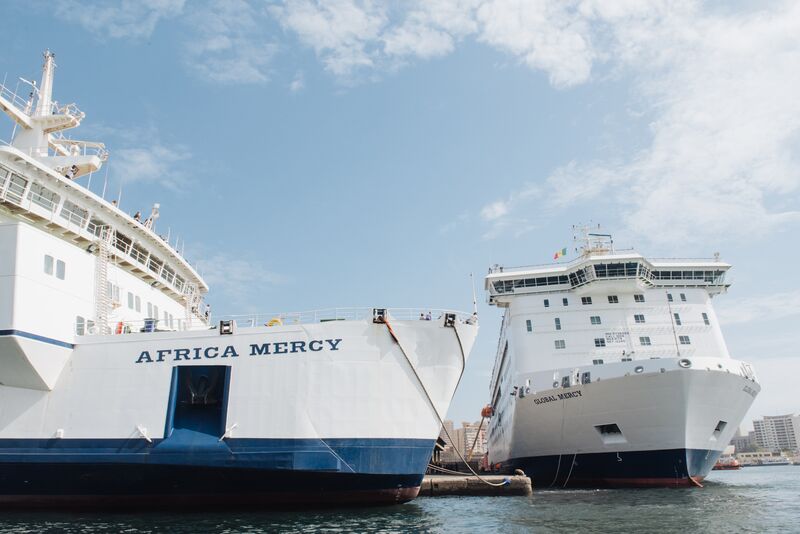
Five billion people around the world lack access to safe, timely surgical care. That figure, drawn from the Lancet Commission on Global Surgery, translates to roughly 18.6 million preventable deaths every year. Hospital ships are one of the more practical answers to that problem, and their role in global healthcare infrastructure is growing.
These floating medical facilities are not novelty vessels or stopgap solutions. They are purpose-built surgical platforms capable of delivering specialist care in regions where land-based hospitals are limited, overwhelmed, or simply non-existent. For Australians, who tend to take reliable surgical access for granted, understanding how these ships work, and what they actually achieve, helps to illustrate the scale of the global surgery crisis.
How Global Healthcare Has Changed
Healthcare no longer stops at national borders. Governments, NGOs, and medical professionals now work across interconnected systems spanning entire ocean regions, responding to shared challenges that no single country can solve alone. The preventable disease burden in sub-Saharan Africa and parts of South-East Asia remains enormous, with workforce shortages, under-resourced facilities and geography all compounding the problem.
Australia’s approach to regional health reflects this shift. Through the Department of Foreign Affairs and Trade, Australia’s international health assistance focuses on building resilient and equitable systems across the Pacific and South-East Asia, working with partner governments rather than simply delivering aid from the outside. That partnership model sits at the heart of how modern hospital ships operate too.
The Rise of Hospital Ships in Modern Healthcare
Demand for flexible healthcare delivery has grown steadily across Africa, and hospital ships have developed in step with it. These vessels function as fully equipped medical centres, capable of performing emergency and elective procedures in locations where shore-based services can’t keep pace with need. They carry operating theatres, diagnostic imaging, intensive care beds and recovery wards, and some now include simulation laboratories for clinical training.
What makes them valuable is not just the equipment on board. It’s the ability to bring that equipment directly to patient populations who would otherwise travel hundreds of kilometres, or go without treatment entirely. Mercy Ships Australia, the Australian arm of the world’s largest non-governmental hospital ship organisation, has delivered free surgeries and direct medical care to more than 2.8 million people in sub-Saharan Africa since 1978, working alongside local health systems at every port.
Floating Hospitals as Permanent Infrastructure
The idea that hospital ships are temporary or emergency-only tools has largely given way. Modern floating hospitals carry the same clinical capacity as a mid-sized land-based facility, and they can sustain deployment over months, sometimes years, in a single region.
Specialised services available on board typically include orthopaedic procedures, ophthalmic surgery, reconstructive and maxillofacial surgery, and obstetric fistula repair. Many ships also run dental programs. Cataract extraction campaigns alone can restore functional vision to hundreds of patients per port visit. Cleft lip and palate repairs, burn contracture releases and procedures treating other neglected conditions round out a caseload that reflects the specific diseases of poverty in each host country.
This range of surgical care allows hospital ships to reduce surgical backlogs that would take years, sometimes decades, to clear through local systems working alone.
Maritime Healthcare Delivery and Remote Populations
Roughly half the world’s population lives within a few kilometres of a coastline. That geography is a significant reason why maritime healthcare delivery works as well as it does. Hospital ships can reach isolated coastal and island communities directly, cutting out the logistical barriers that prevent patients from accessing care on land.
In the Australian context, this model has obvious parallels with remote and regional health delivery, where outreach services by road, air and sea cover the gaps that fixed facilities can’t. The challenge of reaching Torres Strait Islander communities or remote Pacific island populations is not structurally different from the challenge Mercy Ships faces in West Africa, even if the scale and resources differ.
Addressing Healthcare Gaps in Developing Nations
In many parts of sub-Saharan Africa, there are as few as two physicians per 100,000 people. Patients with surgically correctable conditions, cataracts, hernias, clubfoot, facial tumours, live with disability and pain for years before receiving any treatment, if they ever do.
Hospital ships address this not just through direct patient care but through a structured engagement model. Mercy Ships’ volunteer work in Africa involves a five-year country engagement programme in each host nation, focused on reducing unmet surgical needs, supporting policy reform with health ministries, and improving local infrastructure. That time horizon matters. Short-term medical missions can deliver care; longer-term presence can change the system around it.
Medical Capacity Building and Strengthening Health Systems
Delivering surgery is one thing. Leaving a stronger health system behind is another, and the most enduring contribution hospital ships make is in clinical training and workforce development.
Hands-on training programs run on board the ships cover nurse anaesthesia, perioperative care, sterile processing, surgical techniques and more. In 2024, Mercy Ships facilitated more than 25,000 participant training hours for nearly 290 healthcare workers from partner nations. These are not passive observers. They are clinicians who return to their own hospitals and continue performing the procedures they learnt. The knock-on effect compounds over time as each trained professional trains others.
In October 2024, the West African College of Surgeons granted formal accreditation to Mercy Ships’ surgical and anaesthesia training programmes, a milestone that reflects the clinical standard now expected of onboard education. For trainees in West Africa, this accreditation opens pathways to recognised surgical qualifications without leaving the continent.
Volunteer Medical Professionals and International Collaboration
None of this happens without people. Hospital ship programs depend almost entirely on volunteer medical professionals: surgeons, anaesthetists, nurses, scrub technicians, biomedical engineers, and a wide support crew running everything from the galley to the engine room.
Each year, more than 2,500 volunteers from over 60 countries serve aboard Mercy Ships’ two vessels, the Africa Mercy and the Global Mercy. Australians are well represented among them, and the range of volunteer roles available reflects how many different skills it takes to keep a floating hospital running. Not everyone who serves is a clinician. IT staff, teachers, mechanics, cooks and administrators are all part of the crew as well. That mix of expertise, combined with the close-quarters collaboration of life on a ship, creates working relationships that carry over into professional networks long after the mission ends.
Maritime Medical Diplomacy
There is a diplomatic dimension to hospital ship missions that often goes unacknowledged. When a vessel arrives in a port with free surgical care and clinical training, it builds goodwill between nations in a way that few other interventions can match. That trust is difficult to manufacture and easy to lose, but a well-run medical mission creates a durable relationship with host governments, local health ministries and communities.
In-Country Training and Workforce Development
Clinical skills transfer is the most sustainable output a hospital ship can produce. Procedures performed during a port visit benefit the patients treated. Procedures taught to local clinicians benefit every future patient that trained professional treats throughout their career.
Programs such as nurse anaesthesia training and perioperative care courses are designed with that multiplier in mind. The Global Mercy, Mercy Ships’ newest and largest vessel, was purpose-built with simulation laboratories that allow training to continue around the clock, separate from the clinical wards. This setup enables a far higher volume of training hours than older vessels allowed. Addressing healthcare workforce gaps, particularly in anaesthesia and surgical nursing, is one of the most effective ways to reduce surgical mortality in low-income countries over the long term.
Mercy Ships’ mission behind this work, including the vision of a world where even the most isolated communities have access to safe surgery, run by local professionals who were trained, supported and then left to continue independently.
Humanitarian Vessel Logistics and Mission Operations
Delivering complex surgical care from a ship requires a level of logistical precision that rarely gets the attention it deserves. Medical supply chain management across long maritime routes, maintaining sterile operating environments, coordinating patient selection before arrival, scheduling procedures, and planning postoperative rehabilitation all have to work in concert. Get any of it wrong and the mission fails before a single incision is made.
Humanitarian vessel logistics involve close coordination between maritime crews, clinical teams, port authorities and in-country health partners. Cold chain management for medications, waste disposal at sea, customs clearance for controlled drugs, and infection control standards comparable to a land-based accredited facility are all baseline requirements. The operational complexity is significant, and the organisations running these missions have decades of experience managing it.
Sustainable Medical Aid and What Comes Next
The ships themselves are improving. Advanced floating medical facilities now carry diagnostic imaging systems, blood banks and intensive care capacity that would not look out of place in a metropolitan Australian hospital. Digital health tools, telemedicine and remote diagnostics are beginning to be integrated into maritime platforms, extending the reach of specialist expertise beyond the ship’s immediate location.
The longer-term goal for organisations like Mercy Ships is to leave health systems capable of meeting surgical demand independently after they have left the country. That ambition requires sustained investment in infrastructure, equipment, training and policy reform. It also requires continued collaboration between host governments, international partners, NGOs and volunteer professionals willing to give their time and skills.
Hospital ships are not a complete answer to the global surgery crisis. But they are a practical, proven and scalable part of the response, and their contribution to equitable healthcare access and sustainable health outcomes is well established.
FAQs
How do hospital ships complement local healthcare infrastructure in developing regions?
Hospital ships provide a fully self-contained medical environment, featuring sterile operating theatres and intensive care beds, which directly relieves pressure on local land-based clinics. By handling complex, specialised surgical backlogs, these vessels allow local community health networks to focus resources on primary care, preventative health campaigns, and maternal health initiatives.
What specific role do Australian medical professionals play onboard civilian hospital ships?
Australian doctors, specialised surgeons, and ward nurses volunteer their clinical expertise to perform free, life-changing operations. Because Australian healthcare workers are trained under exceptionally high national safety and clinical standards, they bring elite skills in perioperative care, infection prevention, and complex reconstructive procedures directly to vulnerable coastal populations.
Can Australian nurses use long service leave to volunteer on global health missions?
Yes, taking long service leave or accumulated professional holiday time is a highly common path for Australian nurses to join maritime medical missions. Many non-governmental organisations offer short-term placements ranging from two weeks to two months, aligning perfectly with standard Australian workplace leave provisions.
How do floating hospitals support healthcare workforce development in host nations?
Rather than just providing temporary aid, floating medical facilities act as active educational hubs. Australian specialists run formal in-country healthcare training and mentoring programmes onboard, teaching local practitioners advanced clinical skills in fields like paediatric surgery, sterile processing, and safe anaesthesia management.
How do non-governmental hospital ships coordinate with local health ministries?
Operations are entirely collaborative and never independent. NGOs work by invitation from host governments, establishing strict partnerships with national health ministries years before a ship arrives to ensure patient selection protocols, safety regulations, and local clinical training objectives match the country’s long-term health strategy.
Why is maritime medical logistics considered more efficient than building land-based hospitals?
Building permanent medical infrastructure in resource-limited coastal regions requires massive time, capital, and local utilities that may not exist. A mobile medical platform arrives completely equipped with its own power generation, diagnostic imaging, clean water supply, and sterile units, bypassing local infrastructure gaps immediately.
What are the required eligibility criteria for an Australian doctor volunteering overseas?
An Australian medical volunteer must hold a current, unrestricted registration with the Medical Board of Australia via AHPRA (Australian Health Practitioner Regulation Agency). They must also demonstrate recent clinical practice in their specialisation, clear a thorough medical fitness review, and show strong cultural adaptability.
How do hospital ships address the global surgery crisis in sub-Saharan Africa?
In many developing coastal regions, billions of people lack access to safe, timely, and affordable operative care. Hospital ships target this deficit directly by providing free access to essential surgical interventions, effectively reducing massive backlogs of treatable conditions like cataracts, cleft lips, and severe burn contractures.
What kind of non-medical volunteer roles are available for Australians on humanitarian vessels?
Running a floating hospital requires extensive maritime and operational expertise. Australians frequently volunteer in critical technical roles, including hospital ship engineering, maritime logistics, deck operations, galley cooking, hospitality management, and technical asset maintenance.
How do these maritime missions tackle diseases of poverty?
Diseases of poverty, such as neglected tropical diseases, untreated clubfoot, and obstetric fistula, flourish where surgical care is unavailable. Hospital ships focus their entirely free intake on these exact conditions, reversing decades of physical disability and social marginalisation for patients who cannot afford commercial medical fees.
What does a standard shift look like for an Australian ward nurse serving onboard?
Ward nurses generally work structured shifts, often completing around ten shifts over a fortnightly period, which includes standard day, evening, and rotating night duties. The work involves intensive postoperative rehabilitation, complex wound dressing management, and closely monitoring patients’ recovery alongside an international team.
How do mobile medical platforms ensure sustainable clinical outcomes after they depart?
Sustainability is achieved by ensuring clinical skills transfer outlasts the ship’s physical presence. By upgrading local facilities on land, providing modern tools, and certifying local doctors and nurse anaesthetists through rigorous mentoring programmes, the host nation’s health sector is left significantly stronger.
What role does nurse anaesthesia training play in maritime capacity building?
Safe anaesthesia care is one of the greatest challenges in remote global health. Australian anaesthetists and senior nurses onboard run intensive perioperative care programs, training local practitioners in internationally recognised anaesthesia safety standards to ensure future local operations carry minimal risk.
Are donations to international hospital ship charities tax-deductible for Australian residents?
Yes, if you donate to an organisation that maintains a registered Australian office with Deductible Gift Recipient (DGR) status under the Australian Taxation Office (ATO), your financial contributions are fully tax-deductible on your annual Australian tax return.
How do hospital ships manage decentralised patient selection across wide geographic areas?
To reach rural and isolated communities far from the port, advanced medical selection teams travel inland months ahead of the vessel’s arrival. They collaborate with local community health initiatives and regional clinics to assess, screen, and clear patients for safe transport to the ship.
What is the minimum time commitment required for Australian clinical volunteers?
While highly specialised surgical teams or emergency consultants can sometimes serve on short-term blocks of two to three weeks, standard ward nurses, logistical coordinators, and technical crew are typically requested to commit to a minimum of two to ten months to maintain continuity of care.
How do maritime medical missions impact regional infrastructure development projects?
While the ship itself is temporary, NGOs frequently fund and execute land-based infrastructure development projects simultaneously. This includes completely renovating local hospital wards, constructing dedicated outpatient clinics, and installing modern sterile processing units that remain permanently in the host country.
How does maritime medical diplomacy function as soft power in global health?
Maritime medical diplomacy uses humanitarian aid to build strong, peaceful international alliances. When Australian volunteers deliver high-quality, free healthcare in partnership with developing nations, it fosters immense mutual respect, strengthens diplomatic ties, and highlights Australia’s commitment to regional stability.
What specialised surgical care is most frequently delivered by floating operating theatres?
Floating operating theatres are heavily utilised for specialised, life-transforming reconstructive surgeries. This includes maxillofacial reconstructions for large tumours, ophthalmic campaigns for cataracts, orthopaedic corrections for paediatric deformities, and delicate repairs for obstetric fistula.
How is the medical supply chain managed on an ocean-going humanitarian vessel?
Managing maritime humanitarian logistics requires a highly sophisticated global supply chain. Critical pharmaceutical items, sterile instruments, and diagnostic equipment are meticulously tracked, shipped, and stored in specialised onboard cargo holds to ensure clinical suites are fully stocked for months at sea.
Do Australian volunteer professionals have to pay for their own expenses onboard?
Yes, on most civilian humanitarian vessels, crew members act as self-funded volunteers who cover their own travel costs, insurance, and monthly onboard crew fees for room and board. This unique model ensures that public donations go directly into funding free patient surgeries and local medical training.
How do hospital ships integrate with existing community health initiatives on the ground?
Rather than replacing local systems, the ships align with existing community initiatives to amplify public health messages. Onboard teams work alongside local health workers to deliver extensive preventative health education, hygiene training, and nutritional guidance that continues within the community long term.
Why is addressing healthcare gaps via a coastal vessel highly effective for global populations?
Statistically, over half of the world’s population lives within one hundred kilometres of a coastline. Deploying a state-of-the-art, ocean-going hospital ship allows international development agencies to sail an entire tertiary-level medical facility directly to major population centres, completely bypassing broken inland transport networks.
Recent Comments