
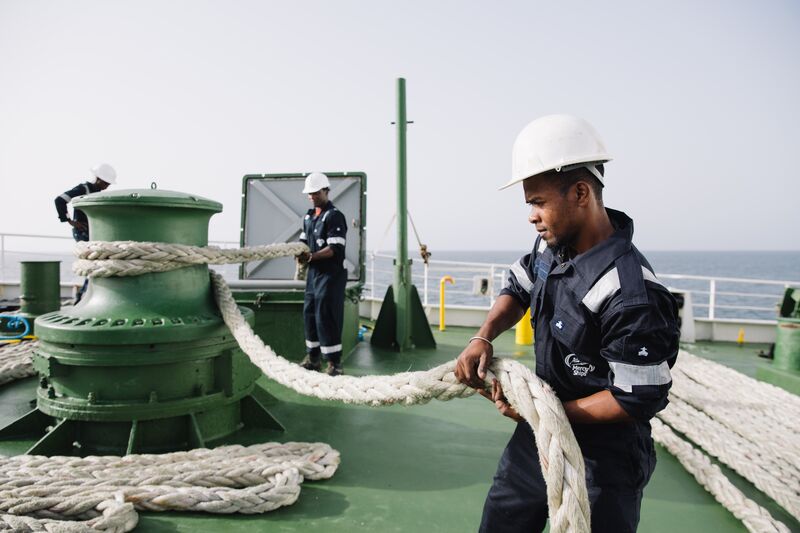
For experienced Australian seafarers, purpose doesn’t always come from the next contract. It comes from applying hard-earned maritime skills somewhere that genuinely matters. Volunteer deck hand and able seaman roles with Mercy Ships offer exactly that: real shipboard work, real operational responsibilities, and a direct connection to life-changing medical missions across some of the world’s most underserved communities.
Growing numbers of Australian maritime professionals are exploring humanitarian pathways through Mercy Ships, where practical seamanship supports free surgical care in developing nations. Whether your background is in commercial shipping, offshore support, coastal transport, or marine logistics, the skills you’ve built at sea translate directly to roles aboard hospital ships operating in international waters.
Understanding the Mission of Mercy Ships
Mercy Ships Australia operates hospital ships that deliver free surgical care, medical training, and healthcare to communities with little or no access to essential services. The ships depend on skilled volunteers from around the world, including qualified maritime crew who keep operations running safely at sea and in port.
Hospital ships differ from commercial vessels in one significant way: every operational decision feeds into a medical mission. A deck hand securing lines on arrival, an able seaman running a safety drill, a boatswain managing gangway access, each task directly supports surgeons and nurses working below decks. That connection between the deck department and patient outcomes is something volunteers consistently describe as one of the most motivating parts of the experience.
The Role of Able Seamen on Hospital Ships
Able seamen are fundamental to safe vessel operations, and hospital ships are no different. Volunteer able seamen contribute to mooring operations, watchkeeping duties, cargo handling, deck maintenance, and safety procedures.
These roles suit Australian seafarers well. Strong familiarity with AMSA standards, solid safety cultures, and experience across commercial and offshore sectors mean Australians tend to hit the ground running aboard a multicultural international crew. The work is physically demanding at times, but the environment is genuinely purpose-driven. You’re not just logging sea time, you’re part of something with visible, immediate impact.
Deck Hand Roles in Humanitarian Shipping
Deck hand positions cover a broad range of day-to-day tasks: maintaining and cleaning deck areas, assisting with navigation procedures, handling lines during port operations, and participating in emergency drills. The scope is similar to commercial deckhand work, but the setting is unlike anything in traditional shipping.
For seafarers weighing a career break with substance, or those looking for an alternative to purely freight-focused work, volunteer deck crew positions with Mercy Ships offer real operational experience in international port environments, exposure to complex logistics, and the chance to work alongside crew drawn from more than 60 countries.
Why Australian Maritime Skills Are in Demand
Australian maritime professionals carry a strong international reputation, built on rigorous training standards, compliance with international maritime regulations, and practical seamanship developed across diverse conditions. That background makes Australians well suited to deck department volunteer roles.
Seafarers with AMSA-recognised qualifications, offshore experience, coastal navigation expertise, or commercial marine backgrounds generally transition smoothly into humanitarian maritime operations. Crew from Queensland, Western Australia, Victoria, and New South Wales regularly bring transferable skills that fit Mercy Ships operations across West and East Africa.
STCW Certification and What You’ll Need
Most maritime volunteer positions aboard Mercy Ships require internationally recognised certifications. Deck crew and watchkeeping roles, in particular, require current STCW Basic Safety Training (BST). Officer and rating positions require a valid certificate of competency and a current maritime medical certificate.
One important detail for Australians: Mercy Ships vessels are registered under the Maltese flag, and not all national certificates are automatically recognised by the flag state. Check whether your AMSA-issued certificates of competency align with those requirements before applying. If you don’t hold a current BST certificate, Mercy Ships offers that training three times a year at their International Support Centre in Texas, America, or can point you to an approved provider.
For a full breakdown of certificate requirements by position, the Mercy Ships’ volunteering FAQs page on their website, covers deck and engineering specifics in detail. You can also refer to AMSA’s guidance on certificates of competency to confirm which qualifications carry international recognition.
Entry-level roles, skilled trades, and certain support positions don’t require maritime licensing at all, only a current BST certificate, which broadens access for those earlier in their seafaring careers.
Life Aboard a Mercy Ships Vessel
Living on a hospital ship is quite different from commercial maritime employment. Crew work in tight-knit international teams where clear communication matters as much as technical ability. Daily routines involve maritime operational tasks alongside regular interaction with medical staff, humanitarian workers, and volunteers from dozens of countries.
Most crew describe the environment as highly collaborative. There’s a shared sense of purpose that shapes how people work together, and that tends to make even routine maintenance tasks feel significant. You’re embedded in a community, not just assigned to a vessel.
How Deck Operations Support Medical Missions
Deck crew don’t work in surgical wards, but their contribution shapes every mission outcome. Safe port arrivals, efficient cargo transfers, gangway management, vessel security, and routine maintenance all determine whether the ship can continue delivering medical care without interruption.
Every watch, every maintenance job, every mooring operation feeds directly into whether a patient receives surgery that day. Volunteer maritime professionals who’ve served aboard hospital ships consistently describe that realisation as one of the more powerful aspects of the experience. Your seamanship matters in a way that extends well beyond cargo delivery or schedule compliance.
Career Value for Australian Seafarers
Volunteer maritime service builds more than goodwill. Australian seafarers gain hands-on international shipboard experience, exposure to multicultural operational environments, and practical development in leadership, adaptability, and cross-cultural communication, skills that carry genuine weight throughout a maritime career.
Younger seafarers especially benefit from the range of operational situations you encounter aboard a hospital ship. Complex logistics, port coordination in West African nations, working under diverse regulatory and procedural environments, all of it sharpens capability that translates back into commercial roles. For some volunteers, the experience also reframes their relationship with the work itself, offering perspective that’s harder to come by through standard contracts alone.
Entry-Level Opportunities for Emerging Maritime Workers
Not every volunteer role requires years of sea service. Entry-level deck positions are available for individuals earlier in their maritime careers, typically involving supervised deck support, vessel maintenance, and participation in daily shipboard operations.
Safety Standards and Professionalism Onboard
Safety is non-negotiable aboard Mercy Ships vessels. All technical crew must hold a current BST certificate before joining, and licensed crew require valid certificates of competency alongside a maritime medical certificate. Volunteers follow strict procedures covering emergency drills, navigation support, cargo handling, and vessel maintenance.
Australian seafarers are well prepared for this environment. Strong workplace safety habits, familiarity with international maritime standards, and practical experience across demanding conditions make the transition to hospital ship operations straightforward for most.
The Application Process
Australians interested in maritime crew roles can start by reviewing available positions and submitting an application through the Mercy Ships volunteer portal on their website. The process involves providing maritime qualifications, certification records, employment history, and references. Depending on the role, additional medical checks or interviews may also be required.
A practical tip: upload all documentation upfront. The more complete your application from the start, the faster the subsequent steps move. If the specific position you’re after isn’t immediately available, you can join a talent community to be contacted when it opens. Short-term volunteer commitments start from two weeks; longer-term positions typically require a minimum of two years.
Read more about what the volunteering experience involves before deciding which commitment suits your situation.
A Practical Option for Purposeful Seafaring
More Australian seafarers are looking beyond purely commercial contracts. Humanitarian maritime volunteering offers a way to keep working at sea while contributing to something with real social weight. Rather than focusing on freight or offshore operations, you become part of a mission built around healthcare access and community impact in regions with very limited medical infrastructure.
Deck crew positions also bring cultural exposure and international connections that are genuinely rare within the broader maritime industry. The people you meet and the situations you work through tend to stay with you long after the voyage ends.
What to Do Next
Able seaman and deck hand volunteer roles aboard Mercy Ships give Australian maritime professionals a meaningful way to apply their skills beyond standard commercial work. The operational responsibilities are real, the environment is professionally demanding, and the broader impact is tangible.
If you’re an experienced seafarer looking for a purposeful next step, or an emerging maritime worker wanting to build solid international experience, hospital ship deck crew roles are worth serious consideration.
FAQs
What qualifications do I need to volunteer as an Able Seaman with Mercy Ships Australia?
To serve as an Able Seaman (Able Seafarer Deck), you generally need a Certificate of Proficiency that complies with international STCW (Standards of Training, Certification and Watchkeeping) guidelines. Mercy Ships requires your qualification to be recognised by their flag state administration. For Australian mariners, holding an appropriate qualification issued or endorsed by the Australian Maritime Safety Authority (AMSA) is the standard pathway to demonstrating these core seafaring skills.
Can an Australian apply for an entry-level Deck Hand volunteer role without maritime experience?
Yes, there are trainee and entry-level Deck Hand roles available that do not require extensive commercial seafaring experience or advanced AMSA licences. However, all technical and deck crew must possess basic safety certificates, such as STCW Basic Safety Training, which covers firefighting, personal survival techniques, and first aid, before they can join the vessel.
Does Mercy Ships Australia accept AMSA certificates for maritime crew roles?
Yes, Mercy Ships accepts maritime qualifications issued by the Australian Maritime Safety Authority (AMSA), as Australia is widely recognized under international STCW frameworks. Your specific certificate or certificate of competency will be cross-checked against the requirements of the vessel’s flag state administration during the application review process.
What are the primary duties of a volunteer Deck Hand on a hospital ship?
A volunteer Deck Hand is responsible for daily maintenance and operational tasks within the deck department. This includes cleaning, painting, chipping rust, assisting with the mooring and unmooring of the vessel, and participating in regular emergency drills such as fire and abandon-ship procedures to keep the hospital ship secure.
How long do Australian maritime crew volunteers typically serve on board?
Commitment lengths vary based on the specific maritime role and the needs of the vessel. Entry-level deck roles may accept commitments of a few months, whereas specialised ratings or long-term crew positions often look for volunteers who can serve for six to twelve months, or even longer.
What is the minimum age for an Australian to volunteer for deck crew roles?
The minimum age to volunteer as part of the maritime crew with Mercy Ships is 18 years. This ensures all seafaring crew meet international maritime labour standards and have the legal capacity to undertake safety-critical duties on international voyages.
Do volunteer maritime crew members have to pay for their own flights from Australia?
Yes, Mercy Ships operates on a volunteer-funded model. Australian crew members are responsible for their own travel costs, including return flights from Australia to the ship’s location, mandatory travel insurance, visas, and required immunisations.
Are crew members required to pay for accommodation and food while volunteering?
Yes, volunteers pay a monthly crew fee that covers their accommodation and meals on board the ship. These fees vary depending on the length of service and help ensure that the maximum amount of direct donations goes straight toward patient healthcare and surgical programs.
Are there medical fitness standards for Australian volunteers joining the deck department?
Yes, all maritime crew must pass a comprehensive medical examination to ensure they are fit for sea duty. For Australians, obtaining an AMSA medical fitness certificate (or an international equivalent that meets STCW I/9 standards) is necessary to prove you have the physical capability and eyesight required for deck work.
What safety training is mandatory for Australian volunteers before joining the ship?
All non-medical crew members staying on board for more than six months must complete Basic Safety Training, Crowd Management, and Security Awareness courses. These international maritime courses prepare you to handle emergency situations, manage crowds safely, and follow global ship security protocols.
Can commercial seafarers from Australia use their volunteer time to maintain their sea time?
Yes, time served on board active humanitarian vessels can often count toward the revalidation of seafaring qualifications. Australian mariners should document their service using standard discharges and check directly with the Australian Maritime Safety Authority (AMSA) regarding the specific sea time logging criteria for hospital ships.
What is the difference between an Able Seaman and an entry-level Deck Hand on board?
An Able Seaman is a qualified rating who has completed significant sea time and holds specific STCW certificates of proficiency to perform watchkeeping duties and complex deck manoeuvres. A Deck Hand role focuses more on general ship maintenance and basic operations, often serving as a pathway to gain maritime experience.
Does Mercy Ships Australia provide maritime training or apprenticeships?
While Mercy Ships provides mandatory shipboard familiarisation, safety drills, and an initial onboarding program, it is not a primary maritime training institution or an integrated apprenticeship provider. Candidates generally need to obtain their foundational STCW or AMSA training in Australia before applying.
How does working in the deck department support the hospital ship’s medical mission?
The maritime crew keeps the vessel safe, stable, and operational. Without the deck department managing the ship’s maintenance, mooring, navigation, and security, the floating hospital could not safely stay in port, power the operating theatres, or provide a secure environment for patients and medical staff.
Are there volunteer opportunities for bosuns or deck officers?
Yes, Mercy Ships regularly recruits experienced maritime professionals, including Bosuns (Boatswains), Chief Mates, and Captains. Australian mariners with advanced AMSA master or deck rating qualifications are highly sought after to lead the deck department teams.
What is the application process like for an Australian maritime volunteer?
The process starts online via the Mercy Ships Australia volunteer portal, where you submit your resume, AMSA maritime certifications, and references. If your skills match an open position, you will participate in a digital interview process and a background check before receiving an official offer letter.
Do I need a passport with specific validity to volunteer from Australia?
Yes, you must hold a valid passport, and it is standard maritime practice to ensure it has at least six months of validity remaining beyond your planned return date to Australia, along with enough blank pages for visa stamps.
What language is used for daily operations and safety commands on board?
English is the official working language on board the entire fleet. All maritime crew, including Australian volunteers, must possess a functional and clear command of English to understand safety instructions, radios, and commands during emergency drills.
Is separate accommodation provided for married couples volunteering together?
Yes, there is limited accommodation on board designated for married couples. If both you and your spouse are accepted as volunteers (whether in maritime, medical, or support roles), Mercy Ships attempts to house you together, subject to cabin availability.
Can I volunteer with my children if I am serving in a deck role?
Family housing is highly limited and generally reserved for crew members committing to long-term service (usually two years or more) in critical leadership or specialist roles. Short-term deck crew volunteers are typically unable to bring dependent children on board.
Are there specific vaccination requirements for Australian volunteers?
Yes, because the ships serve vulnerable populations in developing nations, volunteers must meet strict immunisation standards. This includes routine Australian vaccines as well as specific requirements like Yellow Fever, depending on the ship’s port of service.
What kind of clothing or uniform do deck crew volunteers need to wear?
While on duty, deck crew wear durable work clothes, which often include overalls, heavy-duty trousers, and high-visibility gear. Compulsory personal protective equipment (PPE) like steel-capped safety boots must be worn during all maintenance and deck operations.
Is there an internet connection available on the ship for staying in touch with family in Australia?
Yes, the vessels are equipped with satellite internet access, allowing crew members to stay in touch with family back home in Australia via text, email, and messaging apps, though bandwidth may be managed to prioritise ship operations.
Can Australian volunteers explore the host nation during their time off duty?
Yes, when you are not scheduled for shifts, watchkeeping, or emergency duties, you can explore the local communities and experience the culture of the host country, provided you follow the ship’s safety guidelines and curfews.
How does volunteering with Mercy Ships differ from commercial maritime work in Australia?
While the regulatory standards and physical demands of deck work are identical to commercial shipping, the environment is deeply community-focused. You live alongside a diverse international crew of medical and technical professionals, working collaboratively to provide free surgical care rather than moving commercial cargo.
Recent Comments