
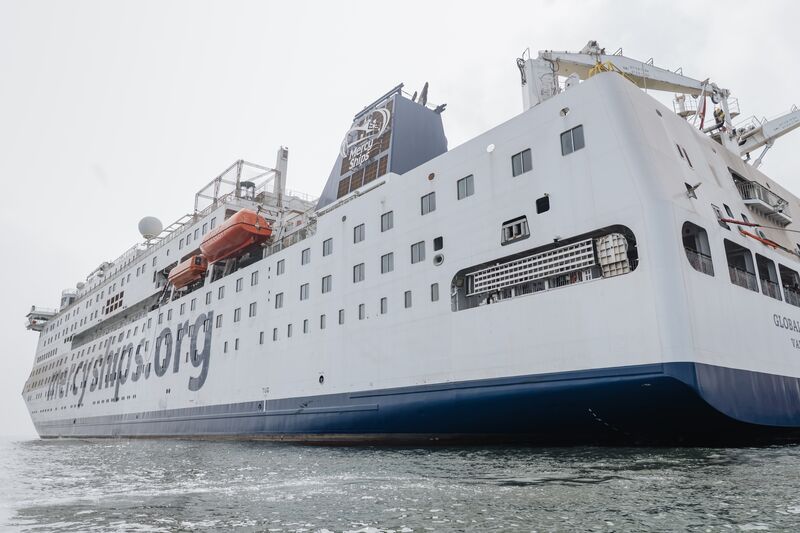
Across sub-Saharan Africa, more than one billion people live in countries where the public health system cannot meet the surgical demand that exists. The World Health Organisation has documented that the region carries roughly a quarter of the global burden of disease while having access to fewer than three percent of the world’s surgeons. Land-based clinics and government hospitals exist across the continent, and they do vital work. But for millions of people living in coastal nations where roads are unpaved, fuel is scarce, and the nearest specialist surgeon may be hundreds of kilometres away, a fixed building on land is not always the answer.
That is the problem that hospital ships address, and it is a problem that is distinctly African in its geography, its scale, and its urgency. This article looks at how floating hospitals and land-based clinics compare in the specific context of West and Central Africa, why maritime medical infrastructure offers strategic advantages in that environment, and what those advantages mean for the patients who have no other option. To understand more about how Mercy Ships deploys its vessels in this context, the how hospital ships work and what their mission involves page sets out the operational model in detail.
The Reality of Healthcare Access in West Africa
Before comparing delivery models, it helps to understand the baseline. In many of the countries where Mercy Ships operates, the healthcare system is not simply under-resourced. It is structurally unable to meet the needs of the population it serves. A country like Guinea, with a population of around 13 million people, may have fewer than a hundred surgeons available to the public sector. The average patient who needs an operation may wait years. Many never receive it at all.
Land-based clinics in these settings face challenges that go well beyond funding. Supply chains for medicines and surgical consumables are unreliable. Cold chains for medications and blood products are difficult to maintain without consistent electricity. Specialist training is concentrated in capital cities, which are often hours of travel from the communities that need care most. When a clinic in a regional town refers a patient to a capital city hospital for surgery, the patient frequently cannot afford the journey, cannot take the time away from their family, or simply cannot leave at all.
The surgical backlog in West Africa is not a temporary problem waiting for a budget increase to solve it. It is a structural feature of health systems that were not built to deliver the volume or complexity of care that the population requires. The Lancet Commission on Global Surgery has documented that five billion people worldwide lack access to safe and affordable surgical care, with low and middle-income countries bearing the greatest share of that burden. That structural gap is exactly where maritime medical infrastructure has a role to play.
What a Hospital Ship Can Do That a Land-Based Clinic Cannot
The most obvious advantage a hospital ship brings to coastal West Africa is mobility. A land-based clinic, however well-equipped, sits in one location and waits for patients to come to it. A hospital ship comes to the patients.
When a Mercy Ships vessel docks in a West African port, it brings a fully equipped surgical hospital to the waterfront of a country that may not have a comparable facility anywhere on land. Patients who live in coastal towns and fishing villages within reach of the port no longer have to travel to the capital. They come to the dock. For communities where the cost and distance of reaching a capital city hospital is itself a barrier to care, this geographic repositioning changes who can access surgery and who cannot.
The ship also brings a self-contained clinical environment that is not dependent on the host country’s infrastructure. Operating theatres with reliable power, clean water systems, sterile supply chains, and specialist nursing ratios are features of the onboard facility that many land-based hospitals in the region simply cannot replicate, not because of a lack of effort, but because the underlying infrastructure of electricity, water, and logistics does not support it.
For patients requiring longer post-operative recovery, the ship provides ward beds in a controlled clinical environment for as long as the recovery requires. A patient who has undergone reconstructive facial surgery, for example, may stay on board for weeks of wound care and follow-up. That continuity of care in a single, consistent environment is difficult to replicate through a land-based referral chain that relies on patients travelling back and forth to clinics that may be far from their homes.
The Limitations of Land-Based Clinics in the Contexts Where Mercy Ships Works
None of this is to argue that land-based clinics are failing or that maritime infrastructure should replace them. The point is more specific than that. In the coastal nations of West and Central Africa where Mercy Ships operate, land-based facilities and hospital ships serve different populations with different needs, and they complement rather than compete with each other.
Land-based clinics are well suited to primary care, routine outpatient services, maternal health, vaccination programmes, and the management of chronic conditions. They are built for consistency and for serving communities over long periods. The staff are local, the patient population is familiar, and the relationships that make community health work are established over years.
What land-based clinics in these settings often cannot provide is the surgical volume and specialist capacity needed to address the backlog of conditions that require operative intervention. Cataracts that cause preventable blindness. Cleft lips and palates that affect nutrition, speech, and social participation for children from birth. Tumours that have grown for years because no surgical option was available. Untreated club feet in teenagers who have never walked correctly. These are not conditions that a primary care clinic can treat. They require a surgeon, an anaesthetist, a scrub nurse, a recovery ward, and the specialist equipment to support them.
In countries where the public health system cannot supply those elements reliably and at scale, a hospital ship docked in the capital’s port for an extended field service fills a gap that would otherwise go unfilled entirely. The range of medical volunteer projects in Africa available through Mercy Ships reflects the breadth of surgical specialties delivered during each field service, from maxillofacial reconstruction to paediatric orthopaedics and ophthalmic care.
Disaster Response and Surge Capacity at Sea
One of the less discussed but genuinely significant advantages of maritime medical infrastructure in Africa is its utility during periods of acute crisis. West and Central Africa experience floods, cyclones, and conflict-related displacement events that strain already fragile health systems to breaking point. In those circumstances, a ship that can be repositioned, stocked with emergency surgical supplies, and brought alongside a port within days of a crisis is a fundamentally different kind of asset from a fixed clinic that either remains intact in an unaffected area or is itself damaged by the event.
The mobility of the vessel is also an advantage in navigating the political and logistical complexity of crisis response. A ship operating in territorial waters can move between ports in response to where need is greatest, without the lengthy negotiation process involved in establishing a new land-based facility in an emergency zone.
Beyond disaster response, maritime medical assets provide surge capacity for routine surgical programmes. A Mercy Ships field service in a single country may deliver thousands of surgical procedures over the course of a year, often operating seven days a week at a pace that no existing land-based facility in the host country could sustain. That sustained surgical output, concentrated in one port city but serving patients drawn from across the country, acts as a form of pressure relief for a health system that has been accumulating unmet surgical need for years.
Medical Capacity Building: The Advantage That Persists After the Ship Leaves
Maritime medical infrastructure, at its best, is not just a delivery mechanism for healthcare. It is a platform for training. This is the dimension of the hospital ship model that land-based emergency clinics are not always able to replicate, and it is arguably the most important strategic advantage maritime infrastructure offers in the African context.
When a Mercy Ships vessel operates in a West African port, it does not only treat patients. It runs surgical training programs for local doctors, nurses, and allied health professionals. It conducts clinical skills workshops. It supports the development of local surgical capacity that will continue to serve patients after the ship has moved to its next field service.
A land-based clinic that arrives with external staff, treats patients, and then closes when the programme ends leaves behind a population that is slightly better off than before. A programme that trains the local surgeon who will still be operating in that hospital in twenty years leaves behind something that compounds over time. The full scope of how Mercy Ships approaches this long-term investment in local health systems is covered in the dedicated article on sustainable healthcare development and how Mercy Ships builds lasting capacity beyond immediate aid, which explains the mentorship, infrastructure, and training programme structures that underpin each field service.
Why Maritime Infrastructure Makes Sense for Coastal Africa
Sub-Saharan Africa has a coastline of more than 26,000 kilometres. A significant portion of the population in the countries with the most acute surgical need lives within reach of a port. Maritime infrastructure is not a niche solution for a narrow problem. In the West and Central African context, it is a logical response to a set of geographical and structural realities that make land-based delivery alone insufficient.
The countries where Mercy Ships works typically have functioning capital city ports, a population concentrated enough in coastal areas to generate patient volumes that justify sustained surgical programmes, and a health system that genuinely benefits from the complement of a fully equipped surgical hospital arriving alongside it for an extended period each year.
That combination of factors does not exist everywhere, and it would be wrong to suggest that hospital ships are the answer to every healthcare access challenge on the continent. But in the specific coastal nations of West and Central Africa where the surgical backlog is deepest, the infrastructure is weakest, and the geography most favours maritime access, floating hospitals are not just a useful supplement to the land-based system. They are, for many patients, the only realistic pathway to the care they need.
Final Thoughts …
The comparison between floating hospitals and land-based clinics is not ultimately a competition between two delivery models for the same patients. In sub-Saharan Africa, these approaches serve different populations with different needs, and the most effective healthcare systems in the region are those that use both.
What maritime medical infrastructure provides, in the specific context of coastal West and Central Africa, is a combination of surgical capacity, specialist expertise, clinical continuity, and training capability that no fixed facility in many of these countries can currently match. For the patient with a cataract who has been waiting years to see clearly, or the child born with a cleft palate who has never eaten without difficulty, the hospital ship docked in their country’s port is not a temporary measure. It is often the only measure.
If you want to support that work, or to find out more about how Mercy Ships deploys maritime medical infrastructure to serve the communities that need it most, explore the ways to get involved here.
FAQs
What are the main advantages of floating hospitals over land-based clinics in Africa?
The primary advantages involve mobility and self-sufficiency. Unlike fixed buildings, hospital ships can move to where the need is greatest along the coast, bringing a fully equipped surgical facility to regions where the local infrastructure, such as power and clean water, cannot support complex operations.
Why is maritime medical infrastructure particularly effective in Sub-Saharan Africa?
Sub-Saharan Africa has a vast coastline where a significant portion of the population lives within reach of a port. Given that unpaved roads and lack of transport often prevent patients from reaching land-based specialist centres, bringing the hospital to a central port bypasses these geographical barriers.
Is a hospital ship better than a traditional hospital for developing nations?
It is not a matter of being better but rather serving a different purpose. Traditional hospitals are essential for long term primary care and emergency medicine. Hospital ships serve as a strategic supplement by providing massive surge capacity for specialized surgeries that the local system is currently too overstretched to handle.
How do hospital ships solve the problem of unreliable electricity and water in West Africa?
Floating hospitals are entirely self-contained. They generate their own power, incinerate their own medical waste, and have advanced onboard water purification systems. This allows them to maintain a sterile, high tech surgical environment even in ports where the local grid is unstable.
Why is there such a significant surgical backlog in West and Central Africa?
The backlog is caused by a critical shortage of trained surgeons and functional operating theatres. The World Health Organisation notes that while the region carries a high disease burden, it has access to a very small percentage of the world’s surgical workforce, leading to years of waiting for basic procedures.
What types of surgeries are typically performed on international hospital ships?
Most missions focus on specialised, life-transforming procedures such as cataract removals, cleft lip and palate repairs, maxillofacial reconstructions, orthopaedic corrections for club foot, and the removal of large tumours.
How do patients from inland regions access hospital ships docked at the coast?
Charities like Mercy Ships often coordinate with local health departments to run screening clinics in rural and inland areas. Once a patient is cleared for surgery, transportation is often arranged to bring them to the port city where the ship is docked.
Can floating hospitals provide post-operative care as well as surgery?
Yes, hospital ships include recovery wards and intensive care units. This ensures that patients receive consistent, high-quality follow-up care and rehabilitation, which is often just as critical as the surgery itself for long term success.
What happens to the patients after a hospital ship leaves the country?
Sustainability is managed through partnerships with local clinics. Before a ship departs, local healthcare providers are trained to manage follow-up care, and in many cases, the ship leaves behind renovated land-based facilities and better-trained staff to continue the work.
How do maritime medical missions contribute to local capacity building for African doctors?
Hospital ships act as floating universities. Local surgeons, nurses, and technicians are invited on board to participate in mentoring programmes and workshops, allowing them to gain experience with advanced equipment and techniques that they can then apply in their own local hospitals.
Does the presence of a hospital ship weaken the local healthcare system?
When managed correctly, the opposite is true. By taking on the most complex surgical cases, the ship relieves pressure on local hospitals, allowing them to focus their limited resources on primary care and maternal health while their staff receive advanced training on board the ship.
Are hospital ships effective for disaster response in coastal Africa?
Maritime assets are uniquely suited for disasters like floods or cyclones. Because they are mobile, they can be deployed quickly to a disaster zone with a full supply of medicine, clean water, and surgical teams, providing an immediate field hospital that is safe from the damaged land-based infrastructure.
What are the costs involved in operating a floating hospital compared to a land clinic?
While the initial cost of a ship is high, its ability to serve multiple countries over several decades makes it a highly efficient long term investment. It eliminates the need to build and maintain multiple specialist hospitals in regions where the underlying infrastructure cannot yet support them.
How safe is it to perform complex surgeries on a ship?
Modern hospital ships are designed with sophisticated stabilisation systems to ensure the vessel remains steady even in choppy port waters. The clinical standards on board typically mirror those found in top-tier hospitals in Australia or Europe.
Why is the “floating hospital” model specifically used for surgery rather than general medicine?
General medicine is best handled by local, land-based clinics that can provide daily care. Surgery, however, requires a massive amount of specialised equipment and sterile conditions that are difficult to maintain in a fixed building in a low-resource setting, making the ship a more logical choice for operative care.
What is the role of non-governmental organisations (NGOs) in maritime medicine?
NGOs like Mercy Ships provide the majority of these services, funded by private donations and staffed by volunteers. They work in direct partnership with national governments to ensure their work aligns with the country’s long-term health goals.
Recent Comments