
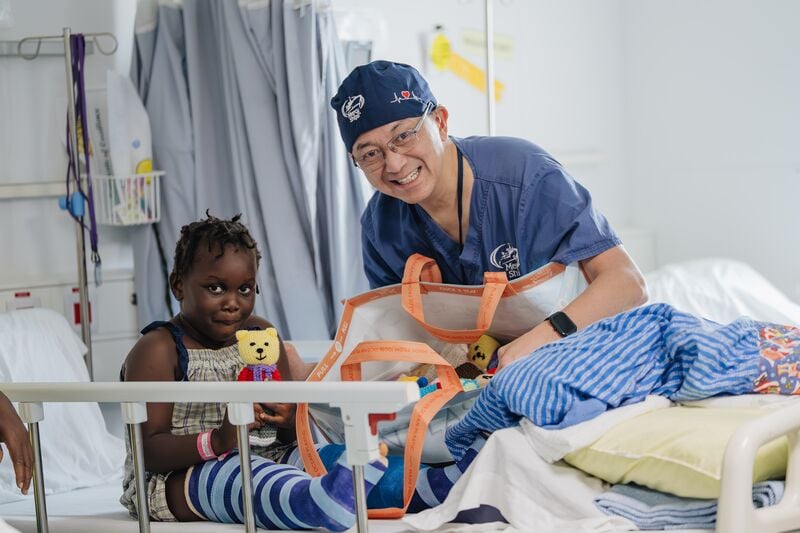
Your teenager or school leaver comes home one day and tells you they want to volunteer overseas. Specifically, they want to spend months aboard a hospital ship in West Africa, performing skilled work in some of the world’s most medically underserved communities. Your first instinct, understandably, is to ask: is volunteering abroad actually safe?
It’s a fair question, and this guide exists to answer it properly.
Mercy Ships is one of the most established and reputable volunteering charities operating internationally. Since 1978, the organisation has delivered free surgical care to countries that have little or no access to specialist medical treatment. The volunteers who make this possible range from retired surgeons to school leavers on a gap year, and the organisation has spent decades refining the systems that keep them safe, supported, and prepared. You can explore the full range of volunteer opportunities with Mercy Ships, from medical roles to general crew positions, to understand what your child would be joining.
This guide is written specifically for Australian parents. It works through the safety measures, security protocols, health provisions, and support structures that Mercy Ships has in place, so you can make an informed decision rather than an anxious one.
What Makes Mercy Ships Different from Other Volunteer Programmes?
Not all international volunteer programmes are created equal. The safety of young women volunteering abroad, the vetting of organisations, the level of pre-departure preparation, and the standard of ongoing supervision vary enormously across the sector. Many parents who start researching safe volunteer programmes for school leavers quickly discover that the difference between a well-run programme and a poorly organised one is significant. Our comprehensive guide to international volunteering for Australians works through exactly these differences in detail and is a useful companion to this article.
Mercy Ships sits at the top end of that spectrum. It is a vetted volunteer organisation with a clearly defined safeguarding policy, a rigorous application process, mandatory orientation, and a structured onboard community. Volunteers don’t arrive in a foreign country and find their own way. They step onto a purpose-built hospital ship with medical facilities, accommodation, security personnel, a chaplaincy team, and a community of several hundred international crew members. The environment is supervised, purposeful, and designed with volunteer welfare at its centre.
For parents weighing up safe international volunteering options for their children, this matters enormously.
Pre-Departure Safety Briefings and Training
Before any Australian volunteer boards a Mercy Ships vessel, they go through a thorough pre-departure process. This isn’t a formality. It’s a structured programme covering everything a young person needs to know before they leave home.
Pre-departure safety briefings include orientation on life aboard the ship, the medical and security protocols in place, and what to expect from the communities the ship serves. Volunteers learn the emergency procedures relevant to their role and receive specific security advice for the host country they’ll be working in. A full overview of the training courses required for Mercy Ships volunteers, including maritime safety, crowd management, and security awareness, is available on the Mercy Ships Australia website, and it’s worth reading before your child submits an application.
Volunteers are also registered with the Australian Government’s Smartraveller system, managed by the Department of Foreign Affairs and Trade, which provides an additional layer of support and consular protection while overseas.
Cultural sensitivity training is woven through this preparation. Volunteers headed to West Africa receive detailed briefings on local customs, social norms, communication styles, and community values. This isn’t just about being respectful, though that matters. It’s practical. A volunteer who understands the cultural context of the community they’re working in is a safer volunteer, less likely to misread situations or create friction through misunderstanding.
Vaccination requirements are also addressed well before departure. Depending on the host nation, volunteers may require Yellow Fever, Hepatitis A and B, Typhoid, and Tetanus boosters. Parents are advised to take their child to a travel medicine clinic in Australia at least eight weeks before departure to allow time for any multi-dose vaccination schedules to be completed.
A Trusted Organisation With Robust Safeguarding Policies
One of the first things parents should do when assessing any overseas volunteer programme is examine the safeguarding policies of the organisation. How does it vet its staff? What happens if something goes wrong? Is there a clear complaints process? Are there codes of conduct that everyone, including senior staff, must follow?
Mercy Ships takes safeguarding seriously. Every crew member, regardless of role or seniority, must complete safeguarding training and sign a Code of Conduct before joining the ship. Background checks are conducted for all volunteers, and Australians working in medical roles must have their registration verified with the Australian Health Practitioner Regulation Agency (AHPRA), the national body that governs medical and nursing registration in Australia. This vetting process applies not just to medical professionals but to all volunteer staff in positions that bring them into contact with patients or vulnerable people.
The organisation operates a zero-tolerance policy on harassment and abuse. This is not a statement sitting in a document somewhere. It is actively enforced through reporting structures, accountability frameworks, and a culture where appropriate conduct is both expected and modelled from the top. The Mercy Ships Australia volunteer FAQs address many common parent questions about vetting, background checks, and the Code of Conduct in plain language.
For parents concerned about the safety of young women volunteering abroad in particular, the structured living environment, shared accommodation supervised by gender, and the clearly defined community norms onboard provide a level of protection that independent travel simply cannot offer.
Onboard Security and the Safety of Hospital Ships
The Mercy Ships fleet operates as floating hospitals, and the security environment aboard these vessels reflects that. Advanced onboard security systems monitor and protect the ship at all times. Dedicated security personnel manage access to the vessel, oversee shore leave protocols, and maintain real-time awareness of the security situation in and around the host port.
When volunteers arrive on board, they receive a thorough security briefing covering what areas are accessible, how shore leave works, and what to do if a situation arises that requires immediate support. Volunteers travel to shore in groups, observe set curfews, and sign in and out when leaving or returning to the ship. Certain areas may be designated off-limits based on the current security assessment, and those assessments are updated regularly.
Mercy Ships does not operate in active conflict zones. Host nations are selected with careful consideration of both medical need and security stability. The organisation maintains close relationships with local governments and international embassies, and monitors the political and social climate in host countries on an ongoing basis. If a situation on land deteriorates, the ship has the unique capability to sail to international waters or an alternative port. This mobility is one of the practical safety advantages of volunteering on a hospital ship rather than in a fixed land-based location.
Health Protocols and Onboard Medical Facilities
The medical facilities aboard Mercy Ships vessels are genuinely world-class. The ships function as fully operational hospitals, equipped with surgical theatres, medical wards, intensive care units, and emergency treatment areas. These facilities exist primarily to treat patients, but they also mean that any volunteer who becomes unwell or is injured has immediate access to high-quality medical care without needing to be transferred to a local health facility.
This is not a minor consideration. One of the genuine risks of international volunteering in low-income countries is the variable quality of local healthcare. According to the World Health Organization, more than half of the world’s population lacks access to essential health services. For a volunteer on a Mercy Ships vessel, that risk is essentially removed. Trained medical staff are present around the clock, and the standard of care available onboard is well above what most host-country hospitals can provide.
Health protocols for volunteers go beyond treatment. Mercy Ships implements strict preventive health measures for conditions common in West African host nations. Malaria prophylaxis is mandatory, mosquito nets and repellents are provided, and the onboard medical team actively monitors crew health throughout the deployment. Volunteers are not left to manage their own health decisions in an unfamiliar environment. They are supported by professionals whose job includes keeping the crew as well as the patients in good health.
For parents whose child has a pre-existing health condition, it is worth having a direct conversation with the Mercy Ships Australia team before the application process goes too far. The organisation’s medical team will assess whether the deployment is suitable and what provisions would be needed.
Travel Insurance for Volunteers
Mercy Ships provides comprehensive travel insurance coverage for active volunteers. This policy covers medical care, accidents, and emergency evacuation and repatriation back to Australia if required. For parents, this is an important piece of the safety picture. Volunteer travel insurance of this type is specifically designed for the realities of humanitarian work in resource-limited settings, not just standard tourist travel scenarios.
Australian parents are also encouraged to check the current Smartraveller advisory for the host country their child will be working in. The Department of Foreign Affairs and Trade maintains updated travel advisories and provides a registration service that allows Australians overseas to be contacted by consular staff in an emergency. Mercy Ships coordinates closely with these international safety standards, and volunteers are expected to register their travel details before departing Australia.
Accommodation and Daily Life Aboard the Ship
Volunteers aboard Mercy Ships live in shared cabin accommodation. Cabins are climate-controlled and secure, with gender-separated arrangements for single volunteers. The living environment is communal in the same way a university residential college is communal. There is supervision, there are community standards, and there is genuine social connection between crew members from dozens of different countries. A full picture of what daily life on the ships looks like, including cabin arrangements, community activities, and onboard facilities, is covered on the Mercy Ships Australia website.
For young Australians on their first experience living away from home in an international setting, this structure is genuinely valuable. They are never isolated. The chaplaincy team provides pastoral and emotional support. Peer mentorship connects newer volunteers with experienced crew members who understand what the adjustment period involves. Organised social activities, including movie nights, sports, community dinners, and group shore excursions, ensure that the wellbeing of volunteers is actively supported alongside the demands of the work itself.
Mental health support is available throughout the deployment. Volunteer welfare and wellbeing is treated as a programme responsibility, not left to individuals to manage quietly on their own. The emotional demands of working in a medical environment with severely ill patients can be significant, especially for younger volunteers, and Mercy Ships has support structures in place to help people process those experiences constructively.
Staying in Contact with Your Child
One of the most common concerns parents raise is simply the ability to stay in touch. The ships are equipped with satellite internet and telephone services. Bandwidth can be limited depending on the location of the vessel at any given time, but most volunteers manage to maintain regular contact with family in Australia through email, messaging applications, and scheduled video or phone calls.
Volunteers generally find their own rhythm with this fairly quickly. The time difference between Australia and West Africa is manageable, and most families settle into a regular communication pattern within the first couple of weeks. It is worth setting expectations before departure rather than assuming daily contact will always be possible, particularly during busy operational periods.
The Day Crew and Community Engagement
Mercy Ships employs local residents from the host nation as Day Crew, working across a range of supporting roles on and around the ship. For Australian volunteers, interaction with the Day Crew is one of the more meaningful dimensions of the experience. It creates a supervised, structured form of cultural exchange that goes well beyond tourist-level contact with a country and its people.
This connection is one of the things that makes organised volunteer trips with Mercy Ships genuinely different from independent volunteering or gap year travel. The community-level relationships that develop through working alongside local staff, understanding the host nation’s healthcare challenges from the inside, and participating in a shared mission builds a kind of cultural competence that is difficult to acquire any other way. To understand how this community engagement model extends to families and children in the host nation, read about how Mercy Ships engages families and communities in children’s health.
What Australian Employers and Universities Think
For school leavers and young adults considering their options, Mercy Ships volunteering is well regarded by Australian employers and universities alike. It demonstrates resilience, adaptability, cross-cultural communication, and a commitment to humanitarian service. These are not qualities that show up on a standard part-time job reference.
From a practical standpoint, a Mercy Ships deployment also develops real skills: clinical skills for medical volunteers, logistics and operations experience for general crew, and leadership capabilities for those who take on supervisory roles. For Australian nurses in particular, our dedicated guide on what Australian nurses need to know before volunteering abroad with Mercy Ships outlines exactly how the experience maps to AHPRA registration requirements and professional development. For CVs in healthcare, international development, social work, or any field where global experience is valued, this kind of volunteer background stands out.
The Minimum Age and Application Process
The minimum age for independent volunteering with Mercy Ships is generally 18. This threshold ensures that school leavers have the maturity required for an international humanitarian mission, while still being part of a supervised, structured programme that provides appropriate support for younger volunteers navigating their first extended time away from home.
The application process involves background checks, personal references, skills assessment, and for Australians in clinical roles, verification of relevant professional registration. This process is not designed to be a barrier. It is designed to make sure that volunteers are genuinely suited to the placement, prepared for what they’ll encounter, and able to contribute meaningfully while being appropriately supported. For a full overview of roles available and how to begin the process, the Mercy Ships Australia volunteer opportunities page is the best starting point.
Parents who have questions about whether their child’s background, health history, or previous experience makes them suitable for a placement are encouraged to contact Mercy Ships Australia directly. The Queensland-based national office handles Australian enquiries and can walk families through the process before any formal application is submitted.
What Happens in a Crisis
The prospect of something going seriously wrong overseas is what keeps many parents awake at night, and it deserves a direct answer.
Mercy Ships has comprehensive crisis management protocols in place, regularly reviewed and updated. These cover medical emergencies that cannot be treated onboard, natural disasters, civil unrest, and security incidents. Volunteers receive crisis response training as part of their onboarding, so they understand their role and the procedures in place before any situation arises. The how to volunteer for an NGO medical charity that travels abroad article covers the full preparation process, including onboarding, background checks, and crisis readiness training in practical detail.
Because the hospital ship is a mobile vessel, it has options that land-based volunteer programmes do not. If the security situation at a host port deteriorates significantly, the ship can move. This is not a hypothetical. It is an operational capability that the organisation factors into its risk management, and it provides a meaningful layer of protection that is unique to this type of volunteering.
For parents, the best preparation is knowing who to call if they have an urgent concern from Australia. Mercy Ships Australia’s national office in Queensland is the first point of contact. Having that number saved before your child departs is a simple step that makes a real difference if you ever need it.
Final Thoughts …
Volunteering abroad is not risk-free, and any organisation that tells you otherwise is not being honest. But risk management is a spectrum, and Mercy Ships sits at the well-prepared end of it. The pre-departure training, onboard security, world-class medical facilities, safeguarding policies, structured community, and comprehensive travel insurance coverage combine to create an environment that is genuinely safer than many alternatives available to young Australians seeking international volunteer experience.
The question for most parents is not really whether Mercy Ships is safe. It’s whether they are ready to support their child in doing something genuinely challenging and meaningful. For families who get to that point, the next step is a conversation with Mercy Ships Australia, not another hour of online searching. Browse the current volunteer opportunities, read through the volunteer FAQs, and reach out to the team directly.
The organisation has answered these questions thousands of times before. They are good at it.
FAQs
What support is available for Australian volunteers on board?
Mercy Ships provides a dedicated chaplaincy team, peer mentorship, and a structured community of several hundred international volunteers. For young Australians, this communal living environment means they are never isolated and always have access to guidance, both practical and emotional. The life on the ships page gives a full picture of the onboard community and accommodation arrangements.
How does the organisation handle emergency medical situations?
Volunteers are aboard a state-of-the-art hospital ship with immediate access to specialist medical care and trained clinicians. For any serious condition that cannot be treated onboard, comprehensive evacuation and repatriation protocols are in place, including repatriation back to Australia.
Does Mercy Ships Australia provide travel insurance?
Yes. Mercy Ships typically provides a comprehensive insurance policy for active volunteers, generally covering medical care, accidents, and emergency evacuation. Australian parents should confirm the current policy details directly with Mercy Ships Australia before departure. The volunteer FAQs cover insurance, vaccination requirements, and other practical pre-departure questions in full.
Are there specific safety briefings before volunteers leave Australia?
All Australian volunteers undergo a thorough orientation and pre-departure briefing covering cultural sensitivity, onboard safety protocols, emergency procedures, and destination-specific security advice. The full range of mandatory training courses, including maritime safety and security awareness, is outlined on the Mercy Ships Australia website. Volunteers are also encouraged to register with the Smartraveller system before leaving Australia.
How can I stay in contact with my child while they are on the ship?
The ships are equipped with satellite internet and telephone services. Bandwidth can be limited at times, but most volunteers maintain regular contact with family through email, messaging apps, and scheduled calls. Setting realistic expectations before departure helps both sides adjust to the communication rhythm.
Does the Australian Government provide advice for these volunteers?
Parents should check the Smartraveller website, managed by the Department of Foreign Affairs and Trade. Mercy Ships coordinates with international safety standards, and volunteers are encouraged to register their travel details with the Australian Government before departure.
What is the minimum age for a Mercy Ships volunteer?
The minimum age for independent volunteering is generally 18. This ensures school leavers have the maturity required for an international mission while still being part of a supervised and structured programme. See the volunteer opportunities page for full eligibility details and current openings.
Are the locations where the ships dock dangerous?
Mercy Ships does not operate in active conflict zones. Host nations are chosen based on medical need and security stability, and the organisation works closely with local governments and international embassies to monitor the security environment daily.
What vaccinations does my child need before departing Australia?
Requirements vary by destination but commonly include Yellow Fever, Hepatitis A and B, Typhoid, and Tetanus. A travel medicine clinic consultation is recommended at least eight weeks before departure to allow time for any multi-dose schedules to be completed. The Smartraveller destination pages include country-specific health advice alongside the Department of Foreign Affairs and Trade’s travel advisories.
How are young volunteers protected from workplace harassment?
Mercy Ships operates a strict zero-tolerance policy on harassment and abuse. All crew must sign a Code of Conduct and complete safeguarding training before joining. This applies to all crew members regardless of seniority. Full details are outlined in the volunteer FAQs.
What is the Day Crew and will my child work with them?
The Day Crew consists of local residents from the host nation working in a range of supporting roles. This provides a supervised, structured way for Australian volunteers to build genuine relationships with local community members and develop real cross-cultural understanding. Read about how Mercy Ships engages families and communities to understand the depth of this community connection.
Can my child leave the ship to explore the local area?
Yes, within clearly defined protocols. Volunteers travel to shore in groups, observe curfews, and sign in and out. Certain areas may be designated off-limits based on current security assessments, which are updated regularly.
Is there a risk of contracting malaria or other local diseases?
The risk exists in many West African host nations. Mercy Ships manages this through mandatory prophylactic medication, the provision of mosquito nets and repellents, and active health monitoring by the onboard medical team throughout the deployment.
How does Mercy Ships vet its international staff?
All volunteers undergo background checks, provide personal references, and have their skills and suitability assessed. Australians in clinical roles must have their professional registration verified with AHPRA before they can be accepted.
What happens if political unrest occurs in the host country?
Mercy Ships has comprehensive crisis management and evacuation plans in place. As a mobile vessel, the ship can sail to international waters or an alternative port if the land-based security situation becomes untenable. This mobility is a genuine practical safety advantage.
Are there organised social activities for young adults?
Yes. Volunteer welfare and wellbeing is actively supported through social spaces and organised activities including movie nights, dock sports, community dinners, and group shore excursions. These help young Australians build friendships and manage the emotional demands of humanitarian work. See the life on the ships page for a full picture of the onboard community experience.
What kind of accommodation will my child have?
Volunteers live in shared, climate-controlled cabins, separated by gender for single volunteers. The living environment is supervised and community-oriented, similar to a university residential college. Full details on cabin types and onboard facilities are available on the life on the ships page.
How does volunteering with Mercy Ships look on an Australian CV?
It is highly regarded by Australian employers and universities. It demonstrates resilience, cross-cultural competence, adaptability, and a genuine commitment to humanitarian service. For nursing graduates specifically, our guide on becoming an international medical volunteer nurse outlines how the experience maps to professional registration and career development in Australia.
Who do I contact in Australia if I have an urgent concern?
Mercy Ships Australia’s national office is based in Queensland. Parents can contact the Australian support team during business hours for assistance or to discuss concerns about their child’s placement. The volunteer opportunities page includes contact details and links to the Australian recruitment team.
Recent Comments