
Global health is no longer a niche interest for idealistic graduates. It has become one of the most consequential fields in medicine, shaped by disease outbreaks, widening health inequities, and healthcare systems under pressure from climate change and population growth. For Australian medical students, this moment represents a real opening. The skills, values, and training developed here position Australians well to contribute abroad, particularly through medical missions and humanitarian work where demand for competent, culturally aware practitioners continues to outpace supply.
This article outlines what it takes to build a career in global health, what preparation looks like in practice, and where Australian students can start.
Why Choose a Career in Global Health?
The draw is rarely just professional. Most Australian medical students who move into global health do so because they want their skills to count in places where they are genuinely scarce. Working in humanitarian medicine means applying clinical knowledge in settings where the gap between care and no care is stark, and the impact of getting it right is immediate and visible.
That said, the career case is also strong. Experience in international health missions builds adaptability, diagnostic reasoning under constraint, and cross-cultural communication skills that translate directly back into Australian clinical practice. Whether students pursue volunteer medical work overseas, roles with NGOs, or structured international electives, they are investing in a professional profile that is increasingly valued across both public health and specialist medicine.
The Growing Importance of Global Health
Healthcare is interconnected in ways that make isolation impossible. An outbreak in West Africa, a maternal health crisis in the Pacific, or a surgical backlog in Southeast Asia all have ripple effects that extend well beyond their borders. Low-resource countries face compounding challenges: workforce shortages, inadequate infrastructure, and limited access to specialist care. According to The Lancet Commission on Global Surgery, five billion people lack access to safe, timely, and affordable surgery.
Australian medical students entering this field arrive at a point when the need has never been greater. International health missions, global surgical programs, and primary healthcare in remote settings all require practitioners who can function competently outside the comfortable systems most Australian graduates have trained within. The demand is real, and it is growing.
Volunteering and Electives Abroad: A Gateway to Global Health Careers
Medical electives in developing nations are one of the most direct pathways into global health work. They provide clinical exposure in under-resourced settings, where students must adapt quickly, work with limited diagnostics, and develop genuine cultural competence rather than a surface-level awareness of it.
The value of an overseas elective extends beyond clinical skills. Students who complete medical student electives abroad consistently report stronger problem-solving instincts, greater comfort with uncertainty, and a more grounded understanding of health as a social and political issue. Choosing placements in low-resource settings, whether in the Pacific, Africa, or Southeast Asia, gives students direct exposure to primary healthcare delivery in remote settings and equips them for the longer missions and NGO roles that often follow later in their careers.
Specialised Training for Medical Missions
Standard medical qualifications are a foundation, not a finish line, when it comes to mission-based work. Students serious about global surgical missions or disaster response medical training should begin pursuing additional preparation well before graduation.
Tropical medicine qualifications are one practical starting point. Training in aeromedical mission preparation, disaster triage, and remote area medicine builds the specific competencies that humanitarian healthcare pathways demand. Several Australian universities and colleges offer short courses or postgraduate programs in these areas, and many can be stacked gradually alongside a medical degree. The earlier students begin this preparation, the better positioned they are when applying for fellowships or international placements later.
The Role of Non-Governmental Organisations in Global Health Missions
NGOs are the primary vehicle through which most early-career practitioners access global health work. They provide structure, logistical support, and the kind of local partnerships that make short-term placements genuinely useful rather than extractive.
For Australian students interested in how to volunteer with a global medical NGO, the process generally begins with understanding what roles are available, what qualifications are required, and what the organisation’s mission actually entails. Not all NGOs are equal. The best ones invest in training local healthcare professionals, improve community health infrastructure, and operate in genuine partnership with host governments. These are the organisations that produce lasting change rather than dependency.
Building Intercultural Clinical Competence
Working effectively across cultures is a skill, and it requires active development. Intercultural clinical competence means more than being polite in unfamiliar settings. It means understanding how a patient’s cultural background shapes their experience of illness, their expectations of care, and their relationship to the healthcare system itself.
Australia’s cultural diversity is an asset here. Many students already have a foundation in cross-cultural communication, whether through multicultural communities, diverse clinical placements, or personal experience. But working abroad deepens this in ways that domestic experience cannot replicate. Language barriers, different consent frameworks, and varying family dynamics in clinical decision-making all require genuine flexibility. Students who develop these skills early adapt more quickly on missions and provide more effective care in the process.
Fellowships and Career Paths with the World Health Organisation
WHO fellowships offer Australian medical graduates a path into global health policy and large-scale program delivery. These programs place participants at the centre of international health initiatives, from disease surveillance and emergency response coordination to the development of health equity frameworks used across member states.
The pathway is competitive, but Australian institutions are increasingly connected to these international networks. Students who combine clinical experience, postgraduate study in global health, and demonstrated engagement with international health missions are the strongest candidates. DFAT’s health volunteering initiatives provide one early connection point for students interested in the intersection of Australian foreign policy and global health development.
Gaining Practical Experience through Australian Health Outreach Programs
Many Australian universities and medical schools run outreach programs with an international dimension, offering students hands-on exposure to clinical settings that differ significantly from metropolitan hospitals. Programs focused on tropical medicine qualifications, community health volunteering, and primary care in regional or remote communities all contribute to the preparation that international missions require.
Outreach programs within Australia, particularly those involving remote Indigenous communities, are also directly relevant. The principles of culturally safe care, working within under-resourced systems, and adapting clinical approaches to community context transfer directly to international settings. Students often underestimate this overlap. It is worth actively seeking out both.
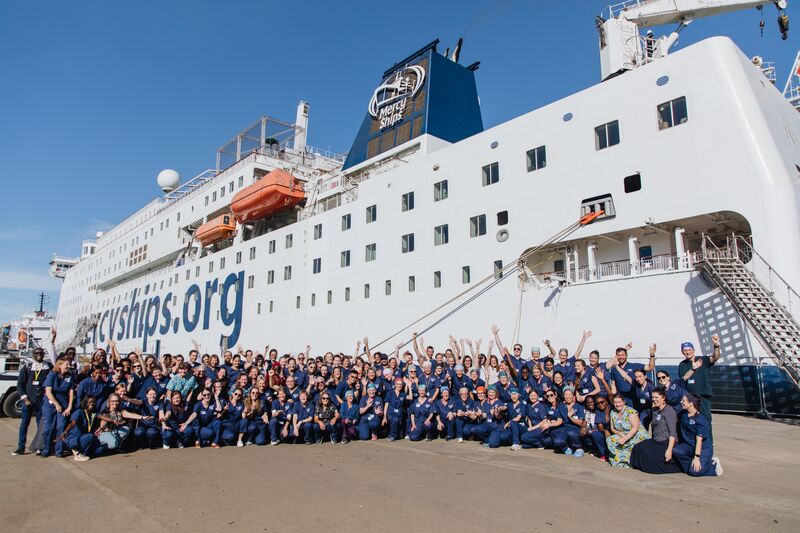
Mercy Ships Australia is one highly respected organisation where Australians can begin exploring how hospital ship missions integrate clinical work, community training, and long-term capacity building across West Africa and beyond.
The Growing Need for Healthcare Professionals in Remote Settings
Remote and under-resourced settings in developing nations face persistent healthcare shortfalls. Limited access to specialists, fragile infrastructure, and preventable disease burdens characterise both contexts. For Australian medical students, pursuing clinical placements in developing nations and investing in disaster response medical training builds a profile suited to exactly these environments.
Working in remote settings also sharpens skills that classroom and metropolitan hospital environments rarely test. Diagnostic reasoning without advanced imaging, managing multi-system complexity with limited pharmaceutical options, and motivating patients toward prevention when the barriers are structural rather than behavioural: these are all competencies that remote experience builds, and that global health careers demand.
Sustainable Health Development: The Key to Long-Term Impact
Short-term missions matter, but the best practitioners in global health think beyond the immediate intervention. Sustainable healthcare development means building systems and training local practitioners so that communities can manage their own health needs after external teams have left.
Australian students can contribute to this from early in their careers by prioritising placements and organisations that work this way. Teaching alongside treating, mentoring local health workers, and supporting infrastructure improvements that outlast a ship or a rotation cycle are all markers of sustainable practice. It is also, practically speaking, more effective. A community with trained practitioners and functioning facilities is more resilient than one that has received a sequence of well-intentioned short-term visits.
Finding Funding for Medical Missions
Funding is often the main obstacle between an Australian medical student and their first international placement. The good news is that options exist. Australian universities frequently offer travel grants and global health scholarships. Medical associations, including the Australian Medical Association and specialty colleges, run competitive funding rounds. Charitable foundations with a focus on international development are another avenue, though these require early research and careful applications.
Many NGOs provide volunteer placements who can commit to a minimum duration. Once a medical student is qualified Mercy Ships Australia offers overseas volunteer roles.
Future Prospects in Global Health Careers
The career outlook for Australian medical students in global health is strong. Emerging infectious diseases, climate-linked health challenges, and the ongoing burden of surgical disease in low-income countries all require a sustained international response from the medical community. Australia’s existing relationships with Pacific neighbours, its strong public health institutions, and its multicultural workforce create genuine opportunities for graduates with international experience to contribute both abroad and to domestic programs with a global dimension.
Students who complete clinical placements in developing nations, pursue humanitarian healthcare pathways, and build professional relationships within international health networks are well placed to move into roles with major global health organisations, Australian universities with global health programs, or medical specialist training with a cross-cultural focus. The work is demanding. It is also among the most professionally and personally significant a medical career can offer.
Where to Start
Building a career in global health missions does not require waiting until after graduation. Start by identifying elective opportunities with an international or remote focus. Research NGOs that align with your values and career interests. Look into tropical medicine short courses and disaster response training available through Australian institutions. Apply early for scholarships and funding rounds.
For students specifically interested in hospital ship missions, reviewing how to become an overseas medical volunteer doctor outlines the eligibility requirements, application steps, and preparation involved in joining an organisation like Mercy Ships. It is a clear, practical starting point for students who want to understand what this kind of commitment actually looks like on the ground.
The path into global health is built step by step. The students who enter it with clear purpose, solid preparation, and genuine openness to the unfamiliar are the ones who make the most of it.
FAQs
What is the definition of a global health mission for an Australian medical student?
A global health mission involves Australian medical students or healthcare professionals travelling to underserved regions to support clinical care, public health education, and sustainable healthcare development initiatives.
How can I find international medical elective opportunities through my Australian university?
Most Australian medical schools offer international elective pathways through clinical placement offices, university partnerships, or student organisations such as the Australian Medical Students’ Association.
Do I need special insurance for a medical mission as an Australian student?
Yes, you should confirm that both your professional indemnity insurance and travel insurance cover international clinical work and humanitarian placements.
What role does AMSA Global Health play in preparing students for missions?
AMSA Global Health supports Australian medical students through advocacy, educational resources, networking opportunities, and global health conferences focused on humanitarian medicine.
How does AHPRA registration work for Australian doctors on overseas missions?
Australian doctors must maintain their registration with AHPRA and continue meeting professional development requirements while participating in overseas missions.
What is the importance of cultural safety in Australian medical missions?
Cultural safety ensures healthcare is delivered respectfully and appropriately by recognising local customs, beliefs, and community expectations within international healthcare settings.
What is the Australian Medical Assistance Team (AUSMAT)?
AUSMAT is an Australian government-supported emergency medical response team deployed internationally during disasters, disease outbreaks, and humanitarian crises.
Do I need a specific visa to participate in a medical mission from Australia?
Most countries require a volunteer, humanitarian, or work visa depending on the mission type and destination country regulations.
What clinical skills should I prioritise for a career in global health?
Emergency medicine, infectious diseases, paediatrics, obstetrics, and public health are highly valuable clinical areas for international healthcare work.
What is the impact of climate change on the future of global health in Australia?
Climate change is increasing regional health challenges, including heat-related illness, infectious disease spread, food insecurity, and disaster-related healthcare pressures.
Are there postgraduate courses in Australia for humanitarian medicine?
Yes, several Australian universities offer postgraduate programmes in global health, tropical medicine, and public health for healthcare professionals interested in humanitarian work.
Are there opportunities for Australian medical students to engage in global health research?
Many Australian universities support student involvement in research projects focused on infectious diseases, healthcare equity, and international public health systems.
What vaccinations are required for Australian medical professionals going abroad?
Required vaccinations depend on the destination but commonly include Hepatitis A, Hepatitis B, Typhoid, and Yellow Fever alongside routine Australian immunisations.
How do Australian NGOs support the mental health of mission volunteers?
Many organisations provide mental health preparation, peer support, counselling access, and structured debriefing programmes before, during, and after overseas placements.
Recent Comments