
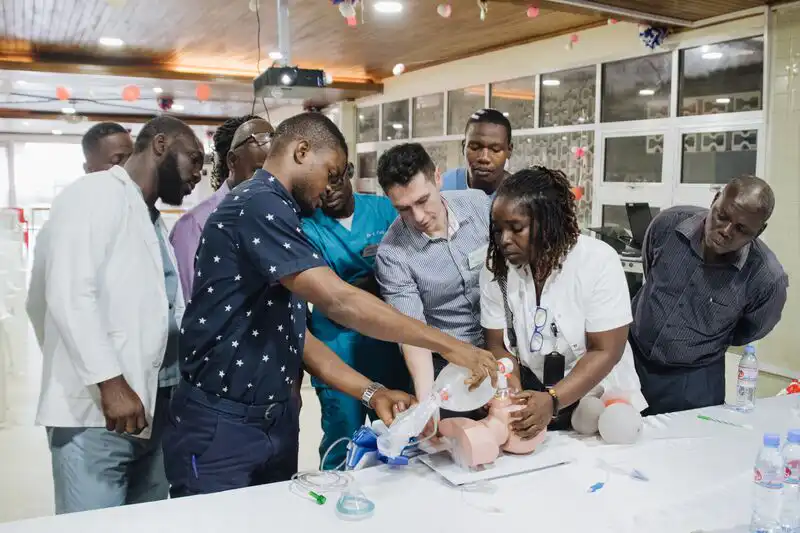
When we think about donating to charity, it’s easy to imagine providing food, shelter, or emergency medical care. However, one of the most impactful ways to contribute to global health is by donating for medical training. Mercy Ships, a maritime hospital charity, combines immediate healthcare relief with essential medical education, empowering local professionals to provide sustainable care. By training healthcare workers in underserved areas, Mercy Ships helps create a lasting legacy of improved healthcare systems, far beyond the ship’s visit.
In this article, we’ll explore how donating to medical education supports Mercy Ships’ mission and how these donations directly contribute to medical training funding. Your support helps local healthcare workers acquire the skills needed to tackle pressing health challenges in their communities, creating a cycle of sustainable healthcare development. With your help, Mercy Ships can continue to train the next generation of healthcare professionals, ensuring a long-term positive impact on global health.
The Power of Donating to Medical Training
Donating to fund essential medical training is a powerful way to create lasting change in global healthcare. While many organisations focus on providing immediate medical aid, Mercy Ships offers a unique approach by investing in the education and training of local healthcare professionals. This enables them to deliver sustained healthcare improvements within their communities, long after the ship has left. Through training, these professionals gain the skills and confidence to address local health challenges effectively.
Supporting medical capacity building means investing in the development of clinical skills and surgical expertise in regions where there is a shortage of trained professionals. These donations not only provide short-term relief but also help establish a robust healthcare infrastructure that can support future generations. By empowering local healthcare workers with the knowledge and tools they need, your donation helps lay the foundation for a stronger, more self-sufficient healthcare system, ensuring better care for those who need it most.
Mercy Ships: A Lifeline for Global Healthcare
Mercy Ships operates floating hospitals that provide essential healthcare services, including life-saving surgeries and dental care, in some of the world’s most underserved regions. These ships are equipped with advanced medical facilities, offering free treatments to those who would otherwise have no access to critical care. Beyond immediate relief, Mercy Ships also focuses on long-term solutions, particularly through medical education and training.
The Role of Ship-Based Medical Training
Mercy Ships provides training for local health care workers in a wide range of areas, such as advanced surgical techniques, patient care practices, and clinical management. The ability to learn in this setting allows healthcare workers to develop expertise that is directly transferable to their local healthcare systems.
For countries with limited access to modern medical facilities, this form of offshore medical education is invaluable. It enables healthcare professionals to receive world-class training that may otherwise be unavailable in their home countries. By learning alongside experienced mentors and using state-of-the-art equipment, these workers gain the expertise needed to improve healthcare delivery in underserved regions. This approach not only elevates local healthcare standards but also creates a lasting impact on the broader medical community.
Why Funding Medical Training in Africa Is Crucial
One of the primary focuses of Mercy Ships is medical training support in Africa, a region where healthcare systems often face immense challenges. With limited resources and a shortage of trained medical professionals, many African countries struggle to provide adequate healthcare to their populations. By funding medical training, you contribute directly to strengthening healthcare systems, enabling local professionals to deliver better care in underserved areas.
The Ripple Effect of Donations on Local Healthcare Systems
Donating to healthcare education offshore creates a ripple effect that extends well beyond the initial training. When healthcare professionals receive training on Mercy Ships, they return to their communities with new knowledge and skills, sharing them with colleagues and mentees. This sharing of expertise raises the overall standard of care in their local healthcare systems, creating a lasting impact on patient outcomes. By investing in this type of education, donors contribute to a continuous cycle of growth, where each generation of healthcare professionals is better equipped to serve their communities.
The ripple effect also empowers communities to become more self-sufficient in healthcare. As trained professionals mentor others, they strengthen the local healthcare workforce, which in turn enhances the healthcare infrastructure. This sustainable impact leads to improved medical care, even in the absence of external support. By donating to charity training programmes, you are supporting a model of healthcare education that creates long-term, transformative change.
Empowering Local Healthcare Professionals
Many healthcare workers in developing countries face immense challenges, from limited access to resources to inadequate training opportunities. These obstacles often prevent them from providing the high-quality care their communities desperately need. By supporting Mercy Ships’ fundraising efforts, you are directly contributing to life-saving training donations that allow local healthcare professionals to enhance their skills and knowledge. This support provides them with the necessary tools to overcome challenges and deliver better care to their patients.
Investing in the training of nurses and doctors in Africa helps create a ripple effect of improvement within the healthcare system. When healthcare professionals receive proper education and hands-on training, they are better equipped to address local health issues and mentor others, building a strong, sustainable healthcare workforce. By empowering these professionals, you are fostering a culture of healthcare excellence that benefits entire communities, ensuring a lasting and positive impact on the region’s overall health system.
A Holistic Approach to Healthcare Development
Mercy Ships’ mission extends beyond providing immediate medical care. It focuses on building long-term healthcare solutions by empowering local professionals with the skills and resources needed to sustain healthcare systems. By donating to surgical training and subsidising medical tuition, you contribute to developing self-sufficient healthcare infrastructure in regions that often lack access to trained personnel and essential resources.
This holistic approach ensures that healthcare systems in developing countries can function independently, offering quality care to local populations without relying on external aid. By strengthening local healthcare education and training, Mercy Ships helps create a ripple effect, enabling communities to thrive with improved medical expertise and better healthcare delivery. This model of sustainable healthcare development is crucial for making a lasting impact and improving health outcomes in underdeveloped regions.
The Role of Medical Training in Global Health
The role of medical training in global health cannot be overstated. In many parts of the world, particularly in low-income regions, access to quality medical education is severely limited. Without trained medical professionals, healthcare systems struggle to meet the needs of their populations, often leading to poor health outcomes and inadequate care. Supporting initiatives that focus on developing the skills of healthcare workers is critical to ensuring that these communities have access to skilled medical professionals who can make a tangible impact.
How Your Donation Can Transform Lives
Every donation to Mercy Ships has a profound impact on the lives of healthcare professionals and the communities they serve. By contributing to medical education, you help provide essential training and life-saving medical tuition for those who would otherwise lack access to such opportunities. Your support ensures that local healthcare workers can enhance their skills and continue providing quality care, addressing critical health needs in underserved regions.
Additionally, your donation plays a key role in sustaining Mercy Ships’ ship-based medical relief efforts. These floating hospitals not only deliver immediate medical care but also offer healthcare professionals the chance to gain invaluable hands-on experience in real-world settings. The training they receive on board enables them to return to their communities with enhanced skills, ready to make a lasting difference in patient care and medical services. Through your generosity, you are helping to create a legacy of skilled healthcare professionals who will continue to transform lives for years to come.
The Lasting Impact of Supporting Medical Training
The impact of donating to medical education extends far beyond the immediate provision of care. While Mercy Ships offer crucial medical services in the short term, your contributions to training local healthcare professionals ensure that they are equipped with the necessary skills to continue this important work once the ship departs. By supporting surgical training programmes, medical scholarships, and funding for medical residencies, you help empower healthcare workers to serve their communities with the knowledge and expertise they need.
Your donation plays a pivotal role in building a sustainable foundation for healthcare improvements in underserved regions. By investing in the education of healthcare workers, you contribute to a lasting legacy of quality care and community empowerment. This ongoing support ensures that future generations of healthcare professionals are trained and ready to tackle the challenges they face, improving the overall health and well-being of their communities for years to come.
Final Thoughts …
Mercy Ships is doing more than providing temporary medical care, they are investing in the future of healthcare. By donating to fund medical training and support healthcare education offshore, you are playing a vital role in shaping the next generation of skilled medical professionals.
Medical capacity building is the key to creating self-sustaining healthcare systems in regions where trained professionals are in short supply. By empowering local healthcare workers with the tools, skills, and knowledge they need, you’re contributing to lasting change.
Whether you choose to support surgeon training, nurse development, or global health education, your donation helps strengthen healthcare worldwide. Join Mercy Ships in their mission to transform healthcare in some of the world’s most underserved regions. Together, we can create a future where quality healthcare is accessible to all.
FAQs
How does my donation specifically fund medical training by Mercy Ships?
Your donation helps cover the costs of on-board and land-based medical education, including surgical mentoring, specialist workshops, and essential clinical training for local healthcare professionals.
What kind of medical training does Mercy Ships provide in host countries?
Training focuses on practical, hands-on instruction for surgeons, anaesthetists, nurses, and other healthcare staff, promoting safe surgical practices tailored to low-resource environments.
Why is funding medical training as important as providing free surgery?
While free surgery offers immediate care, training builds long-term capacity, enabling local professionals to continue delivering safe surgery long after the ship departs.
Which regions benefit from the essential medical training funded by donations?
Mercy Ships primarily operates in sub-Saharan Africa, where access to safe surgical care is limited and medical workforce development is most urgently needed.
Are the Mercy Ships training programmes accredited or recognised?
Yes, many programmes are developed in partnership with health ministries, universities, and global medical institutions, often recognised within the host nation’s healthcare system.
How does Mercy Ships ensure the training has a long-term impact?
The charity focuses on mentoring and ‘training the trainers’ to ensure sustainable knowledge transfer and continued skill development within local health systems.
What types of surgical specialities are covered in the training?
Training covers general surgery, orthopaedics, maxillofacial, ophthalmology, and obstetrics—disciplines that address the most pressing surgical needs in developing countries.
Can I specifically donate to a fund for a medical student or professional?
General donations support all programmes, but certain fundraising campaigns may allow you to sponsor specific training initiatives or participant scholarships.
Is Mercy Ships an international aid charity or a healthcare charity?
Mercy Ships operates as both—delivering free surgery while also strengthening local healthcare capacity through education and infrastructure support.
How does the ‘floating hospital’ facilitate surgical education?
The hospital ship provides modern theatres and classrooms, allowing trainees to observe and participate in live procedures under expert supervision.
Does Mercy Ships only train surgeons?
No, training includes operating theatre nurses, anaesthesia providers, biomedical technicians, and community health educators to ensure a complete surgical care ecosystem.
How is the need for specific training programmes identified?
Mercy Ships collaborates with each host nation’s Ministry of Health to assess gaps in clinical skills and design training that addresses national healthcare priorities.
What is ‘medical capacity building’ in the context of Mercy Ships?
It’s the long-term process of strengthening a country’s ability to deliver its own healthcare through education, mentoring, infrastructure, and equipment donations.
Where does the term ‘Beyond the Operating Theatre’ come from in the article?
It reflects the charity’s broader mission—impacting lives beyond surgery by investing in lasting education, skill-sharing, and healthcare development.
Are my donations to Mercy Ships tax-deductible in Australia?
Yes, donations made through Mercy Ships Australia are tax-deductible as the organisation holds Deductible Gift Recipient (DGR) status with the ATO.
How can I ensure my donation is used efficiently for training?
Mercy Ships pools donations to maximise impact and maintain transparency, directing funds toward core training operations and medical education delivery.
What is the cost of training a local medical professional through Mercy Ships?
Costs vary depending on the course and duration, but all donations help offset tuition, materials, and resource expenses for participants.
Do the local professionals receive certification upon completing the training?
Yes, participants typically receive formal certificates or recognised proof of completion that enhance their professional qualifications.
What are the biggest challenges Mercy Ships faces in providing medical training?
Challenges include limited infrastructure, supply shortages, and the ongoing need for sustainable funding and expert volunteer educators.
Can businesses or organisations partner with Mercy Ships to fund training?
Yes, corporate partnerships play a major role in financing training programmes and expanding Mercy Ships’ global capacity-building initiatives.
Recent Comments