
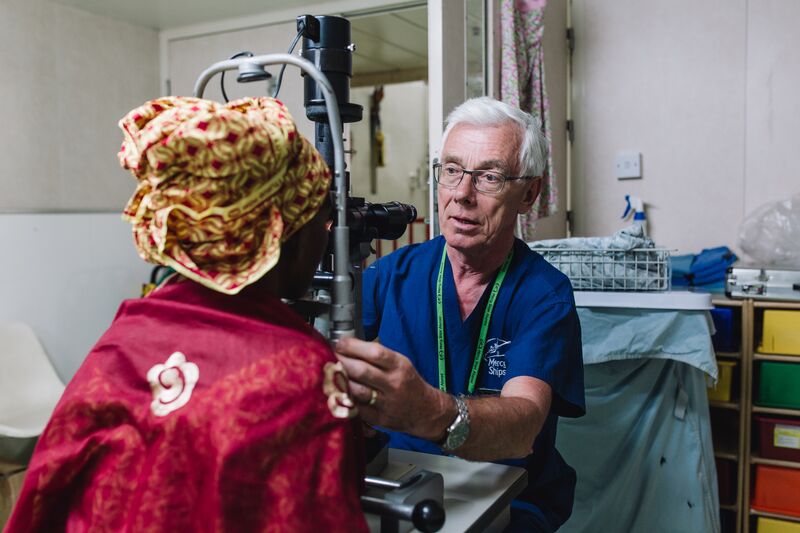
Millions of people wake up every day unable to see their own children clearly, cross a road safely, or read a letter, and in most cases the cause is something surgeons fixed decades ago in wealthier countries. World Sight Day exists to put that gap in front of the public, and nowhere is the gap wider than across Africa, where cataracts remain one of the leading causes of blindness even though the surgery to treat them takes roughly twenty minutes and can restore useful sight almost immediately.
The problem isn’t medical knowledge. Surgeons have understood how to remove a clouded lens and replace it with a clear artificial one for generations. What’s missing in large parts of sub-Saharan Africa is everything that has to surround that operation: money, transport, trained staff, functioning theatres and a health system that can find patients before they’ve been blind for years.
Australians have a genuine stake in this story. Local clinicians, businesses, donors and volunteers have backed eye care programmes in Africa and other low-resource regions for years, often through organisations such as Mercy Ships Australia. Understanding why cataract blindness persists, despite being one of the most treatable conditions in medicine, explains why that support matters and where it does the most good.
What World Sight Day Means
World Sight Day is a global awareness day coordinated by the International Agency for the Prevention of Blindness (IAPB). It’s happening in 2026 on Thursday October the 8th (it’s every year on the second Thursday of the month of October). It exists to push eye health onto the public agenda, encouraging governments, health services, businesses and ordinary people to treat sight as something worth protecting, regardless of a person’s income or postcode.
The 2026 campaign puts patients’ own stories at the centre, alongside a call for governments and donors to fund services people can actually reach. It also gives clinicians, policymakers and charities a shared moment to argue for stronger investment in screening, surgery and follow-up care rather than one-off missions.
Awareness days don’t fix broken health systems on their own, but they do shift what gets funded. A well-run World Sight Day campaign can lift screening numbers, put political pressure on health ministries and give families the confidence to seek treatment instead of assuming nothing can be done.
Why It Matters Across Africa
The World Health Organisation’s African regional office estimates that roughly twenty-six million people across the region live with some degree of vision impairment, and a large share of those cases are preventable or treatable. That single figure captures why World Sight Day Africa campaigns carry more weight here than almost anywhere else.
Cataracts sit at the centre of that burden. Age-related cataracts are the most common cause worldwide, but the difference between Australia and much of Africa isn’t how often cataracts occur. It’s how quickly they get treated. In Australia, cataract blindness is now rare because surgery is accessible. Across large parts of Africa, it remains one of the biggest drivers of avoidable vision loss, precisely because access to timely surgery is so uneven.
For health ministries and international partners, World Sight Day is a chance to check whether eye care is properly built into national health planning, rather than treated as a side project run by visiting missions. For families, it’s often the first time they hear that a parent’s fading eyesight has a name, a cause and a fix.
Understanding Cataracts
A cataract forms when the lens inside the eye, normally clear, becomes cloudy. That clouding scatters and blocks light before it reaches the retina, so vision gets progressively blurred, dim or glary. People often notice it first through faded colours, difficulty reading, poor night vision or trouble recognising faces across a room.
Most cases are age-related, though injury, certain illnesses and some childhood conditions can also cause cataracts. Because the condition usually develops slowly, many people quietly adjust their lives around worsening sight long before anyone calls it a medical problem. A grandmother might simply stop walking to the market alone. A farmer might hand off tasks he can no longer see well enough to do.
That slow progression is dangerous in places where eye examinations aren’t routine. Clouded vision can go undiagnosed for years, especially where the nearest clinic is hours away and every visit competes with the cost of food, transport or a day’s lost wages. By the time someone is finally examined, their sight may already be severely reduced, and simple daily tasks such as cooking, farming or caring for children become genuinely unsafe.
Why Cataract Blindness Can Be Reversed
Cataract-related blindness is often described as reversible, and for good reason. Surgery removes the clouded natural lens and replaces it with a clear artificial one, a procedure that’s been refined and standardised for decades. Done properly, with the right assessment, a sterile theatre and follow-up care, it restores meaningful vision to the vast majority of patients.
The World Health Organisation names cataract as the single largest cause of blindness worldwide, and surgery as the standard, proven fix. That’s precisely why cataract treatment in Africa is considered one of the clearest wins available in global health: the intervention is simple, well understood and comparatively cheap, yet it’s still out of reach for millions.
Calling it “curable” shouldn’t make it sound easy, though. Patients still need an accurate diagnosis, a properly equipped theatre, a trained surgical team and someone checking in afterwards. Skip any one of those and a routine operation can turn into a complication nobody wanted.
The Scale of Vision Loss Across the Continent
Recent WHO reporting puts Africa’s unmet need for cataract surgery higher than any other region, with effective surgical coverage still well below the level required to bring avoidable blindness down to negligible levels. The cataract crisis Africa faces isn’t really a medical mystery. It’s an access problem, and access problems are solvable with the right combination of funding, training and infrastructure.
Why Surgery Still Remains Out of Reach
Cataract surgery barriers rarely show up alone. A patient might be weighing a full day’s travel, a consultation fee, fear of an unfamiliar procedure and uncertainty about who’ll look after the farm or the children while they’re away, all at the same time. Hospitals, for their part, may be dealing with long waiting lists, patchy staffing or equipment that’s out of service more often than it’s working.
Fixing this means treating the whole patient journey as one system, not a single operation. Awareness, diagnosis, referral, surgery, follow-up review and, often, a pair of glasses afterwards all need to connect. An operation with no reliable path back to a follow-up appointment can leave a patient only partly helped.
Distance and Transport Barriers
Rural healthcare access across sub-Saharan Africa sits at the heart of the problem. Many people live hours from the nearest eye clinic, and getting there can mean an expensive, unreliable or physically gruelling trip, especially for someone whose sight is already failing. A family member usually has to travel too, which means lost wages or someone missing school on top of everything else.
Mobile eye clinics and scheduled outreach visits help close that gap, but only when they’re tied to a permanent facility rather than run as one-off events. Rural vision care improves fastest when screening, referral and surgery are treated as one continuous service rather than separate, disconnected activities.
Cost, Poverty and Delayed Treatment
The cost of cataract surgery in Africa is rarely just the hospital’s fee. Add transport, food, accommodation near the hospital, medication and days of lost income, and a technically affordable operation can feel entirely out of reach for a household already stretched thin.
That’s how poverty and blindness in Africa end up reinforcing each other. Losing sight cuts into a person’s ability to earn, while reduced income makes the surgery that would fix it even harder to afford. Subsidised care, transparent pricing, transport support and efficient local services are what break that cycle, not goodwill alone.
The Shortage of Eye Health Professionals
An ophthalmologist shortage in Africa limits both diagnosis and surgical capacity, and the gap is worst outside the major cities. But surgeons are only part of the workforce. Ophthalmic nurses, optometrists, technicians, anaesthesia providers and clinic managers all have to be in place for a cataract programme to actually function day to day.
Expanding cataract surgery Africa programs takes more than flying in visiting specialists for a fortnight. It takes sustained ophthalmic surgery training, ongoing supervision and career paths that give skilled local staff a reason to stay in the regions that need them most, rather than moving to a capital city or overseas. Organisations supporting surgical training programs in the region have found that trained local teams keep multiplying their impact long after any single mission ends, because experienced staff go on to train the next group themselves.
Infrastructure and Equipment Gaps
Reliable ophthalmic care depends on unglamorous things: working theatres, sterilisation equipment, a stable power supply, clean water, functioning supply chains and decent patient records. If any one of those breaks down, surgical volume and quality both suffer.
Low-resource eye care solutions have to be built for local conditions, not simply donated and left. Handing over sophisticated equipment with no maintenance plan, no spare parts and no one trained to fix it tends to deliver a few months of use and then a storeroom full of dead machines. Sustainable investment covers the whole chain: procurement, biomedical support, staff training, infection control and dependable follow-up, so local teams can keep operating without waiting for the next visiting mission.
Nigeria: A Case in Point
Nigeria is worth a closer look because its scale and diversity, huge cities, regional centres, remote villages, show just how uneven eye care can be distributed even within a single country. Access varies enormously depending on where a patient lives and what they can afford.
Nigeria’s experience shouldn’t be read as a template for the whole continent. Health systems, funding and surgery barriers differ from country to country, sometimes from province to province. What Nigeria does demonstrate clearly is that national commitments to eye health only matter if they translate into services patients can actually reach, which means stronger referral pathways, affordable surgery and workforce investment on the ground, not just policy documents in a capital city.
The Toll on Families and Communities
Untreated cataracts cost far more than eyesight. Losing the ability to move around confidently, work, or take part in community life often pushes a person into isolation, and relatives frequently cut back their own work or schooling to provide care.
That’s the socioeconomic impact of blindness in Africa in practice. A farmer can no longer safely work his own fields. A grandmother can’t watch her grandchildren while their parents earn a living. A teenager stays home from school to guide an ageing relative to appointments. Restoring sight through surgery reverses a good chunk of that burden almost overnight, handing people back their independence and, often, their income.
Women and Unequal Access
Women frequently face extra barriers to cataract care tied to income, household duties, mobility and who gets to make decisions about spending. The WHO has reported lower rates of access to cataract surgery among women across several global regions, and Africa is no exception.
Closing that gap isn’t a matter of good intentions. It requires services designed around how women actually live: outreach that comes to them, clear information, safe transport, flexible appointment times and support for whoever accompanies them. Universal eye health coverage means nothing if half the population is structurally less likely to receive it, so programmes need to collect the data that shows where women are being left behind and adjust accordingly.
Children and Paediatric Cataracts
Cataracts are usually associated with older age, but children can be born with them or develop them early in life. Paediatric cataract surgery needs careful timing, specialist assessment and ongoing visual rehabilitation, because a delay can interfere with how a child’s brain learns to process visual information at all, not just with their eyesight.
Parents, teachers and community health workers all need to recognise the warning signs, an unusual appearance in the eye, poor visual behaviour, or a child struggling to learn in ways that don’t fit the obvious explanations. Clear referral pathways matter just as much here as they do for adults, arguably more, given how much is at stake for a child’s development.
Community Screening and Referral
Community eye health programs catch people who’d otherwise stay outside the formal health system entirely. Screening in villages, schools, workplaces and primary care clinics can flag clouded vision early and route people towards proper assessment before it worsens.
Screening only works when it leads somewhere. A list of suspected cataract cases with no follow-up appointment or transport support helps nobody. The strongest community-based eye care programmes pair local trust with clinical rigour: community health workers, local leaders and former patients explaining that cataracts are treatable and helping people get past the fear of surgery, while quality standards are held firm throughout assessment, operation and recovery.
Mobile Clinics and Surgical Outreach
Mobile eye clinics bring examinations and basic services within reach of remote communities, and well-planned surgical outreach can genuinely expand access when it’s properly equipped and tied to a local hospital. The strongest outreach programmes build lasting referral networks with local health authorities rather than parachuting in and leaving nothing behind.
Outreach still needs the same pre-operative checks, infection control and post-operative review as any hospital-based surgery. Done well, it feeds into a long-term regional plan for eye care. Done poorly, it just creates dependence on the next visiting team turning up.
Training Local Capacity
Eye health workforce development is probably the single most sustainable answer to the African cataract surgery challenge. Training local surgeons and multidisciplinary teams increases how many patients can be treated while building expertise that stays inside the health system long after outside partners have moved on.
The best training partnerships combine mentoring, clinical supervision and quality monitoring with the equipment and steady patient flow that make training worthwhile in the first place. When local teams have both the skills and the authority to run their own services, sight restoration becomes an ongoing part of the health system rather than a campaign that ends when the visiting team flies home. Australian and international partners are most useful providing technical expertise and funding, while local institutions set the priorities and lead delivery.
Integrated, People-Centred Eye Care
Integrated people-centred eye care treats the patient as more than a single operation. Instead of running cataract surgery as an isolated activity, it connects eye care with primary healthcare, diabetes management, ageing support, rehabilitation and community education, all things that often affect the same patient at once.
That kind of joined-up thinking makes early detection more likely and referral pathways easier for ordinary people to navigate. The WHO recommends folding eye care into broader health systems for exactly this reason: patients rarely have just one health issue, and treating them as if they do wastes chances to catch problems early. Accessible eye services work best when they’re coordinated, respectful of local culture and built around how communities actually seek care, not how a health system assumes they should.
Australia’s Part in Sustainable Eye Care
Australia has a genuine, ongoing connection to global blindness prevention. Local clinicians, ophthalmic technicians and support staff have volunteered on hospital ships and in partner hospitals across Africa for years, and Australian donors fund the training, equipment and outreach that keep those services running.
Australians looking to help don’t need to choose between funding an individual operation and supporting the wider system. The most useful contribution is usually the one that builds lasting capacity: backing local training, ophthalmic outreach, research and services designed to keep running long after the initial funding round ends. Understanding why Mercy Ships focuses so heavily on Africa helps explain where that kind of support goes furthest.
A Clear Takeaway
Asking what World Sight Day is really points to a bigger question: what happens after the campaign ends and the attention moves on? Cataract blindness in Africa persists not because the medicine is unsolved, but because distance, cost, workforce shortages and fragile infrastructure keep getting in the way of a fix that already works.
The encouraging part is that none of the solutions are mysterious. Community screening, mobile clinics, local surgical training, affordable care and joined-up health services all reduce avoidable vision loss when they’re funded properly and run for the long haul. If you’re looking to support that work, the clearest place to start is backing programmes that train local staff and build lasting services, rather than one-off surgical trips, because that’s what turns a single World Sight Day into decades of restored sight.
FAQs
What is World Sight Day and when is it observed?
World Sight Day is an annual global day of awareness held on the second Thursday of October. Coordinated by the International Agency for the Prevention of Blindness (IAPB) alongside organisations like Vision 2020 Australia, the day focuses attention on blind and vision-impaired individuals, promoting universal eye health and sight restoration programmes worldwide.
What is the primary cause of avoidable blindness in Africa?
Cataracts remain the leading cause of preventable blindness across sub-Saharan Africa. Although a cataract can be cured with a straightforward 20-minute surgical procedure, millions of people remain needlessly blind due to severe shortages of ophthalmic surgeons, limited healthcare infrastructure, and financial barriers.
Why is cataract blindness still considered a crisis in sub-Saharan Africa?
The crisis persists because the rate of cataract surgery in sub-Saharan Africa remains among the lowest in the world. Rapidly ageing populations, poverty, lack of local medical training facilities, and geographic isolation mean millions cannot access or afford basic sight-saving treatments.
How does cataract blindness impact economic development in African nations?
When an adult loses their vision to cataracts, they often lose their ability to work and support their family. Furthermore, family members—frequently young girls—are forced to leave school or employment to act as full-time carers. This cycle deepens community poverty and reduces economic productivity across entire regions.
Can cataracts be cured, and what does treatment involve?
Yes, cataracts are entirely reversible. Treatment involves a brief surgical procedure where the clouded natural lens of the eye is removed and replaced with a clear artificial intraocular lens (IOL). This restores normal vision almost immediately.
How much does cataract surgery typically cost in low-resource African settings?
Thanks to manufacturing innovations pioneered by Australian humanitarian efforts and global health partners, the consumable cost of an intraocular lens and basic surgical supplies can be as low as AUD $25 to $50. However, the true cost often involves training surgeons, building clinics, and providing outreach services to rural communities.
Why is there a shortage of ophthalmologists in rural Africa?
Many African nations face a severe deficit of trained eye specialists, with some countries having fewer than one ophthalmologist per million people. Training facilities are scarce, and many qualified specialists are concentrated in major urban centres, leaving rural populations without access to surgical care.
What are mobile eye clinics and how do they help in remote African regions?
Mobile eye clinics are outreach units equipped with surgical equipment and medical teams that travel to isolated villages. They perform screenings, distribute spectacles, and carry out cataract surgeries on-site, bringing critical care directly to populations unable to travel to urban hospitals.
How does gender disparity affect cataract treatment in Africa?
Women in sub-Saharan Africa account for a disproportionate percentage of blind individuals. Financial dependence, domestic responsibilities, and cultural barriers often prevent women from seeking or receiving medical treatment as quickly as men, making gender-equitable eye care a key priority for Australian aid partners.
What is the difference between a cataract and other eye diseases like trachoma?
A cataract is the clouding of the natural crystalline lens inside the eye, whereas trachoma is an infectious bacterial eye disease that causes scarring on the inner eyelid, leading to inverted eyelashes that scratch the cornea. Both cause avoidable blindness, but cataracts require surgical lens replacement while early trachoma is treated with antibiotics.
How does cataract blindness in Africa compare to vision loss in Australia?
In Australia, high-quality cataract surgery is readily available through the public healthcare system and private providers, meaning blinding cataracts are rare. In sub-Saharan Africa, a lack of accessible healthcare means cataracts are frequently left untreated, progressing to complete blindness.
What is paediatric cataract surgery and why is it particularly urgent?
Paediatric cataracts affect infants and young children. Urgent surgical intervention is critical because a child’s visual system is still developing; if the clouded lens is not removed early, the brain may never learn to interpret visual signals, resulting in permanent, irreversible vision loss even if operated on later in life.
What is the Vision 2020 initiative and how does Australia contribute?
Vision 2020: The Right to Sight was a global initiative launched by the International Agency for the Prevention of Blindness and the World Health Organisation to eliminate avoidable blindness. Vision 2020 Australia leads local advocacy, ensuring Australian expertise and funding support sustainable eye health frameworks globally.
Are cataracts in Africa preventable, or only treatable?
While age-related cataracts cannot be entirely prevented, vision loss from cataracts is completely avoidable through timely surgical intervention. Public health measures, such as protecting eyes from intense ultraviolet (UV) radiation and managing trauma or diabetes, can also help reduce early onset.
What barriers prevent African patients from seeking cataract surgery?
Key barriers include distance to medical facilities, lack of public transport, fear of surgery, limited awareness that cataracts are curable, and the indirect costs of travel and taking time off work for both the patient and their carer.
How do Australian eye health NGOs ensure long-term sustainability in Africa?
Rather than relying solely on fly-in fly-out medical teams, Australian NGOs focus on training local African doctors, nurses, and community health workers. By upgrading local regional hospitals and supporting national health strategies, they build self-sustaining healthcare systems.
What is intraocular lens (IOL) technology and why was it a turning point?
Before intraocular lenses were widely available, cataract surgery required patients to wear thick, heavy glasses after the lens was removed. The development of cheap, high-quality rigid and foldable IOLs allowed surgeons to restore near-normal visual acuity permanently during surgery, revolutionising global eye care.
How does untreated cataract blindness affect childhood education in Africa?
Children who lose their sight to congenital or developmental cataracts are often unable to attend school. Furthermore, when parents or grandparents go blind from cataracts, children are frequently taken out of formal education to serve as primary carers, trapping generations in socio-economic disadvantage.
What can Australian individuals do on World Sight Day to help end cataract blindness?
Australians can participate by raising awareness on social media, organising workplace fundraising events, advocating for continued foreign aid investment, and donating directly to reputable Australian charities dedicated to sight restoration overseas.
What is integrated people-centred eye care?
Integrated people-centred eye care is an approach recommended by the World Health Organisation where eye health services are embedded into a nation’s general health architecture at primary, secondary, and tertiary levels, ensuring patients receive continuous, local, and affordable care throughout their lives.
How does diabetes contribute to visual impairment alongside cataracts in Africa?
Diabetes increases the risk of developing cataracts at an earlier age and can also lead to diabetic retinopathy, a condition damaging the blood vessels in the retina. As lifestyle changes drive up diabetes rates across Africa, comprehensive eye screenings become even more vital.
What is the ultimate goal of World Sight Day campaigns in relation to Africa?
The core objective is to ensure that every individual, regardless of their geographic location or financial standing, has access to quality, affordable eye care. The global ambition is to eliminate avoidable cataract blindness entirely by empowering local healthcare systems across the African continent.
Recent Comments