
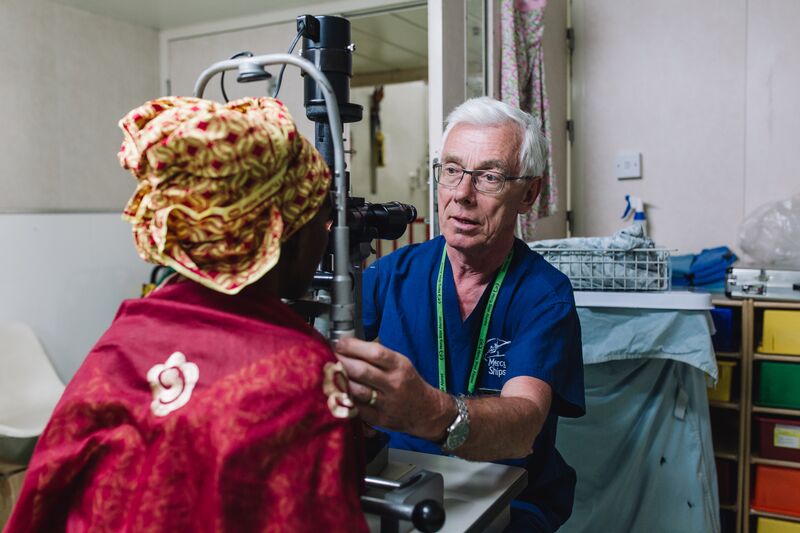
Vision loss remains one of the most widespread yet preventable health challenges facing communities across the developing world. According to the World Health Organisation, an estimated 2.2 billion people globally live with some form of vision impairment or blindness, and at least one billion of those cases could have been prevented or have yet to be treated. In low-resource settings, the absence of trained eye care professionals, surgical infrastructure, and affordable services means that entirely treatable conditions progress until sight is lost permanently. Cataracts alone remain the leading cause of blindness in low and middle-income countries, representing a profound and unnecessary burden on individuals, families, and communities.
Addressing this global crisis requires far more than awareness. It demands skilled professionals willing to work where the need is greatest. Australian ophthalmologists, optometrists, and ophthalmic nurses are increasingly contributing to this effort through Mercy Ships Australia and other coordinated humanitarian programs, bringing clinical expertise and compassionate care to communities that would otherwise wait years, or decades, for treatment that never comes.
The Global Burden of Vision Impairment
The scale of preventable blindness worldwide is difficult to fully comprehend. Conditions such as cataracts, glaucoma, trachoma, and uncorrected refractive errors collectively rob millions of people of their independence, their livelihoods, and in the case of children, their education. In sub-Saharan Africa and parts of South and Southeast Asia, the shortage of trained ophthalmic surgeons is severe. Some regions have one ophthalmologist serving populations of several hundred thousand people. The result is a backlog of treatable cases that local health systems simply cannot clear without external support.
From an Australian perspective, the contrast is stark. Australia’s well-funded eye care system delivers timely cataract surgery, corrective procedures, and ongoing monitoring as routine practice. The knowledge and surgical skills that Australian eye care professionals develop over their careers can, when applied in humanitarian settings, change the trajectory of an entire family’s future in a single operating session. That reality is what draws many Australian practitioners toward international volunteering.
The Role of Mercy Ships in Global Eye Care
Mercy Ships plays a significant role in delivering comprehensive ophthalmic services to regions where surgical care is entirely unavailable.
Operating the world’s largest civilian hospital ships, the organisation provides cataract surgery, pterygium removal, strabismus correction, and corneal interventions for patients who have often waited years for treatment. Mercy Ships’ ophthalmology programs in Africa have restored sight to thousands of patients, with outcomes that stand alongside those achieved in well-resourced clinical environments.
In response to a specific request by the Sierra Leonean health authorities, the Mercy Ships Education, Training, and Advocacy (ETA) team organised an ophthalmology training for ophthalmic care providers in the country.
Australian healthcare professionals, including ophthalmologists, ophthalmic nurses, and optometrists, contribute regularly to these missions. Their involvement brings clinical standards consistent with Australian healthcare practice and helps ensure patients receive safe, effective treatment. Beyond surgery, Mercy Ships also invests in ophthalmic training for local practitioners, recognising that short-term missions only create lasting change when they leave behind stronger local capacity. Australian volunteers are central to that training effort, passing on skills that continue to benefit communities long after the ship has moved on.
Why Eye Care Volunteers are Essential
Trained ophthalmic volunteers fill a gap that local health systems in many developing nations simply cannot bridge on their own. The number of practising ophthalmologists in sub-Saharan Africa is a fraction of what the population requires, and many of those who are trained work in capital cities, far removed from rural communities where eye disease is often most prevalent. Without volunteer support, the patients who need help most are also the least likely to access it.
Australian ophthalmologists and eye care professionals who volunteer abroad bring a combination of surgical expertise, diagnostic skill, and clinical judgement that delivers immediate results. A cataract surgery that takes twenty minutes can return full or near-full vision to a patient who has been blind for years. That is not an incremental improvement. It is a complete restoration of independence, productivity, and quality of life. Multiply that across dozens of patients per surgical block, and the collective impact of a single mission becomes extraordinary.
Beyond individual patient outcomes, volunteers contribute to long-term improvements through mentoring, collaborative practice, and structured knowledge transfer. Australian practitioners trained in evidence-based care and patient safety standards carry those values with them into every setting they work in, raising the bar for what local teams experience and come to expect.
Eye Care Missions in Low-Resource Settings
Working in humanitarian eye care settings presents challenges that are genuinely different from anything most Australian clinicians encounter in domestic practice. Equipment may be limited, sterilisation processes may be adapted to available resources, and patient presentations are often more advanced than practitioners are used to seeing at home. Mature cataracts, untreated glaucoma that has progressed to significant optic nerve damage, and corneal scarring from infections that would have been managed early in Australia are common findings.
Despite these constraints, Australian ophthalmic volunteers consistently deliver high-quality care by applying practical, evidence-based approaches adapted to the context. Many describe the experience as professionally formative, forcing a level of clinical problem-solving and resourcefulness that expands their capabilities in ways that standard practice does not. Community-based screenings bring services directly to villages and regional centres, identifying patients who would never seek care independently and connecting them to surgical or corrective services. This outreach model, drawing on Australia’s well-established preventive health philosophy, ensures that the most isolated members of a community are not simply left behind.
Specialised Eye Surgery and Treatment
Cataract surgery remains the most transformative ophthalmic intervention available in humanitarian settings. The procedure is relatively brief, carries low surgical risk in skilled hands, and delivers results that are immediate and life-changing. For a patient who has spent years navigating daily life with deteriorating vision, the moment their bandages are removed the morning after surgery is one of the most powerful experiences any volunteer will witness. The impact of cataract surgery donations in Africa illustrates just how profoundly these interventions change lives.
Beyond cataract extraction, Mercy Ships surgical teams also perform pterygium excisions for patients with painful, vision-obscuring growths on the cornea, strabismus corrections for children whose misaligned eyes would otherwise affect their development and social inclusion, and glaucoma management procedures to reduce intraocular pressure and preserve remaining sight. Trachoma-related surgical work, including correction of the eyelid scarring that causes corneal abrasion, is another area where volunteer surgeons make an enormous difference in regions where the infection remains endemic. Each of these conditions is treatable. Without access to skilled surgeons, all of them progress to permanent damage.
Paediatric Vision Care and Early Intervention
Children’s eye health carries particular urgency. The visual system develops rapidly in the early years of life, and conditions left untreated during this critical window can result in amblyopia, delayed development, and permanent limitations that no intervention can later fully reverse. In many developing countries, newborn vision screening and paediatric eye assessments simply do not exist as routine services. Conditions that would be picked up at a routine check in Australia go undetected until a child’s difficulties at school or obvious visual dysfunction prompt a referral that may take months or years to reach a specialist.
Australian-trained volunteers working in paediatric eye care bring expertise in family-centred assessment, age-appropriate examination techniques, and the clinical judgement required to distinguish between conditions that can be managed with corrective lenses and those requiring surgical intervention. Early identification of cataracts in infants, treatment of strabismus in young children, and provision of spectacles to school-aged children with uncorrected refractive error all have cascading positive effects on educational outcomes and long-term quality of life. These are investments in a child’s entire future, and they are made possible by the presence of skilled volunteers who choose to show up.
Community Outreach and Vision Screenings
Clinical care delivered from a hospital ship reaches patients who are able to travel to the vessel or to associated land-based screening sites. Community outreach programs extend that reach considerably, bringing eye health services directly into villages, schools, and community health centres where people live. Volunteer optometrists and ophthalmic nurses conduct vision screenings, identify refraction errors, fit ready-made spectacles where appropriate, and refer patients with surgical needs for assessment by the ophthalmic team.
These outreach sessions serve a dual purpose. They provide immediate benefit to community members who receive assessments and treatment on the day, and they create a referral pathway for more complex cases that require surgical intervention or specialist review. Eye health education delivered alongside screenings, covering topics such as preventing trachoma transmission, protecting eyes from UV exposure, and recognising the early signs of glaucoma, builds long-term awareness that contributes to better vision health outcomes well beyond the duration of any single mission.
Training and Developing Local Ophthalmic Expertise
The most durable contribution any volunteer mission can make is to leave behind greater local capability than it found. Mercy Ships invests in ophthalmic training programs that equip local surgeons, nurses, and ophthalmic technicians with skills they can apply independently for years after the ship has departed. Australian volunteers are integral to this work, providing surgical mentorship, facilitating structured skills workshops, and modelling evidence-based clinical practice in real patient care settings.
A local surgeon who completes ophthalmic training with a visiting Australian team does not just become more capable. They become a resource for their community, their hospital, and potentially for other practitioners they train in turn. This happened to Dr Wodome when he set up his own clinic when he returned to Togo after participating in one of Mercy Ships’s ophthalmic trainings. The WHO has been explicit about the importance of workforce development in addressing the global vision impairment burden, recognising that sustainable improvement requires more qualified practitioners in-country, not just more visiting teams. Australian volunteers who commit to teaching as a core part of their mission contribution are the ones who create that multiplier effect.
Preventable Blindness Initiatives
World Sight Day, observed each year on 8 October, focuses global attention on the scale of preventable blindness and the actions needed to address it. The WHO estimates that at least one billion people worldwide are living with vision impairment that could have been prevented or has not yet been treated. That figure is not a fixed reality. It is a measure of unmet need, and it can be reduced through consistent investment in accessible eye care, early detection programmes, and surgical outreach.
Australian-supported humanitarian eye care initiatives contribute to this effort through a combination of direct patient care, community education, and health system strengthening. Volunteer ophthalmologists working in West Africa and other regions bring practical prevention strategies drawn from Australian public health practice, including hygiene promotion to reduce trachoma transmission, guidance on protective eyewear in high UV environments, and education about the importance of seeking early assessment for symptoms that could indicate treatable conditions. Prevention and early intervention together represent the most cost-effective pathway to reducing global blindness rates, and Australian volunteers are active contributors to both.
Optical Aids,Glasses, and Vision Rehabilitation
Surgical intervention is not the only pathway to restoring functional vision. For a significant proportion of the people identified through community screenings, the primary issue is uncorrected refractive error, a problem corrected simply and inexpensively with the right pair of glasses. In many developing communities, access to an optometrist and a pair of prescription glasses is genuinely out of reach, leaving adults unable to work effectively and children unable to read the board at school.
Volunteer optometrists and ophthalmic technicians providing refraction assessments and fitting glasses as part of humanitarian missions deliver immediate, visible results. The impact of a child receiving their first pair of glasses and suddenly being able to see clearly is as transformative in its own way as cataract surgery. Post-surgical rehabilitation, including low vision support for patients with residual impairment after treatment, is another component of comprehensive care that Australian practitioners bring expertise to. Patient-centred rehabilitation approaches, drawing on methods developed and refined in Australian optometric practice, help individuals maximise the vision they have and adapt to any limitations that remain.
Medical Volunteerism from Australia
Australia has a long and respected history of contributing to global health through both government-funded programs and the individual commitment of healthcare professionals who choose to give their time and skills in contexts of need. For ophthalmologists, optometrists, and ophthalmic nurses, the global vision impairment crisis represents one of the most compelling opportunities to apply clinical expertise where it creates the greatest possible impact.
Participating in medical volunteer projects in Africa through organisations like Mercy Ships provides Australian practitioners with clinical exposure to conditions and presentations that are rare in domestic practice. Advanced cataracts, late-stage glaucoma, and corneal disease resulting from infection or malnutrition all build a practitioner’s diagnostic and surgical repertoire in ways that continuing professional development programmes at home cannot replicate. Many Australian volunteers describe their experience abroad as among the most formative of their professional lives, and a number return to volunteer again, deepening relationships with local teams and building on the capacity work they began in earlier missions.
Sustainable Vision Solutions for the Future
The long-term goal of humanitarian eye care is not ongoing dependency on visiting teams. It is to build local ophthalmic capacity to a point where communities can sustain their own eye care services, supported by reliable infrastructure, trained practitioners, and adequate supplies. Australian-led initiatives within programs like Mercy Ships contribute to that vision through deliberate investments in training, equipment donation, and collaborative partnerships with national health authorities.
Sustainable progress also requires engagement at a policy level, supporting host governments to prioritise eye health within their national healthcare strategies and to allocate resources accordingly. Australian volunteers who return home and advocate for continued support, whether through fundraising, professional network engagement, or direct policy contributions, extend their impact far beyond the weeks or months they spend aboard. Every contribution, clinical or otherwise, is part of a larger effort to make preventable blindness genuinely preventable everywhere, not just in countries with the resources to address it routinely.
Final Thoughts …
Eye care volunteers are making a difference that statistics alone cannot capture. Behind every cataract surgery, every pair of glasses fitted, and every local surgeon mentored is a person whose life has taken a different, better direction because skilled practitioners chose to show up. Australian ophthalmologists, optometrists, and ophthalmic nurses who volunteer with Mercy Ships contribute to outcomes that ripple outward through families and communities for generations.
The global vision impairment crisis is large, but it is not insurmountable. The tools, the surgical techniques, and the clinical knowledge needed to address it already exist. What makes the difference is whether enough trained professionals are willing to take them to where they are needed most. If you are an Australian eye care professional considering what a volunteer placement might offer, both to the communities you would serve and to your own professional development, the Mercy Ships Australia team is ready to help you take that next step.
FAQs
What is the role of an Australian ophthalmology volunteer on Mercy Ships?
Australian ophthalmologists on board provide life-changing eye care, including cataract surgery, pterygium excision, strabismus correction, and mentoring of local surgical teams in countries across West Africa.
How can Australian eye care professionals apply to volunteer overseas?
Within the volunteer section on the Mercy Ships Australia website.
Do I need to be registered with AHPRA to volunteer?
Yes. Mercy Ships requires current registration with the Australian Health Practitioner Regulation Agency and evidence of active clinical practice to ensure patient safety standards are maintained on board.
Are there opportunities for Australian optometrists alongside surgeons?
Absolutely. Optometrists are essential for pre-operative refraction assessments, community vision screenings, spectacle fitting, and supporting post-operative rehabilitation for surgical patients.
What is the minimum time commitment for an Australian volunteer ophthalmologist?
Most surgical speciality roles require a minimum of two to four weeks. Long-term clinical leadership positions, including training coordinator roles, can extend to several months or longer.
Does volunteering with Mercy Ships count towards CPD for Australian practitioners?
Many practitioners successfully claim Continuing Professional Development points for their humanitarian service. Confirm the specific category requirements with your professional body before your placement.
What types of eye surgeries are performed on the hospital ships?
Surgical teams perform cataract extractions, pterygium removals, strabismus corrections, eyelid surgery for trachoma complications, and glaucoma interventions, among other ophthalmic procedures.
How is paediatric eye care prioritised on board?
Children presenting with cataracts, strabismus, or other treatable conditions are prioritised because early intervention during development has the greatest long-term impact on a child’s vision and education.
Do Australian volunteers pay to serve on Mercy Ships?
Yes. Volunteers contribute a monthly crew fee that covers their accommodation and meals on board, ensuring that donor funds are directed entirely toward patient care programmes.
Is there a need for Australian ophthalmic nurses on board?
Ophthalmic and perioperative nurses are essential across all surgical programmes, managing patient preparation, theatre assistance, post-operative monitoring, and clinical record-keeping.
What vaccinations are required for Australians travelling to serve in Africa?
Volunteers must meet all health entry requirements for the host nation, typically including Yellow Fever, Hepatitis A and B, Typhoid, and MMR vaccinations, consistent with Australian Government travel health advice.
Can I volunteer as an Australian orthoptist?
Yes. Orthoptists contribute to pre-operative assessments, strabismus programmes, paediatric vision evaluations, and post-operative monitoring, making them highly valuable members of the ophthalmic team.
How does Mercy Ships ensure sustainable eye care after the ship leaves?
The Medical Capacity Building program trains local ophthalmic practitioners in surgical skills, patient assessment, and theatre management, creating a lasting legacy beyond each ship visit.
Are Australian ophthalmic technicians needed on medical missions?
Technical specialists who can operate and maintain diagnostic equipment, carry out biometry measurements, and prepare patients for surgery are vital to the efficiency of the ophthalmic programme.
What language skills are needed for Australian volunteers?
English is the working language on board. Mercy Ships provides qualified translators and cultural liaisons so that Australian volunteers can communicate effectively with patients during consultations and screenings.
Are the hospital ships equipped with modern ophthalmic facilities?
Yes, the Global Mercy and Africa Mercy feature dedicated eye surgery theatres, diagnostic equipment, and ophthalmic consulting rooms that support a full range of surgical and clinical eye care services.
How does volunteering abroad affect an Australian ophthalmologist’s career?
International humanitarian service builds experience with advanced disease presentations, strengthens surgical adaptability, and provides professional fulfilment that many practitioners describe as a career-defining experience.
Are there non-clinical roles for Australians interested in eye health programs?
Australians can serve in sterilisation, ward coordination, anaesthetics support, and supply chain roles that are all fundamental to keeping the ophthalmic surgical programme running smoothly.
Does Mercy Ships Australia assist volunteers with fundraising?
Yes. The Australian office provides practical tools, templates, and guidance to help volunteers raise funds for their crew fees and travel expenses before departure.
What is the age requirement for Australian medical volunteers?
Volunteers must be at least 18 years of age. All crew members complete a medical assessment prior to joining to confirm they are fit for the physical demands of life and work on board.
Where is the Mercy Ships Australia head office located?
The national office is based in Caloundra, Queensland and serves as the primary contact point for all prospective Australian volunteers.
Can Australian volunteers take part in short-term surgical missions only?
Yes. Short-term placements aligned with specific surgical blocks are a common option for Australian practitioners who cannot commit to extended leave from their practice or hospital role.
What is the difference between the Africa Mercy and the Global Mercy for eye care services?
Both ships run active ophthalmic programs. The Global Mercy, launched in 2021, features expanded surgical capacity and more modern facilities, supporting higher patient volumes across all surgical specialities including ophthalmology.
Recent Comments