
Walk past an operating theatre on any given day and you’ll see surgeons and nurses getting the credit, while a smaller team works quietly in the background to make sure everything actually functions. That’s the operating theatre technician, one of the most important people in any surgical environment, even though they rarely get a mention. On a hospital ship, this role matters even more, because the theatre team works in a compact clinical space where preparation and teamwork have to be spot on every single day. For Australian healthcare workers, students and surgical support staff, the idea of working in a hospital ship operating theatre is both inspiring and genuinely rewarding as a career move.
A hospital ship brings surgery closer to communities that would otherwise go without it. Behind every successful procedure sits a team of people preparing equipment, supporting clinicians, protecting sterile areas and keeping the operating suite running. The operating theatre technician isn’t always the person you notice first, but their work is what makes safe, efficient and compassionate surgical care possible. Organisations such as Mercy Ships Australia rely heavily on skilled theatre support staff to keep their surgical programs running smoothly across West Africa and Madagascar.
Understanding the Operating Theatre Technician Role
An operating theatre technician supports the surgical team before, during and after operations. In Australia, you might see this role called an operating theatre tech, theatre technician, theatre assistant, perioperative assistant or surgical support assistant, depending on the workplace. Job titles shift from hospital to hospital, but the purpose stays the same: help the operating theatre run safely, efficiently and professionally.
In a standard hospital setting, theatre technicians prepare the operating theatre, check equipment, assist with patient positioning, move and handle clinical items safely, support theatre turnover and help maintain infection control standards. On a hospital ship, those same responsibilities continue, but in a tighter, more coordinated space. Every tray, cable, trolley and piece of equipment has to be managed with real care, because there’s no spare room and no easy substitute if something goes missing.
Why Hospital Ships Need Skilled Theatre Technicians
A hospital ship isn’t just a vessel with medical gear bolted on. It’s a working clinical facility that can include operating theatres, recovery spaces, wards, sterilisation areas and treatment rooms. For the surgical team to work well, the theatre needs to be prepared to a high standard, every time, without exception.
This is where the theatre technician hospital ship role earns its keep. Surgical staff depend on reliable theatre preparation, safe equipment handling and quick, practical support. A technician helps build the conditions that let surgeons, nurses and anaesthetic staff focus purely on the patient in front of them. In a floating hospital surgery environment, that support keeps the day organised, calm and safe, even when the schedule shifts at short notice.
The Hospital Ship Operating Theatre Environment
The hospital ship operating theatre differs from a land-based operating suite in some obvious ways. Space is tighter, storage areas need careful planning, and supplies have to be managed with real forward thinking, since a replacement item might be weeks away rather than a phone call away. A hospital ship deployment also calls for people who can adapt to changes in schedule, environment and patient needs without losing their composure.
For an Australian operating theatre technician, this can be an exciting professional stretch. The role brings together familiar theatre skills with the demands of maritime medicine and offshore surgical care. It’s fast-paced work, but it carries a strong sense of purpose, because every task supports patients who may have waited years for surgical treatment that most Australians would consider routine.
Theatre Preparation Before Surgery
Theatre preparation hospital ship work starts well before the patient enters the room. The technician may help set up the operating table, check positioning equipment, confirm the correct accessories are on hand and make sure the theatre is clean and ready for the planned procedure.
This preparation isn’t just a checklist exercise, it’s part of patient safety. A well-prepared operating suite cuts down on delays and keeps the surgical list moving. The operating theatre technician also restocks items, arranges trolleys, checks suction, sets up lighting and confirms equipment is in the right place. On a hospital ship, this level of organisation matters even more, because every item on board has a specific purpose and a specific spot.
Supporting the Surgical Team During Procedures
During surgery, the operating theatre technician gives hands-on support to the wider perioperative team. That might mean adjusting equipment, assisting with patient positioning surgery, helping with theatre supplies, supporting the scrub assistant or moving fast when the team needs extra items mid-procedure.
Theatre tech responsibilities call for calm attention and clear communication. The technician needs to read the rhythm of the operating suite and anticipate what’s coming next, often before anyone asks. On a hospital ship, where teams include healthcare workers from a mix of backgrounds and first languages, clear communication becomes even more important. A confident, respectful theatre technician helps the whole team work better together, especially under pressure.
Maintaining Sterile Fields and Infection Control
Operating theatre infection control sits at the centre of the role. The technician protects the clinical environment by following cleaning procedures, supporting sterile workflow and respecting sterile boundaries at all times. Maintaining sterile fields matters because even a small lapse can raise the risk for a patient who has no backup hospital to turn to.
Surgical Instrument Sterilisation and CSSD Support
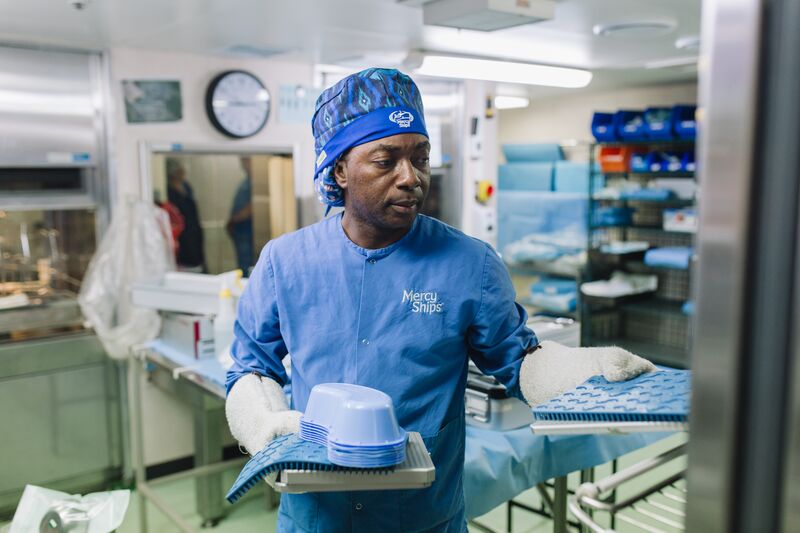
Surgical instrument sterilisation is a core part of safe theatre practice. In some settings, a sterile processing technician or CSSD technician manages central sterilisation, while theatre technicians support the correct handling, movement and availability of surgical instruments. On a hospital ship, these roles need to work closely together, because the surgical schedule depends entirely on instruments being clean, processed, packed and ready on time.
The operating theatre technician assists by helping with surgical tray setup, checking that required items are available and liaising with the sterilisation team when instruments are needed for upcoming cases. Mercy Ships Australia has documented this partnership in detail through its work on sterile processing training, including Frank’s story, a volunteer sterile processing technician keeping the surgical schedule on track. This support may not always be visible to patients, but it has a direct effect on theatre flow and surgical readiness.
Equipment Checks and Technical Support
Operating theatre technical support is another important slice of the job. The technician helps check lights, operating tables, suction, positioning aids, monitors and other theatre equipment, and may assist with operating theatre equipment maintenance or flag issues for biomedical review.
On a hospital ship, technical confidence really pays off. Equipment gets used intensively, storage is limited and a replacement part might not arrive for weeks. Medical equipment troubleshooting has to be handled carefully and strictly within the technician’s scope of practice, working alongside colleagues in biomedical engineering roles who keep the ship’s more complex machinery running. A reliable theatre technician spots problems early, supports safe equipment use and keeps the operating suite ready for whatever the day brings.
Anaesthetic Support and Patient Readiness
The anaesthetic area is another key part of the perioperative journey. Depending on training, workplace policy and role boundaries, a theatre technician may work alongside an anaesthetic assistant or nurse anaesthetist to help prepare equipment, support patient transfer and assist with safe positioning.
Anaesthetic workstation maintenance and preparation demand real care, because this area sits right at the centre of patient safety. The technician isn’t there to replace the anaesthetic professional, but to support the smooth running of the theatre environment around them. On a hospital ship, where teams work closely and practical support is genuinely valued, this cooperation can make a real difference to how the day unfolds.
Patient Positioning and Safe Manual Handling
Patient positioning surgery support is a practical but genuinely important responsibility. Correct positioning helps the surgical team access the operative site while protecting the patient’s comfort, dignity and safety throughout the procedure. The operating theatre technician assists with moving the patient, placing supports, preparing positioning aids and making sure the patient is secure before the surgeon begins.
Safe manual handling matters enormously in the operating theatre, since patients are often under anaesthesia and unable to move on their own. The technician has to work carefully with nurses, anaesthetic staff and surgeons to manage safe transfers and positioning. In a hospital ship setting, where space is often tighter than in a large metropolitan Australian hospital, good coordination becomes even more important, and there’s less room for error.
Theatre Restocking and Supply Management
Theatre restocking is one of the quieter parts of the job, but it’s essential for the whole operation to run smoothly. A theatre can’t function if gloves, drapes, dressings, suction tubing, cleaning items or surgical supplies go missing mid-case. The operating theatre technician keeps the room ready by checking stock levels and replacing items after each procedure.
On a hospital ship, supply management demands extra awareness. A floating hospital doesn’t have the same quick access to replacement stock that a major Australian hospital enjoys, so theatre technicians need to be organised, careful and proactive rather than reactive. Good stock control reduces delays, protects limited resources and supports the surgical team right through a deployment that might run for months.
Theatre Clean-Up and Decontamination
After a procedure wraps up, the operating theatre needs cleaning and preparing for the next patient. Theatre clean-up and decontamination cover safe waste removal, cleaning of surfaces, correct handling of used items and equipment preparation for the next case.
Working as Part of a Maritime Healthcare Team
A hospital ship is a community as much as it is a workplace. Healthcare workers live and work close to one another for the length of a deployment. The theatre team includes surgeons, nurses, anaesthetic staff, theatre technicians, recovery staff, allied health workers and non-clinical crew, all pulling in the same direction.
For a sea-based healthcare worker, teamwork stretches well beyond the operating theatre walls. Good communication, cultural respect and emotional resilience matter just as much as clinical skill. Australian healthcare workers are typically trained to value safety, patient dignity and multidisciplinary collaboration, and those qualities translate directly to hospital ship careers. A theatre technician who listens, adapts and backs up their colleagues quickly becomes a trusted part of the team.
Skills That Make a Theatre Technician Effective at Sea
An effective operating theatre technician needs attention to detail, physical stamina, practical problem-solving skills and a solid grasp of infection control. Clear communication and a level head under pressure round out the list. On a hospital ship, adaptability matters just as much as technical ability, if not more.
Remote surgical technician work throws up unexpected challenges on a regular basis. Schedules change, equipment needs careful management and the team often works with patients who have waited a long time for treatment. The best theatre technicians bring a positive attitude, a steady work ethic and genuine respect for every person involved in the surgical journey, from the patient’s family through to the most junior crew member.
Australian Training and Career Pathways
For Australian readers, operating theatre technical support skills can be built through health services training, on-the-job theatre support experience and relevant vocational learning. Some people move into the field through hospital support roles, while others follow a formal training pathway such as the Certificate IV in Operating Theatre Technical Support, which is listed on the national register of accredited VET qualifications.
Theatre technician jobs in Australia turn up in public hospitals, private hospitals, day procedure centres and specialist surgical services. Experience in these settings builds the skills needed for more specialised work later on, including humanitarian hospital ship roles, maritime medicine, remote healthcare and emergency surgical support at sea. A solid Australian theatre background helps workers arrive confident, capable and ready for a very different clinical setting.
Hospital Ship Careers and Professional Purpose
Hospital ship careers can be genuinely meaningful for people who want to put their healthcare skills to practical, compassionate use. An operating theatre technician might not be the one performing the operation, but their work supports every stage of safe surgical care, from theatre preparation through to surgical tray setup, from maintaining sterile fields to assisting with equipment on the day.
This career path appeals to people who enjoy teamwork, service and technical responsibility in equal measure. A humanitarian hospital ship gives theatre technicians the chance to contribute to something bigger than a single workplace roster. It lets them support patients directly, strengthen surgical teams and take part in a mission built around access to care that many Australians take for granted.
Final Thoughts …
The role of the operating theatre technician on a hospital ship is essential, practical and genuinely valuable, even if it rarely makes the headlines. These professionals work behind the scenes, but their contribution shows up in every safe theatre setup, every well-prepared surgical tray, every clean operating space and every smooth patient transfer.
For Australian healthcare workers and surgical support staff, this pathway offers more than a job title. It offers the chance to pair operating theatre technical support with humanitarian purpose, maritime medicine and genuinely meaningful teamwork. Whether you’re working in a local hospital, a day surgery centre or a floating hospital surgery environment, the operating theatre technician helps make safe surgery possible.
A hospital ship depends on a lot of people, and the theatre technician is one of the quiet professionals keeping the mission moving. If this kind of work interests you, the next step is straightforward: look into local theatre support training, gain experience in an Australian operating suite, and explore volunteer pathways with organisations running hospital ship deployments.
FAQs
What does an operating theatre technician do on an Australian hospital ship?
An operating theatre technician prepares and maintains the surgical environment, sets up specialised medical equipment, ensures strict infection control, positions patients safely for surgery, and supports the surgical team behind the scenes during offshore maritime operations.
What qualifications do you need to work as a theatre tech in Australia?
Most employers look for an AQF Certificate III in Health Services Assistance (Operating Theatre Support) or a Certificate IV in Operating Theatre Technical Support, combined with recent practical experience in a hospital environment.
What is the ANZSCO code for an operating theatre technician in Australia?
The specific classification under the Australian and New Zealand Standard Classification of Occupations is ANZSCO 311214, which falls under the medical technicians unit group.
Are Australian operating theatre technicians required to register with AHPRA?
No, theatre technicians are not currently required to hold national registration with the Australian Health Practitioner Regulation Agency (AHPRA), though they must hold relevant vocational certifications and institutional compliance checks.
How does a hospital ship operating theatre differ from a standard Australian hospital?
While the surgical standards and sterile fields are identical to a land-based Australian hospital, a ship’s theatre requires technicians to secure specialised equipment against vessel movement, manage tighter storage spaces, and handle unique maritime logistics.
What role does a theatre tech play in infection control on a medical vessel?
They are responsible for cleaning and decontaminating the theatre suite between cases, maintaining the sterile zone, disposing of infectious clinical waste safely, and ensuring all surgical instruments undergo strict sterilisation protocols.
Do theatre technicians assist Australian anaesthetists during surgery at sea?
Yes, they provide essential technical support by preparing anaesthetic workstations, checking life support machinery, adjusting monitoring equipment, and assisting with patient transfer and positioning.
What are the physical demands of being a theatre technician onboard a floating hospital?
The role involves significant physical effort, including standing for extended shifts, lifting and positioning patients safely, moving heavy surgical trays, and maintaining steady footing while working on a moving ship.
Can an Australian Certificate III in Health Services Assistance lead to hospital ship deployment?
Yes, completing this qualification provides the fundamental medical skills in theatre preparation, sterilisation, and patient care required to clear the screening process for humanitarian or naval medical missions.
What equipment does a maritime theatre tech need to troubleshoot?
Technicians regularly maintain and troubleshoot critical perioperative machinery, including surgical lights, operating tables, anaesthetic machines, suctions, autotransfusion systems, and vital signs monitors.
How do hospital ships manage surgical supplies in remote offshore locations?
Theatre technicians oversee strict inventory controls and restocking protocols, ensuring that all surgical trays, disposable gowns, drapes, and sterile packs are carefully catalogued for long-term maritime deployments.
What safety checks must an Australian theatre technician perform before surgery?
They must test all electrical and gas systems, verify that life support equipment is operational, ensure all back-up batteries are charged, check suction units, and guarantee that the necessary sterile instrument sets are complete.
Do operating theatre technicians work shifts on humanitarian voyages?
Yes, maritime medical environments operate around the clock, meaning technicians must work varied rosters, including evening shifts, night shifts, weekends, and on-call rotations for emergency trauma surgeries.
What is the difference between a theatre technician and a CSSD technician?
A theatre technician works directly inside the operating room assisting the surgical team and handling equipment setup, whereas a Central Sterile Supply Department (CSSD) technician focuses primarily on cleaning, sorting, and sterilising instruments in a dedicated processing unit
What role do theatre technicians play in pre-operative planning?
They review the daily surgical list to anticipate the specific equipment, surgical instruments, and positioning accessories required for each scheduled procedure, ensuring everything is pre-staged efficiently.
Are there volunteer opportunities for Australian theatre technicians onboard hospital ships?
Yes, international non-governmental organisations, like Mercy Ships, actively recruit qualified Australian perioperative staff and technical support workers for short-term and long-term medical missions.
What vaccinations and health checks do Australian technicians need for maritime deployment?
They must meet strict Australian healthcare standards, including up-to-date immunisations for hepatitis B, influenza, measles, mumps, rubella, pertussis, varicella, and clear a comprehensive national police check and working with children check.
How do technicians manage hazardous medical waste on a ship?
They follow strict international maritime and healthcare protocols, separating biological waste, sharps, and general garbage into designated colour-coded containment systems for safe onboard processing or shore-side disposal.
What communication skills are vital for a theatre technician during a crisis at sea?
Clear, concise verbal communication is crucial, as technicians must follow exact instructions from surgeons and nurses, hand over equipment quickly, and report any sudden machinery faults instantly to the team.
Can a theatre tech transition into an anaesthetic technician role in Australia?
Yes, with further specialised training, such as an advanced diploma, an experienced operating theatre technician can transition into a dedicated anaesthetic technician position (ANZSCO 311211).
What is the job outlook for operating theatre technicians from Australia?
Jobs and Skills Australia reports strong projected employment growth for medical technicians, driven by an expanding healthcare sector and an ongoing demand for skilled perioperative support workers in both public and private systems.
How do theatre technicians assist with surgical trays before a procedure?
They verify the integrity of the sterile indicator tape, open the outer wrappers using aseptic techniques without touching the sterile interior, and arrange the instrument containers logically for the scrub team.
What post-operative duties do theatre techs perform on a medical ship?
After a surgery concludes, they assist in transferring the patient to the recovery room, transport used surgical instruments to the cleaning zone, safely dispose of single-use items, and thoroughly decontaminate the theatre for the next case.
Why is residual heat tracking important for instrument sterilisation?
Technicians monitor the sterilisation process to ensure steam autoclaves reach and maintain the exact temperature parameters required to eradicate all microbial life, guaranteeing that every instrument pack is perfectly safe for surgical reuse.
Recent Comments