
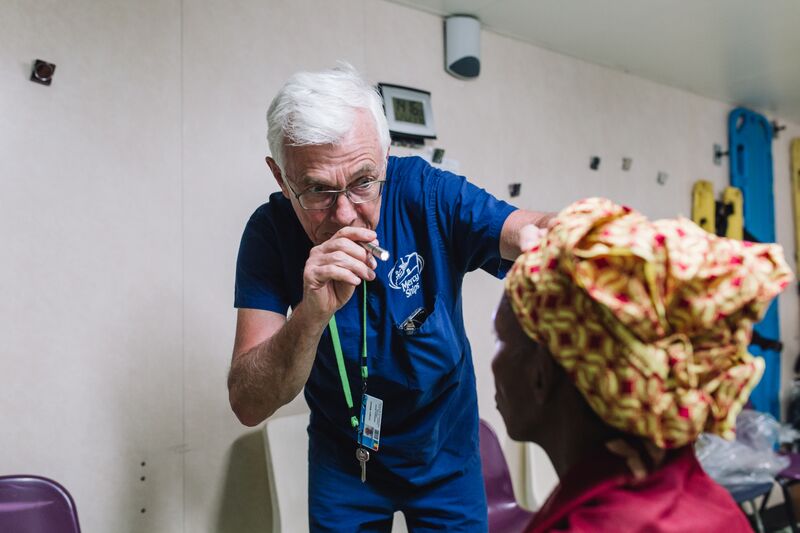
Somewhere in the world right now, a person has gone blind from a condition that a 20-minute operation could fix. Cataracts remain the single leading cause of reversible vision loss globally, yet roughly half of all people who need cataract surgery still can’t access it. In low and middle income countries, where specialist eye care is scarce and clinics are far away, that gap between what’s treatable and what gets treated is measured in millions of lives. Cataract surgery missions, run by volunteer surgeons and humanitarian organisations, are closing that gap one patient at a time.
Global Burden of Avoidable Blindness
The scale of the problem is hard to overstate. According to the World Health Organization, more than 94 million people worldwide are affected by cataracts, and nearly half of those facing cataract-related blindness still have no access to surgery. In sub-Saharan Africa, three in four people who need cataract surgery remain untreated. Women are consistently worse off than men across every region.
The causes of this gap are well-documented: cost, distance, a shortage of trained surgeons, and a lack of basic surgical infrastructure. In many African nations, there are as few as two physicians per 10,000 people. Rural and remote communities face the steepest barriers, often spending days travelling to reach the nearest clinic. For people already living in poverty, that journey simply isn’t possible.
What makes this so frustrating is that blindness and poverty reinforce each other. When someone loses their sight, they often lose their income, their independence, and their ability to support their family. Children with vision impairment are less likely to attend school. Women, who make up 55% of the world’s blind population, are among the most marginalised. Blindness is not just a medical problem, it’s an economic and social one.
Why Cataracts Remain a Leading Cause of Vision Loss
Cataracts develop gradually, which is part of why they’re so often missed until vision is seriously impaired. The lens of the eye clouds over time, usually as a result of aging, though malnutrition, UV exposure, and certain medications can accelerate the process. In high-income countries, the condition is routinely picked up during regular optometry visits and treated well before it causes significant harm. In low-resource settings, patients often present only when the cataract is fully mature and vision is almost entirely gone.
The Role of Cataract Surgery Missions
Surgery missions fill the void that health systems in low-income countries cannot yet fill themselves. Teams of volunteer ophthalmic surgeons travel to remote communities, set up temporary clinics, and perform high volumes of cataract extractions in a short period. In environments where the alternative is permanent blindness, even a basic surgical facility can change thousands of lives.
Mercy Ships is one of the most recognisable models for this kind of work. Operating hospital ships staffed largely by volunteers from over 40 nations, the organisation docks in port cities across Africa and delivers free surgical care to patients who would otherwise have no access to it. Eye care is central to that mission, cataracts are the most common cause of avoidable blindness worldwide, and a 20-minute procedure on board can restore sight permanently. Beyond the operations themselves, the program distributes sunglasses to protect eyes after surgery and provides reading glasses to patients with residual vision impairment.
Australia’s Contribution to Global Eye Health
Through the Department of Foreign Affairs and Trade (DFAT), Australia has committed significant funding to blindness prevention across the Asia-Pacific, more than $80 million since 2007 through the Avoidable Blindness Initiative alone. That funding has supported more than 400,000 vision screenings, over 27,000 sight-restoring surgeries, and training for more than 4,000 eye health workers. It’s a serious investment, and it’s produced real results.
Humanitarian Organisations and Eye Care Programmes
The breadth of humanitarian organisations working in ophthalmic outreach reflects how serious the problem is. Mercy Ships operates two purpose-built hospital ships, the Africa Mercy and the Global Mercy, deploying them to countries with the greatest need. In Madagascar alone, over 1,090 surgical procedures were performed in a single field service, including cataract operations, with patients registered across 12 of the country’s diverse regions. Local training and mentorship runs alongside the surgical program, so that gains in surgical capacity don’t evaporate when the ship leaves port.
What distinguishes the best humanitarian eye care programs from short-term aid missions is that focus on continuity. Training a local ophthalmologist produces returns for an entire career. Equipping a clinic with reusable surgical instruments creates a lasting resource. Integrating eye health into primary care means cataracts get caught earlier, before they become a surgical emergency.
Economic and Social Impact of Restoring Sight
The return on investment from cataract surgery is remarkable. For a procedure that costs a fraction of what most Western surgeries do, the outcomes are immediate and life-altering. When a farmer regains sight, they can return to work. When a parent can see again, they can take their children to school. When an older woman no longer needs a full-time carer, the economic ripple effects flow through the whole household.
Equipment donations and local infrastructure support extend these benefits further. Dr Wodome, a surgeon who trained with Mercy Ships, went on to tackle cataract blindness in Togo independently after mastering complex surgical techniques on board. That kind of multiplier effect, one trained surgeon treating thousands of patients over a career, is where the real economic and social impact of these programs lies.
Challenges in Delivering Eye Care in Developing Nations
Progress is real, but the challenges haven’t gone away. Geographic isolation remains a significant barrier in Pacific Island nations, parts of Southeast Asia and Sub-Saharan Africa, where patients may need to cross water or mountains to reach any kind of health facility. Supply chains for surgical equipment are unreliable in many low-income settings, and trained eye health workers are unevenly distributed, concentrated in capital cities while rural populations go without.
Sustainability is another persistent difficulty. Short-term missions can produce impressive surgical numbers, but without follow-up care and continued access to consumables, outcomes can deteriorate. Infections, complications, and refractive errors after surgery need ongoing management that’s simply not available in many communities. Programs that invest in system-strengthening, training, infrastructure, supply chains, tend to produce more durable results than those focused purely on operative volume.
Surgical Outreach Campaigns and Access to Care
Effective surgical outreach campaigns combine screening, surgery, and follow-up in a single coordinated program. Tele-ophthalmology is increasingly used to identify patients remotely, prioritising those with the most advanced disease for surgical visits. Community health workers play a critical role in identifying cases and linking patients with services, particularly in communities where trust in formal healthcare systems is low.
Training and Capacity Building in Local Systems
Visiting surgical teams save lives in the short term. Training local surgeons saves lives for generations. Sustainable healthcare development through capacity building is central to how organisations like Mercy Ships approach their long-term work. Programs focus on training ophthalmologists, nurses, and anaesthetists, building structured mentorship relationships between visiting specialists and local clinicians.
Mercy Ships offers onboard surgical and nurse anaesthesia training programs designed to leave skills embedded in local health systems after the ship departs. Over time, this investment reduces reliance on visiting teams and strengthens the self-sufficiency of national eye care programmes. The goal isn’t to be needed indefinitely, it’s to make sustainable eye health systems possible without ongoing external support.
The Importance of Funding and Partnerships
Partnerships between government, NGOs, local health ministries, and regional hospitals are what allow programs to be both ambitious and grounded. Pooling resources prevents duplication, stretches donor funding further, and ensures that training and surgical services are coordinated rather than competing. When these partnerships function well, they produce systems that continue delivering results long after any individual mission has ended.
Technological Innovation in Eye Care Delivery
Technology is reshaping what’s possible in remote eye care. Portable diagnostic tools, handheld slit lamps, mobile fundus cameras, optical coherence tomography units, allow clinicians to screen patients.
Future Outlook for Global Blindness Prevention
The WHO’s 2030 targets for cataract surgery coverage are ambitious. Member states agreed to a 30% increase in effective cataract surgical coverage by the end of the decade, but current modelling suggests the world is on track for less than half that. Closing the gap will require more surgeons, better infrastructure, stronger primary care screening systems, and sustained funding, none of which can be taken for granted.
Australia’s role in achieving those targets will depend on continued investment in Indo-Pacific eye health programs, expansion of training pathways for local ophthalmic professionals, and ongoing support for organisations doing the work on the ground. Alignment with World Health Organisation priorities and sustained commitment through DFAT partnerships will be critical.
The good news is that the interventions work. Cataract surgery is among the most cost-effective procedures in all of medicine. The surgical techniques are well-established, the equipment is increasingly affordable, and the outcomes are immediate. What’s needed now is the will to scale.
Final Thoughts …
A 20-minute surgery can give someone their life back. This is the reality of cataract treatment, and it’s why these missions matter so much. The work that Mercy Ships Australia and organisations like it do, delivering free, high-quality surgical care to people who have no other options, is among the most direct forms of poverty alleviation available. It restores sight, restores independence, and restores dignity.
Australia has the expertise, the funding mechanisms, and the regional relationships to make a genuine difference in global blindness prevention. The challenge now is maintaining that commitment as other health priorities compete for attention and funding. Given the return on investment, thousands of productive, independent lives for every dollar spent, that’s a case worth making clearly and often.
FAQs
How do hospital ships complement local healthcare infrastructure in developing regions?
Hospital ships provide a fully self-contained medical environment, featuring sterile operating theatres and intensive care beds, which directly relieves pressure on local land-based clinics. By handling complex, specialised surgical backlogs, these vessels allow local community health networks to focus resources on primary care, preventative health campaigns, and maternal health initiatives.
What specific role do Australian medical professionals play onboard civilian hospital ships?
Australian doctors, specialised surgeons, and ward nurses volunteer their clinical expertise to perform free, life-changing operations. Because Australian healthcare workers are trained under exceptionally high national safety and clinical standards, they bring elite skills in perioperative care, infection prevention, and complex reconstructive procedures directly to vulnerable coastal populations.
Can Australian nurses use long service leave to volunteer on global health missions?
Yes, taking long service leave or accumulated professional holiday time is a highly common path for Australian nurses to join maritime medical missions. Many non-governmental organisations offer short-term placements ranging from two weeks to two months, aligning perfectly with standard Australian workplace leave provisions.
How do floating hospitals support healthcare workforce development in host nations?
Rather than just providing temporary aid, floating medical facilities act as active educational hubs. Australian specialists run formal in-country healthcare training and mentoring programmes onboard, teaching local practitioners advanced clinical skills in fields like paediatric surgery, sterile processing, and safe anaesthesia management.
How do non-governmental hospital ships coordinate with local health ministries?
Operations are entirely collaborative and never independent. NGOs work by invitation from host governments, establishing strict partnerships with national health ministries years before a ship arrives to ensure patient selection protocols, safety regulations, and local clinical training objectives match the country’s long-term health strategy.
Why is maritime medical logistics considered more efficient than building land-based hospitals?
Building permanent medical infrastructure in resource-limited coastal regions requires massive time, capital, and local utilities that may not exist. A mobile medical platform arrives completely equipped with its own power generation, diagnostic imaging, clean water supply, and sterile units, bypassing local infrastructure gaps immediately.
What are the required eligibility criteria for an Australian doctor volunteering overseas?
An Australian medical volunteer must hold a current, unrestricted registration with the Medical Board of Australia via AHPRA (Australian Health Practitioner Regulation Agency). They must also demonstrate recent clinical practice in their specialisation, clear a thorough medical fitness review, and show strong cultural adaptability.
How do hospital ships address the global surgery crisis in sub-Saharan Africa?
In many developing coastal regions, billions of people lack access to safe, timely, and affordable operative care. Hospital ships target this deficit directly by providing free access to essential surgical interventions, effectively reducing massive backlogs of treatable conditions like cataracts, cleft lips, and severe burn contractures.
What kind of non-medical volunteer roles are available for Australians on humanitarian vessels?
Running a floating hospital requires extensive maritime and operational expertise. Australians frequently volunteer in critical technical roles, including hospital ship engineering, maritime logistics, deck operations, galley cooking, hospitality management, and technical asset maintenance.
How do these maritime missions tackle diseases of poverty?
Diseases of poverty, such as neglected tropical diseases, untreated clubfoot, and obstetric fistula, flourish where surgical care is unavailable. Hospital ships focus their entirely free intake on these exact conditions, reversing decades of physical disability and social marginalisation for patients who cannot afford commercial medical fees.
What does a standard shift look like for an Australian ward nurse serving onboard?
Ward nurses generally work structured shifts, often completing around ten shifts over a fortnightly period, which includes standard day, evening, and rotating night duties. The work involves intensive postoperative rehabilitation, complex wound dressing management, and closely monitoring patients’ recovery alongside an international team.
How do mobile medical platforms ensure sustainable clinical outcomes after they depart?
Sustainability is achieved by ensuring clinical skills transfer outlasts the ship’s physical presence. By upgrading local facilities on land, providing modern tools, and certifying local doctors and nurse anaesthetists through rigorous mentoring programmes, the host nation’s health sector is left significantly stronger.
What role does nurse anaesthesia training play in maritime capacity building?
Safe anaesthesia care is one of the greatest challenges in remote global health. Australian anaesthetists and senior nurses onboard run intensive perioperative care programs, training local practitioners in internationally recognised anaesthesia safety standards to ensure future local operations carry minimal risk.
Are donations to international hospital ship charities tax-deductible for Australian residents?
Yes, if you donate to an organisation that maintains a registered Australian office with Deductible Gift Recipient (DGR) status under the Australian Taxation Office (ATO), your financial contributions are fully tax-deductible on your annual Australian tax return.
How do hospital ships manage decentralised patient selection across wide geographic areas?
To reach rural and isolated communities far from the port, advanced medical selection teams travel inland months ahead of the vessel’s arrival. They collaborate with local community health initiatives and regional clinics to assess, screen, and clear patients for safe transport to the ship.
What is the minimum time commitment required for Australian clinical volunteers?
While highly specialised surgical teams or emergency consultants can sometimes serve on short-term blocks of two to three weeks, standard ward nurses, logistical coordinators, and technical crew are typically requested to commit to a minimum of two to ten months to maintain continuity of care.
How do maritime medical missions impact regional infrastructure development projects?
While the ship itself is temporary, NGOs frequently fund and execute land-based infrastructure development projects simultaneously. This includes completely renovating local hospital wards, constructing dedicated outpatient clinics, and installing modern sterile processing units that remain permanently in the host country.
How does maritime medical diplomacy function as soft power in global health?
Maritime medical diplomacy uses humanitarian aid to build strong, peaceful international alliances. When Australian volunteers deliver high-quality, free healthcare in partnership with developing nations, it fosters immense mutual respect, strengthens diplomatic ties, and highlights Australia’s commitment to regional stability.
What specialised surgical care is most frequently delivered by floating operating theatres?
Floating operating theatres are heavily utilised for specialised, life-transforming reconstructive surgeries. This includes maxillofacial reconstructions for large tumours, ophthalmic campaigns for cataracts, orthopaedic corrections for paediatric deformities, and delicate repairs for obstetric fistula.
How is the medical supply chain managed on an ocean-going humanitarian vessel?
Managing maritime humanitarian logistics requires a highly sophisticated global supply chain. Critical pharmaceutical items, sterile instruments, and diagnostic equipment are meticulously tracked, shipped, and stored in specialised onboard cargo holds to ensure clinical suites are fully stocked for months at sea.
Do Australian volunteer professionals have to pay for their own expenses onboard?
Yes, on most civilian humanitarian vessels, crew members act as self-funded volunteers who cover their own travel costs, insurance, and monthly onboard crew fees for room and board. This unique model ensures that public donations go directly into funding free patient surgeries and local medical training.
How do hospital ships integrate with existing community health initiatives on the ground?
Rather than replacing local systems, the ships align with existing community initiatives to amplify public health messages. Onboard teams work alongside local health workers to deliver extensive preventative health education, hygiene training, and nutritional guidance that continues within the community long term.
Why is addressing healthcare gaps via a coastal vessel highly effective for global populations?
Statistically, over half of the world’s population lives within one hundred kilometres of a coastline. Deploying a state-of-the-art, ocean-going hospital ship allows international development agencies to sail an entire tertiary-level medical facility directly to major population centres, completely bypassing broken inland transport networks.
Recent Comments