
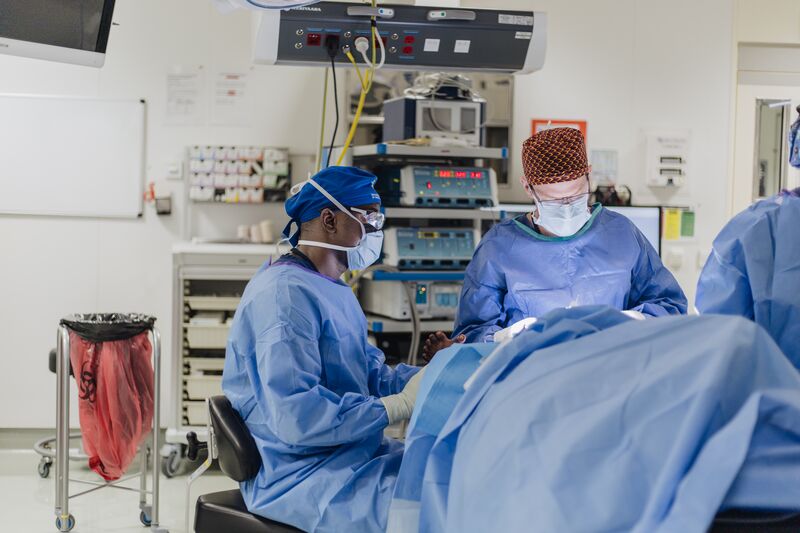
In Africa, a single untreated surgical condition can quietly dismantle a family’s finances. An injury, a cleft lip, a cataract, an obstetric complication: each one can cut into household income, pull children out of school and push relatives into unpaid caring roles for years. The economic impact of free surgery reaches well beyond the operating theatre. When treatment is free, families are spared the choice between their health and their savings, and that single decision can ripple through an entire community.
Free surgical interventions remove one of the biggest barriers to timely care: the fear that treatment will bury a family in debt. Safe, affordable surgery is now recognised as a core part of universal health coverage, largely because it prevents death, disability and financial ruin all at once. For Australian businesses, donors and charitable organisations, that creates a genuinely useful opportunity. Supporting surgical care isn’t only a humanitarian act. It’s a practical, measurable form of poverty alleviation, and it’s how surgical interventions help break the cycle of poverty for the people who need it most.
Surgery and the Poverty Cycle
Poverty and poor health tend to feed each other. Someone who can’t access surgery may struggle to work, study, travel or care for family members, and reduced income then delays treatment further, turning a manageable condition into something far more severe and expensive. Illness reduces earning capacity, and limited resources prevent recovery. Round and round it goes.
This cycle bites hardest where households cover most of their own healthcare costs directly. Out-of-pocket spending can tip a family into financial hardship or deeper poverty, particularly when a surgical condition requires hospital care, medicines, transport and follow-up visits on top of the procedure itself. Financial risk protection in healthcare sits at the centre of both health equity and economic stability, which is why Mercy Ships treats access to safe surgery as an economic issue, not just a medical one.
When Medical Costs Become a Financial Crisis
A surgical condition rarely affects only the patient. Families lose income when a parent can’t work, or when another family member becomes a full-time carer overnight. Children miss school, household savings disappear, and small businesses lose the person who ran them. These flow-on costs stay invisible when the conversation only covers the price tag of a single procedure.
Catastrophic health expenditure prevention is one of the strongest arguments for free or subsidised medical care. Research on global surgery shows that surgery-related costs expose millions of people to financial catastrophe every year, and the damage isn’t limited to hospital bills. Transport, accommodation, lost wages and medicines all pile pressure onto a household budget that often had little slack to begin with.
Free Surgery as Financial Risk Protection
Free surgery doesn’t mean healthcare has no cost. It means the cost isn’t passed to the patient at the exact moment they’re most vulnerable. Charities, healthcare non-government organisations, donor networks and public health partners fund the gap so patients are protected from medical debt and delayed treatment.
That funding model supports financial risk protection in healthcare by cutting the odds that people will borrow at high interest, sell productive assets, or avoid treatment altogether. It also gives patients a stronger platform for long-term recovery, because they can focus on healing rather than firefighting an immediate financial crisis. Done well, free surgical interventions become genuine solutions to medical impoverishment rather than one-off charitable gestures.
Reducing Out-of-Pocket Medical Costs
Out-of-pocket cost reduction is one of the clearest household-level benefits of free surgery. Even when a patient doesn’t pay for the procedure itself, the family may still need help with transport, meals, medicines or follow-up care. Strong programs plan for the whole patient journey rather than treating surgery as a single, isolated event.
Ancillary hospital fee protection matters most for people living in remote communities, where a donated procedure can still be out of reach if the trip to hospital costs more than a family earns in a month. Organisations that cover transport, accommodation and post-operative care make surgical care genuinely affordable for the people who need it most. Global health research consistently finds that cutting out-of-pocket health spending is one of the clearest paths towards universal health coverage and away from financial hardship.
Restoring Workforce Productivity Through Surgery
Untreated surgical conditions keep people out of the workforce. Pain, poor mobility, impaired vision or untreated illness can make it hard to work consistently, operate machinery, travel for work or run a small enterprise. When treatment becomes available, surgery restores independence, confidence and the ability to actually turn up.
This is a big part of the microeconomic case for free operations. A person who returns to work regains income, strengthens household security, and reduces the need for relatives to provide unpaid care instead of earning their own wage. The benefits extend to employers and local businesses too, through better attendance, output and workforce stability. Safe, timely surgical care has been linked to measurable gains across whole health systems, productivity included.
Supporting Family Breadwinners and Carers
When one working adult supports children, elderly relatives and other dependents, their health becomes the household’s financial backbone. If that person loses the ability to earn because of a treatable surgical condition, the whole family can slide into instability fast.
Free surgery reduces this risk by getting people back on their feet before income loss becomes permanent. It also lightens the unpaid load on carers, who might otherwise give up paid work to look after an unwell relative for months or years. The social impact of surgery reaches well past the patient on the table, into the network of people whose lives are shaped by that person’s health.
Protecting Children’s Education and Future Opportunities
Children living with untreated surgical conditions often face real barriers to school attendance and social inclusion. Conditions affecting vision, mobility, breathing, speech or appearance can chip away at learning and confidence in ways that compound over time. Early access to children’s surgical programs can reshape a child’s entire trajectory by protecting their ability to learn, develop and take part in community life.
The economic value becomes clearer the longer you track it. A child who attends school consistently is more likely to find stable employment later, while their family avoids the repeated costs that come with untreated illness. This isn’t only a healthcare issue. It’s tied directly to future workforce participation, household resilience and the strength of the local community over the next generation.
The Economic Value of Cataract Surgery
Cataract surgery is a useful example of how a relatively simple operation can shift someone’s entire economic position. Restoring vision lets people return to work, run a business, care for children or get through daily tasks safely, and it cuts their dependence on relatives who would otherwise need to provide ongoing assistance.
The value of cataract surgery shouldn’t be measured by clinical success alone. Look at it through the lens of restored independence, reduced caregiving demands and a household contribution that starts flowing again. That’s why cost-effective global surgery programmes weigh up both the direct medical outcome and the wider economic ripple effect.
Cleft Surgery and Social Inclusion
Cleft lip surgery pays off through long-term social and practical outcomes as much as clinical ones. Depending on the patient’s needs and care pathway, cleft care can support feeding, speech development, confidence and school participation, and it often removes a major source of social exclusion that would otherwise limit future education or employment.
For families, access to free surgery lifts a huge weight of anxiety and financial pressure off their shoulders. For communities, it builds greater inclusion and chips away at the broader economic burden that untreated conditions leave behind. Pair the surgery with appropriate follow-up support, and the benefits keep compounding well past the initial procedure.
Essential Obstetric Surgery and Household Stability
Access to essential obstetric surgery, including caesarean delivery and fistula repair, protects mothers, newborns and entire families during pregnancy and birth complications. When emergency care is delayed or unaffordable, the fallout can be life-changing for the patient and everyone who depends on her.
The economic stakes are just as high as the medical ones. A mother’s wellbeing shapes childcare, household management and family income all at once. Preventive surgical safety nets protect households from the combined hit of medical costs, lost income and long-term care needs, which is exactly why the World Health Organisation lists surgical, obstetric and anaesthesia care as core components of universal health coverage.
Addressing the Non-Communicable Disease Surgical Burden
The surgical burden from non-communicable disease is growing in many parts of the world, as people need treatment for cancers, injuries, chronic conditions and complications that medicine alone can’t fix. Delayed care increases pain, disability and treatment complexity, while also cutting the odds that someone can stay economically active.
Free surgery reduces the economic output lost to untreated disease by making essential procedures accessible to people who’d otherwise put off care indefinitely. This matters most in low and middle-income settings, where health systems face real resource constraints and households are often expected to cover significant costs themselves. Building out the case for universal access to essential surgery supports health, productivity and fairness all in the same move.
From Humanitarian Missions to Sustainable Local Care
Humanitarian surgical missions provide vital treatment where communities have limited access to specialists or surgical facilities. But the real long-term value comes from programs that work alongside local health professionals, hospitals and community leaders. Sustainable care needs safe referral pathways, post-operative support, local training and a genuine understanding of what patients need before and after surgery.
A locally led approach builds trust and keeps resources pointed at real community priorities rather than donor assumptions. Australian organisations working in this space, including Mercy Ships Australia, aim to reduce power imbalances and keep support relevant to the people actually receiving it.
Measuring the Return on Investment in Healthcare
Return on investment in healthcare shouldn’t be judged by the number of operations completed alone. A proper evaluation asks whether patients recovered safely, returned to work or education, avoided medical debt and received appropriate follow-up care. It also looks at whether local surgical capacity has grown through training, equipment support and stronger hospital systems.
The cost-effectiveness ratio of surgical care can be genuinely favourable when treatment prevents disability, restores productivity and avoids far more expensive complications down the track. Strengthening local surgical capacity, according to global health research, generates substantial economic value well beyond the initial spend, through better health outcomes and productivity gains that compound year on year.
Australia’s Role in Humanitarian Health Partnerships
Australia has a genuine role to play in equitable health outcomes across the region, through responsible partnerships, charitable giving and business-led social investment. Australian organisations can contribute by funding surgery, supporting local health workers, investing in equipment and partnering with community organisations that understand local needs on the ground.
The Department of Foreign Affairs and Trade runs Australia’s humanitarian assistance framework, which includes partnerships with local and international organisations to deliver support in line with national humanitarian priorities. That creates a solid foundation for Australian businesses and donors who want to back surgical poverty alleviation through collaborative, accountable programmes.
Responsible Funding and Ethical Governance
Funding for healthcare non-government organisations should run on transparency, accountability and patient safety, full stop. Donors and business partners should look for programs that explain how funds are used, how patients are selected, how clinical quality is monitored and how long-term outcomes get tracked. Clear reporting builds confidence in the charitable sector and encourages more sustainable giving over time.
In Australia, the Australian Charities and Not-for-profits Commission regulates registered charities, and any registered charity operating overseas has to comply with the External Conduct Standards. Those standards cover governance, resource management, risk and safeguarding, which is worth checking before you commit a donation to any organisation working internationally.
Building Stronger Communities Through Surgical Access
The macroeconomic benefits of surgery show up most clearly when individual recoveries add up into stronger communities. A person who returns to work supports their household. A child who receives treatment stays in education. A parent who avoids medical debt spends more on food, housing or a small business instead. Each change looks modest on its own, but together they drive real, trackable change at a community level.
Universal access to surgical care is tightly linked to the UN Sustainable Development Goals on good health and no poverty. By cutting preventable disability, supporting employment and shielding families from financial shocks, surgery becomes a genuinely practical investment in inclusive development, not just a feel-good donation line item.
Final Thoughts …
The economic impact of free surgery comes down to restoring opportunity. It gives people a real chance to work, learn, care for their families and take part in community life without the weight of unaffordable medical costs hanging over them. Free surgical interventions protect families from debt, reduce inequality in healthcare access and strengthen long-term economic productivity across generations.
For Australian businesses, charities and donors, backing surgical care can deliver a genuine return on medical aid, provided the program is safe, locally informed and properly governed. When it is, surgery becomes more than a medical service. It becomes a practical route to poverty alleviation, health equity and stronger communities, one patient at a time. If you’re weighing up where to put your next donation, start by asking any organisation how they measure what happens to a patient after they leave hospital. That answer tells you more than any brochure will.
FAQs
How does free surgery contribute to global poverty alleviation from an Australian perspective?
Free surgery breaks the poverty cycle by preventing catastrophic out-of-pocket health expenditure. Australian research bodies, including the Australian National University (ANU) Open Research repository, highlight that unaddressed surgical conditions result in severe loss of economic productivity, making free medical interventions vital for financial risk protection in developing regions.
What is the role of Australian medical volunteers in humanitarian surgical missions?
Australian medical professionals, including surgeons, anaesthetists, and nurses, regularly volunteer with organisations like Mercy Ships Australia. They deliver free specialised surgeries that treat preventable disabilities, which helps restore the workforce capacity and economic independence of patients in low- and middle-income nations.
How does untreated surgical disease impact global economic output?
According to global health economic models widely studied by Australian academic institutions, the macroeconomic burden of untreated surgical conditions results in trillions of dollars in lost Gross Domestic Product (GDP). Free operations counteract this by returning healed individuals to active workplace participation.
Why is financial risk protection critical in universal health coverage?
Financial risk protection ensures that seeking medical care does not lead to impoverishment. When vulnerable communities have access to free surgical care, they avoid high ancillary hospital fees and medical debt, protecting family breadwinners from financial ruin.
What is the connection between free cleft lip surgery and economic return?
Free cleft lip and palate surgeries offer an exceptionally high return on investment. By correcting these conditions early, children avoid lifelong social suffering and can access education and future employment, fundamentally altering their long-term economic trajectory.
How do free cataract operations deliver a direct productivity gain?
Restoring sight through free cataract surgery immediately eliminates a major cause of preventable disability. This allows adults to return to work and frees up family caregivers, boosting the local community’s economic revitalisation.
How does Mercy Ships Australia facilitate long-term healthcare sustainability?
In addition to providing free surgeries on board hospital ships, Mercy Ships Australia supports the training of local healthcare professionals and the upgrading of local facilities, ensuring that the economic and social benefits of surgical care continue long after the vessel departs.
What are the primary causes of medical impoverishment in low-income nations?
Medical impoverishment is primarily driven by out-of-pocket medical costs and non-medical expenses like transport. For families living in poverty, a single surgical emergency can result in catastrophic health expenditure, forcing them to sell assets or accumulate debt.
How does paediatric surgery impact a child’s long-term economic productivity?
Timely paediatric surgery prevents congenital conditions or injuries from becoming permanent, lifelong disabilities. This ensures the child can participate in the future workforce, effectively breaking the intergenerational cycle of poverty.
What economic value does the Lancet Commission on Global Surgery place on investing in healthcare?
Research shared by Australian universities shows that failing to invest in surgical infrastructure leads to massive losses in economic welfare. Conversely, scaling up access to safe, affordable surgery unlocks significant global economic gains and increases regional productivity.
How do free surgical interventions align with the Sustainable Development Goals?
Free surgeries directly support Sustainable Development Goal 1 (No Poverty) and Goal 3 (Good Health and Well-being). By removing the financial barriers to essential obstetric, trauma, and general surgeries, these interventions foster health equity and economic resilience.
What is the societal cost of untreated non-communicable surgical conditions?
Untreated non-communicable diseases requiring surgery, such as tumours or digestive disorders, place a heavy economic burden on societies due to premature mortality and lost workplace participation, highlighting the cost-effectiveness of early surgical intervention.
How does free obstetric surgery support local economies?
Access to free essential obstetric surgery, such as emergency caesarean sections, protects maternal health and prevents neonatal disorders. Ensuring mothers survive and remain healthy stabilizes family units and secures the local workforce.
What is the difference-in-differences approach in health economics?
The difference-in-differences approach is an econometric method used by Australian health economists to evaluate policy impacts. It compares the long-term cost trajectories and health outcomes of patients who received interventions against those who did not, proving the systemic value of healthcare investments.
How do humanitarian maritime medical missions target coastal populations?
With more than half of the world’s population living near a coast, specialised hospital ships can efficiently access isolated communities, bringing state-of-the-art surgical suites and free medical care directly to those facing severe inequality in healthcare access.
Why are non-medical costs a major barrier to surgical care affordability?
Even if a surgery is technically subsidised, ancillary costs such as long-distance travel, hospital meals, and lost wages prevent poor patients from seeking care, making fully comprehensive free surgical missions essential to bridge the gap.
How does restoring workforce productivity benefit macroeconomic growth?
When free surgery restores a family breadwinner’s physical capacity, it transforms them from a dependent into an economic contributor, which directly increases the community’s overall economic output and reduces welfare dependencies.
What constitutes catastrophic health expenditure in developing regions?
Catastrophic health expenditure occurs when a household’s out-of-pocket healthcare costs exceed a critical threshold of their income, forcing them to compromise on basic needs like food and education, a cycle frequently broken by free surgical care.
How do non-government organisations fund free surgical care?
Healthcare non-government organisations rely on corporate partnerships, public donations, and philanthropic support from countries like Australia to cover operational logistics, enabling them to offer life-changing procedures at zero cost to the patient.
What is the cost-effectiveness ratio of basic surgical care?
Health economics research indicates that basic surgical interventions have a highly competitive cost-effectiveness ratio, often comparable to or better than traditional public health measures like vaccinations, due to the high number of disability-adjusted life years averted.
How does untreated trauma or injury affect a developing community’s economy?
Road traffic injuries and workplace accidents frequently strike young adults in their peak productive years. Without free, timely orthopaedic or general surgery, these injuries lead to permanent disability, devastating both family income and local industry.
What role does health equity play in global economic development?
Health equity ensures that a person’s socioeconomic status does not dictate their survival. Providing universal access to essential surgery reduces systemic financial vulnerability and creates a more stable, productive global economy.
How can Australians contribute to breaking the healthcare poverty cycle?
Australians contribute by donating to international medical charities, volunteering technical or medical skills on hospital ships, or conducting economic research that helps influence international aid and health policy decisions.
Why is the concept of a surgical financial safety net important?
A financial safety net ensures that an unexpected illness or injury does not plunge a family into deep poverty. Free surgical programs act as immediate safety nets, protecting vulnerable populations from medical debt and exploitation.
What long-term welfare returns are achieved through health investment?
Investing in free surgery yields high long-term welfare returns by lowering the societal cost of untreated conditions, improving public health metrics, and generating a healthier, more resilient workforce capable of self-sustained economic growth.
Recent Comments