
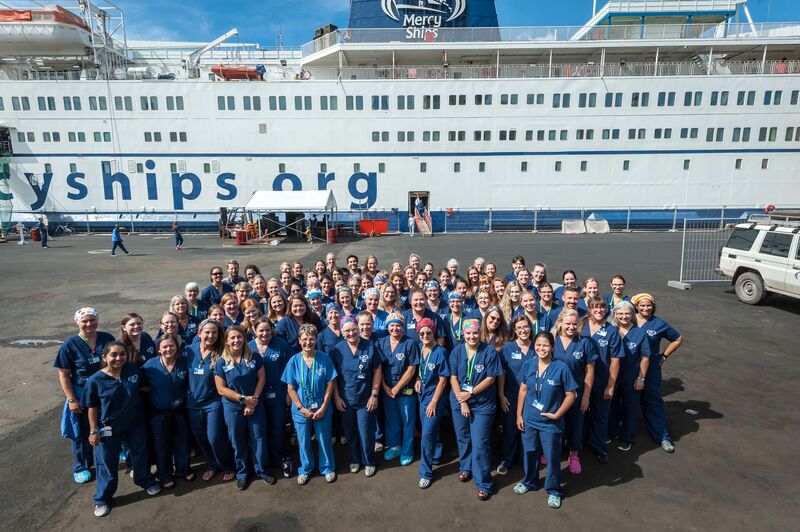
Every year on 19 August, World Humanitarian Day gives Australians a chance to stop and think about the people who give their time, skills and compassion to communities doing it tough. The United Nations set the date after the 2003 bombing of the Canal Hotel in Baghdad, an attack that killed 22 humanitarian aid workers. Since then, the day has become a fixture on the calendar for anyone who cares about the people delivering aid in difficult places.
For Mercy Ships Australia, World Humanitarian Day 2026 is also a moment to recognise the volunteers behind its hospital ships. These vessels deliver free surgical care, medical training and practical support in partnership with African nations, and the people who make that happen come from every corner of shipboard life: surgeons, nurses, anaesthetists, maritime officers, engineers, cooks, teachers and administrators among them.
What their work shows, again and again, is that humanitarian service depends on teamwork, professional discipline and a shared sense of purpose. A theatre nurse’s contribution matters as much as an engineer’s, and a cook’s shift keeps a hospital running just as surely as a surgeon’s does.
World Humanitarian Day 2026 in Australia
World Humanitarian Day Australia conversations tend to bring global humanitarian work a bit closer to home. It’s easy to think of international medical care as something that happens somewhere else, on the other side of the planet, but Australian health professionals, maritime workers and support staff are contributing their skills abroad right now.
The day is a chance to acknowledge humanitarian volunteers Australia can be proud of, while also being honest about what good humanitarian work actually requires: humility, respect for local culture and genuine cooperation with the communities being served.
It isn’t about turning up with all the answers. It’s about listening first, sharing skills where they’re wanted, and supporting work that reflects what local communities actually need. World Humanitarian Day is as much about recognising local professionals and the progress they’re driving as it is about celebrating international volunteers.
Why Humanitarian Recognition Matters
Recognising volunteers isn’t just a nice gesture. It reminds people doing hard, often unglamorous work that their contribution is seen, and it helps the wider public understand just how many people it takes to deliver safe medical care.
A patient’s surgery might be the most visible outcome of a hospital ship’s work, but that single operation depends on sterilised instruments, reliable electricity, clean water, a functioning galley, accurate patient records and ongoing maintenance. Recognising unsung humanitarian heroes means acknowledging the people whose work rarely makes it into a photo but without whom nothing else would happen. It also pushes organisations and communities to give volunteers the preparation, support and appreciation they deserve.
Mercy Ships and Humanitarian Healthcare
Mercy Ships is an international charity that runs hospital ships providing free surgical and medical care. Alongside direct treatment, it trains local healthcare professionals and works to strengthen health systems over the longer term.
Mercy Ships Australia describes its mission as bringing hope and healing through hospital ships, professional volunteers, surgical care, medical training and infrastructure development. That model means a single vessel has to work as both a clinical facility and a seaworthy ship, which is precisely why hospital ship volunteer opportunities span such a wide range of professions, from medicine and nursing through to maritime and technical trades.
Volunteers at the Heart of Mercy Ships
Mercy Ships volunteers come from dozens of countries and just as many professions, but they share a willingness to put their skills towards something bigger than themselves.
Mercy Ships Australia notes that both medical and non-medical volunteers are needed, in roles ranging from housekeeping and galley work through to deck operations, nursing and surgery, with both short-term and long-term placements available depending on the position. Crew members support patient care directly and indirectly, making sure clinicians have the equipment, environment and daily support they need to do their jobs well. Recognising Mercy Ships volunteers means valuing every one of these roles, not just the ones that end up on the news.
Australian Volunteers on Board
Australians have served aboard Mercy Ships in surgery, nursing, information technology, administration, housekeeping, food services, education and deck operations.
Published volunteer stories include a Melbourne surgeon’s involvement in the organisation’s 100,000th free surgical procedure, a Western Australian nurse who served alongside family members, and an Australian family who contributed to education on board while their children lived and studied on the ship.
These stories make one thing clear: there’s no single path for Australian aid volunteers. Some take on short, highly specialised clinical placements. Others commit to longer stints in roles that need continuity, particularly where family life is involved. Every person brings different experience, but all of them become part of an international team working towards the same outcome, better and safer health for patients who’d otherwise go without.
Surgeons Expanding Access to Care
Volunteer surgeons bring specialised expertise to places where patients often have no other access to safe, timely surgery. Working alongside anaesthetists, theatre nurses, ward staff and local colleagues, they carry out carefully planned procedures within a structured clinical system, some of them complex operations that need experienced teams, proper facilities and careful follow-up care.
Recognising volunteer doctors also means recognising the years of preparation behind their service. Mercy Ships Australia asks that most onboard medical positions come with at least two years of post-licence experience, plus an active professional licence in good standing. This isn’t red tape for its own sake. Surgery onboard a moving hospital, with limited backup, calls for people who’ve already proven themselves in more forgiving settings.
Nurses Providing Skilled and Compassionate Care
A volunteer nurse with Mercy Ships might support a patient before surgery, through recovery, or during intensive postoperative care. That means keeping track of changing needs, talking with families, coordinating with the wider clinical team, and helping patients feel safe in a place that’s completely unfamiliar to them.
Australian medical volunteers abroad bring their professional training with them, but they also need flexibility and a genuine willingness to adapt. Ward teams work closely with surgeons, anaesthetists, local day crew and volunteers from other countries. Clinical skill matters enormously, but so does patience, respect, and the ability to communicate clearly across language and cultural differences.
Anaesthetists and Theatre Teams
Safe surgery relies on far more than what happens during the operation itself. Volunteer anaesthetists, operating theatre nurses and the rest of the surgical team assess patients beforehand, prepare equipment, run safe clinical processes, and monitor recovery afterwards.
A volunteer anaesthetist working with Mercy Ships operates inside a coordinated, multidisciplinary team, where clear communication and reliable systems aren’t optional extras. This is exactly why specialised surgery volunteer missions call for experienced professionals rather than informal clinical helpers. Every person has a clearly defined job, and patient safety depends on all of those jobs working together without gaps.
Allied Health and Patient Recovery
Surgical care doesn’t stop when a patient leaves the operating theatre. Rehabilitation professionals, pharmacists, laboratory staff, dental workers, sterilisation technicians and other specialists all play a part in recovery and in the broader delivery of care.
These roles shape comfort, movement, infection control and longer-term wellbeing. Volunteer healthcare programmes work best when they consider a patient’s whole journey, from first assessment right through to follow-up visits after discharge. Recognising global healthcare volunteers means celebrating the professionals who help patients regain function, understand their treatment and move forward with confidence, work that’s often less visible than surgery but every bit as necessary to a good outcome.
Maritime Crew Keeping the Mission Moving
A hospital can’t operate at sea without properly qualified maritime professionals. Captains, deck officers, able seafarers and deck hands are responsible for safe navigation, keeping the vessel seaworthy, managing mooring operations and running emergency procedures when they’re needed.
Mercy Ships Australia describes its maritime team as responsible for safe operation and navigation, maritime standards, training and vessel readiness. Volunteer maritime crew roles sit at the centre of any maritime humanitarian relief effort. By keeping the vessel itself safe and applying proper maritime standards, these volunteers create the stable platform that every clinical service on board depends on.
Engineers and Technical Specialists
Hospital ships rely on complicated systems for electricity, water, communications, ventilation, medical equipment and general mechanical operation. Engineers, electricians, mechanics and biomedical technicians keep those systems running safely, day in and day out.
When a technical volunteer fixes a generator, repairs a piece of equipment, or checks over an electrical system, the flow-on effects reach operating theatres, wards, kitchens and crew accommodation alike. Without reliable systems, medical teams simply can’t deliver safe care. Technical expertise deserves a place right alongside clinical skill in any conversation about humanitarian service recognition.
The People Who Support Daily Life
Cooks, cleaners, housekeepers, supply staff and other general crew members keep daily life running aboard a busy hospital ship. They prepare meals, maintain shared spaces, manage supplies and help create an orderly environment for patients and volunteers to live and work in.
Mercy Ships Australia confirms that general volunteer opportunities sit alongside medical and maritime positions, not beneath them. These volunteers prove that meaningful humanitarian contribution isn’t limited to people with clinical qualifications. Consistency, care and practical skill can make a real difference to the wellbeing of everyone living and working on board.
Education, Administration and Technology
Teachers support the children of long-term crew members, while administrators, finance staff, human resources teams, communications professionals and IT specialists keep the wider organisation running smoothly.
Mercy Ships Australia lists teachers, administrators, IT specialists and accountants among the professions it needs on board. Accurate records, dependable technology, organised rostering and clear communication let every other department do its job properly. These services also make longer-term placements more workable for volunteers whose families live aboard with them.
Much of this work happens well out of sight, but it contributes directly to the stability and effectiveness of the whole mission.
Teamwork Across Cultures and Professions
Mercy Ships brings together volunteers from dozens of countries and just as many occupations, all of whom end up working, eating and sharing communal spaces with colleagues whose backgrounds may look nothing like their own.
Mercy Ships Australia describes onboard life as a multicultural community working towards one shared mission, with shared accommodation and facilities built for shipboard living. Successful teamwork here depends on patience and mutual respect as much as professional skill. Volunteers who listen well, communicate clearly and contribute to a healthy community tend to build trust quickly, whatever their job title.
Supporting Stronger Healthcare Systems
Humanitarian medical work carries more weight when it builds something that lasts. Mercy Ships combines direct surgical care with training and other initiatives aimed at strengthening local healthcare delivery over time.
Volunteer capacity building in healthcare might mean sharing clinical knowledge, supporting formal training programs, or simply working alongside local professionals day to day. The point is never to overlook local expertise. International volunteers can instead contribute to partnerships that respect national leadership and build on strengths that already exist. That approach supports genuine health equity far better than treating each visit as a one-off event.
Life Aboard a Hospital Ship
Volunteering on a hospital ship means signing up for professional service and community life at the same time. Volunteers might live in shared cabins, eat in communal dining areas and share common facilities with dozens of other crew members.
Mercy Ships Australia notes that accommodation varies, with family cabins available for some long-term roles and shared cabins the norm for individual crew members. The experience can be genuinely rewarding, but it asks a lot of people too: limited personal space, unfamiliar routines, and the emotional weight that comes with humanitarian work. Clear expectations and solid preparation help applicants work out whether shipboard service actually suits them, before they commit.
Skills, Qualifications and Readiness
Hospital ship volunteer qualifications vary depending on the role, so applicants should check the required experience, credentials and minimum commitment before they apply.
Mercy Ships Australia asks candidates to provide a current résumé along with copies of relevant licences, registrations and certificates. Applications go through a review process, and some roles involve a recorded or direct interview. Readiness isn’t just about paperwork, either. Personal health, emotional resilience, financial planning and a genuine fit with the organisation’s values all matter. A thoughtful application isn’t simply about wanting to help. It’s about matching real skills to a role where they can actually be put to good use, safely.
How Australians Can Get Involved in 2026
Mercy Ships Australia is currently advertising positions aboard the Global Mercy and Africa Mercy for 2026 and beyond, spanning medical, nursing, surgical, maritime, technical and general roles. Current information points to upcoming field services in Madagascar and Ghana, though Australians should check the official Mercy Ships Australia website directly for up-to-date vacancies, qualifications and minimum commitments, since availability can shift.
Anyone who isn’t in a position to volunteer overseas can still help by donating, sharing verified Mercy Ships volunteer stories, encouraging suitably qualified professionals to apply, or helping a friend or family member prepare for their own placement. Australians thinking about giving regularly might also want to check how a charity is registered before donating; the Australian Charities and Not-for-profits Commission keeps a public register that’s worth a look.
World Humanitarian Day events in 2026 are also a good excuse for informed conversations about safe surgery, skilled volunteering and respectful healthcare partnerships. Genuine support starts with understanding how complicated humanitarian healthcare really is, and why long-term collaboration matters more than one-off gestures.
Honouring the Unsung Humanitarian Heroes
World Humanitarian Day is a chance to honour the people whose work rarely gets noticed. On a Mercy Ships vessel, that includes the person sterilising surgical instruments, the technician repairing a piece of equipment, the cook preparing that evening’s meal, the administrator maintaining patient records, the teacher looking after a crew member’s child, and the deck officer bringing the vessel safely into port.
Every one of these contributions connects to another. The surgical team depends on sterile equipment. The hospital depends on electricity and clean water. The whole crew depends on food, safe accommodation and technology that actually works. Recognising these connections replaces the idea of a lone hero with something closer to the truth: skilled people working together with care, discipline and a shared sense of purpose.
Final Thoughts …
World Humanitarian Day 2026 gives Australians a good reason to recognise the volunteers who make Mercy Ships possible. From surgeons and nurses to maritime officers, engineers, teachers, cooks and administrators, every one of these people contributes to a much wider system of care.
Their service shows that compassion works best when it’s backed by preparation, professional standards and genuine partnership. Mercy Ships volunteers work within international teams and alongside local professionals, putting their skills towards a mission that pairs free surgical care with medical training and long-term capacity building.
For Australian readers, this day can be more than a moment of appreciation. It’s an invitation to understand humanitarian work a bit more deeply, thank the people who serve, and think about how your own skills, time or support might contribute. Whether that means volunteering, donating, sharing a verified story or backing an Australian crew member already on board, every considered action helps sustain the people behind the mission.
This World Humanitarian Day, Mercy Ships crew members have earned recognition for bringing competence, humility and commitment to genuinely demanding roles. Their collective effort keeps hospital ships running, supports patients through surgery and recovery, and shows what humanitarian service can achieve when people work together properly.
FAQs
What is World Humanitarian Day 2026, and why is it significant for Australian volunteers?
World Humanitarian Day 2026 takes place on 19 August to honour aid workers who dedicate their lives to helping communities affected by poverty, conflict, and lack of essential services. For Australian volunteers, it serves as a moment to recognise those serving with organisations like Mercy Ships Australia, who give their time and specialised skills to deliver life-saving surgical care to nations in need.
How does Mercy Ships Australia celebrate World Humanitarian Day 2026?
Mercy Ships Australia marks World Humanitarian Day 2026 by sharing inspiring volunteer stories, highlighting the selfless contributions of Australian doctors, nurses, maritime crew, and support personnel, and hosting community awareness campaigns to encourage others to consider volunteering or supporting hospital ship missions.
What roles are available for Australian volunteers on board Mercy Ships hospital vessels?
A wide range of roles is available, including medical positions such as surgeons, anaesthetists, paediatric nurses, and operating theatre scrub nurses, alongside non-medical roles including maritime officers, cooks, IT specialists, carpenters, accountants, and teachers.
Do I need to be a medical professional to volunteer with Mercy Ships Australia?
No, medical qualifications are not required for every role. Around half of the crew members on board hospital ships serve in technical, logistical, educational, administrative, and maritime capacities that keep the floating hospital operational.
How do Australian healthcare workers handle Ahpra registration while volunteering overseas?
Australian healthcare professionals registered with the Australian Health Practitioner Regulation Agency (Ahpra) maintain their professional registration while volunteering. Practitioners must ensure their professional indemnity and registration status align with overseas medical missions prior to deployment.
Can volunteering with Mercy Ships count towards Continuing Professional Development (CPD) points in Australia?
Yes, many Australian medical colleges and professional bodies recognise overseas volunteer clinical practice towards Continuing Professional Development (CPD) hours. Volunteers should consult their specific Australian specialty college or Ahpra board guidelines to confirm how overseas hours are logged.
Is donating to Mercy Ships Australia tax-deductible through the Australian Taxation Office (ATO)?
Yes, Mercy Ships Australia is a registered charity with Deductible Gift Recipient (DGR) status with the Australian Taxation Office (ATO). Donations of $2 or more made by Australian taxpayers are fully tax-deductible.
What are the general health and entry requirements for Australian citizens volunteering on a hospital ship?
Australian volunteers must pass a comprehensive health assessment, complete required immunisations, hold a valid Australian passport, and undergo relevant background checks, such as a Working with Children Check or Police Check, depending on their role.
How long are volunteer field deployments for Australian health professionals on board Mercy Ships?
Deployment lengths vary based on the position. Surgeons and specialised medical specialists can serve on short-term assignments ranging from two weeks to a month, whereas nurses, maritime staff, and administrative personnel often serve for several months to a year or longer.
Where is the national office for Mercy Ships Australia located?
The national support office for Mercy Ships Australia is located on the Sunshine Coast in Queensland, where staff and volunteers coordinate local recruitment, fundraising, and community outreach across Australia.
Are travel and health insurance provided for Australian volunteers serving on board?
Mercy Ships provides comprehensive health and travel insurance coverage for active volunteers while they are serving on board or travelling directly to and from the hospital ship.
How can Australian registered nurses apply to serve on Global Mercy or Africa Mercy?
Australian registered nurses can apply directly via the Mercy Ships Australia website by submitting their curriculum vitae, professional references, copies of their current Ahpra registration, and evidence of recent clinical experience.
What support does Mercy Ships Australia offer to prospective volunteers during the application process?
The Mercy Ships Australia team in Queensland assists applicants through every step of the process, offering guidance on application documentation, medical checks, visa preparation, fundraising strategies, and pre-departure briefings.
Can Australian surgical teams volunteer together on board Mercy Ships?
Yes, Mercy Ships occasionally accommodates complete surgical or operating theatre teams from Australian hospitals who wish to serve together during specialised field service blocks.
How does Mercy Ships contribute to local healthcare capacity building in host nations?
In addition to providing free surgical procedures, volunteer medical staff train, mentor, and upskill local healthcare professionals, leaving a lasting legacy of improved local healthcare infrastructure in host African nations.
What maritime safety and operational certifications do Australian maritime crew members need?
Maritime personnel must hold appropriate certifications issued or recognised by the Australian Maritime Safety Authority (AMSA) or international STCW (Standards of Training, Certification and Watchkeeping) standards, depending on their rank and responsibilities.
How can Australian businesses and corporate partners support Mercy Ships Australia on World Humanitarian Day 2026?
Australian businesses can participate through corporate sponsorship, workplace giving programmes, matching donation gifts, or supporting fundraising initiatives such as the annual Cargo Day event.
What are the financial responsibilities for an Australian volunteer serving on board a Mercy Ships vessel?
As a volunteer-driven charity, crew members pay crew fees to cover their on-board room and board, as well as travel costs to reach the vessel, though many volunteers raise financial support through their local Australian communities and churches.
How do Australian volunteers handle leave from their workplace or health service employers?
Many Australian volunteers utilise accrued annual leave, long service leave, or negotiate unpaid professional development leave with their public health networks, private hospitals, or corporate employers.
Can retired Australian health professionals volunteer with Mercy Ships?
Yes, retired Australian doctors, nurses, and specialists are welcome to apply, provided they meet the health and physical fitness requirements and maintain active or temporary Ahpra registration where clinically required.
How does DFAT travel advice impact Australian volunteers deploying overseas with Mercy Ships?
Mercy Ships Australia works closely with international safety protocols and monitors Smartraveller advice from the Department of Foreign Affairs and Trade (DFAT) to ensure the safety and security of all deployed Australian crew members.
What non-medical volunteer roles are most needed by Mercy Ships Australia?
High-demand non-medical roles include cooks, galley workers, mariners, engineers, electricians, plumbers, vehicle mechanics, IT experts, teachers for crew children, and human resources personnel.
How does World Humanitarian Day 2026 highlight the safety and protection of global aid workers?
World Humanitarian Day 2026 emphasises international humanitarian law and advocates for the safety, dignity, and recognition of volunteers and aid workers operating in challenging environments across the globe.
How do I start my application as an Australian volunteer with Mercy Ships Australia?
You can visit the volunteer section on the Mercy Ships Australia website, browse the current list of open urgent volunteer positions, create an online profile, and submit your initial interest form to connect with an Australian volunteer coordinator.
Recent Comments