
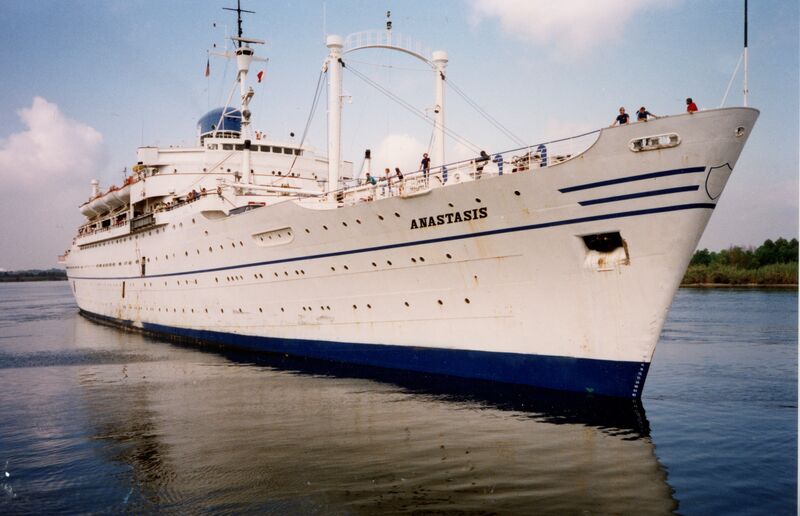
In 1978, a small group of volunteers bought a worn-out Italian ocean liner for its scrap value and turned it into a floating hospital. That ship became the Anastasis, and it started a fleet that now delivers free surgery across Africa. Mercy Ships Australia supports that work from home, and the story of the vessels behind it is worth knowing if you give, volunteer or simply follow the mission.
The ships have changed a lot. They began as converted liners and ferries and grew into a purpose-built hospital ship with six operating theatres. The purpose never shifted: bring safe surgery to people who have no realistic way to get it.
How Many Hospital Ships Do Mercy Ships Have?
Two, as of now. The Africa Mercy and the Global Mercy are the operating hospital ships, as shown on the official Mercy Ships fleet and fleet history pages.
The historical fleet is bigger. The Anastasis, Caribbean Mercy and Island Mercy all served in earlier decades and have since retired. If you’re counting for a school project, a news story or a donor update, check which number you need. “Current fleet” and “every ship in the organisation’s history” give different answers.
The Origins of Mercy Ships
Don Stephens and his wife, Deyon, founded Mercy Ships in 1978 on a simple idea. Most of the world’s coastlines have ports, and a ship can sit in a port and act as a hospital. Instead of building permanent clinics, the charity could sail to a country, work with its health authorities and treat patients on board.
The model brought together three things: a vessel, professional volunteers and local partners. Surgery was the headline service, but early ships also carried dental teams, supplies and community health programs. The mix has shifted over the decades, and the basic formula hasn’t.
Anastasis: The Ship That Started It All
The Anastasis began life in 1953 as the Italian passenger liner Victoria. Mercy Ships bought her in 1978 for little more than her scrap value. Volunteers then spent four years rebuilding her, and she sailed from Greece in 1982.
The new name came from the Greek word for resurrection. It suited a retired liner given a second life. Her hospital included three operating theatres, a ward, a dental clinic, a laboratory and an X-ray unit, plus cargo space for supplies and a fleet of vehicles for work onshore.
She served as flagship from 1978 until 2007, close to three decades. Some of the volunteers who sailed on those early voyages still tell their stories today, including Åsa and Lars Gisel’s decades with Mercy Ships. The Anastasis proved that a second-hand ship could carry a working hospital across oceans. Every later vessel builds on that.
Good Samaritan and Island Mercy: Smaller Ships, Wider Reach
The Good Samaritan joined the fleet in 1983. She was a former Newfoundland coastal ferry, originally named Petite Forte. She carried supplies and people around the Caribbean, Central America and South America, which gave Mercy Ships a more flexible way to operate. A ship that could haul cargo and run clinics could also reach smaller ports that a big liner couldn’t.
In 1994 she was renamed the Island Mercy and sent to the South Pacific, where she delivered eye and dental services alongside cargo and practical support. Treat the two names as one ship with two chapters. Mixing them up is a common mistake in fleet timelines.
Caribbean Mercy: Serving the Americas
Mercy Ships acquired the Caribbean Mercy in 1994. She was a former Norwegian ferry, the Polarlys. She worked mainly in Central America and the Caribbean basin, with an eye surgery unit on board and space for conferences and training.
She retired in 2006. Over her twelve years of service she visited well over a hundred ports. Her career shows how far a commercial ferry can be pushed when a crew of volunteers from many countries fits it out for a different job.
How Converted Ships Became Floating Hospitals
Turning a liner into a hospital is harder than it sounds. A ship’s hull, engines and accommodation come ready-made, which saves money. Everything else has to be built or reworked, including sterile operating theatres, reliable power and clean water, ventilation, patient wards and safe routes for moving people through the vessel.
Those conversions taught Mercy Ships where the limits were. Corridors built for passengers made awkward hospital layouts. Space was tight. Systems designed for a different purpose needed constant workarounds. These lessons eventually pushed the organisation towards designing a hospital ship from scratch.
Africa Mercy: A Major Step Forward
The Africa Mercy was built in 1980 as the Danish rail ferry Dronning Ingrid. Mercy Ships acquired her in 1999, and after a long conversion she entered service in 2007, replacing the Anastasis. She has five operating theatres and a ward of around 80 beds, a big jump in surgical capacity.
She also houses a large volunteer community on board. For years she was the largest non-governmental hospital ship in the world, and she has worked with partner nations across Africa on surgery and training. She remains in service today.
Life Aboard a Hospital Ship
A hospital ship is two things at once: a hospital and a working vessel. Surgeons, anaesthetists and nurses share the same corridors as engineers, deck officers, cooks and administrators. If the generators fail, theatres stop. If the kitchen doesn’t run, nobody has the energy to operate.
Volunteers often live on board for months, so the ship has to work as a community as well as a workplace. Accommodation, meals, laundry and communications all sit alongside the clinical areas. Medical skill gets patients treated, but it’s the people running the whole system who make that treatment possible.
Global Mercy: A Purpose-Built Hospital Ship
The Global Mercy is the first Mercy Ships vessel designed as a hospital from the keel up. The board committed to building her in 2011, rather than converting another ship. Construction took place at a Chinese shipyard, and she was delivered in 2021 and began service in Africa in 2022.
She is 174 metres long and has six operating theatres and 102 acute-care beds, plus ICU and isolation beds. She also has training and simulation areas, which matter as much as the theatres because teaching is a core part of the mission. Mercy Ships’ own team explains what makes the Global Mercy different from other hospital ships, starting with a hospital built into the design rather than fitted around a passenger layout.
Designing from scratch lets planners think about workflow first. Where do patients enter? How do clean and dirty supplies move apart? Where do recovering patients rest? Earlier ships never had room for those questions.
The Surgery That Changes Lives
Mercy Ships operate on conditions that become serious or disabling when treatment isn’t available. Typical procedures include cataract removal, cleft lip and palate repair, tumour removal, orthopaedic surgery and obstetric fistula repair. Exact services depend on what each host country’s screening identifies.
For a patient, an operation can mean restored sight, easier movement or an end to the isolation that comes with a visible condition. Teams assess each person first, weigh the risks and plan follow-up care. Surgery isn’t a cure-all, and the best outcomes come when it’s backed by recovery support and local health services.
Volunteers Who Keep the Ships Running
Thousands of volunteers serve each year, drawn from dozens of countries. Clinical roles include surgeons, anaesthetists, nurses, dentists, pharmacists and lab staff. Non-clinical roles include engineers, electricians, deck crew, cooks, teachers and logistics specialists. A ship with no engineers is just a very expensive building.
Australians who want to serve should check role requirements, time commitments and costs with Mercy Ships directly. Health professionals should also confirm their registration status with Ahpra before applying, since requirements vary by profession.
Before any trip, read the government’s advice for the host country on Smartraveller. Health, safety and entry rules for the countries Mercy Ships visits can change from one season to the next.
Local Partnerships and Training
A hospital ship can’t fix a health system by itself. Local hospitals, health ministries and community groups help identify priorities, find patients and arrange follow-up care. Without them, a patient could have a successful operation and then have nowhere to go for a check-up.
Training is the other half of the work. Mercy Ships teaches local surgeons, anaesthetists, nurses and other staff, often using techniques that suit local hospitals rather than high-tech city theatres. When a ship leaves, trained staff stay behind. Results vary by country and depend on long-term investment, but training is how a short visit leaves something lasting.
Ports of Call and Field Missions
Ships spend roughly ten months in a host country on each field service. Planning begins long before arrival and involves national authorities, patient screening and port logistics. A suitable port needs deep enough water, secure berthing and access for patients.
Today the focus is Africa. Schedules shift with refits, maintenance periods and partner agreements, so check the official schedule rather than relying on an older article.
How Ship Technology Has Changed
Early converted ships proved the concept but forced medical teams to work around the old layouts. Modern ships can build clinical spaces, patient flow and supporting systems into the design. Better diagnostics and communications also help teams working far from major hospitals.
Equipment still needs maintenance, training and good procedures to be useful. A new ship with poor processes will deliver worse care than an old one with a great team.
What Comes Next for the Fleet
The Global Mercy shows what purpose-built design can do. The Africa Mercy shows how long a well-maintained converted ship can serve. The next vessel will add capacity if the funding, crew and partnerships line up.
The measure of the fleet isn’t ship size. It’s how many patients get treated, how many local professionals get trained and how strong the relationships with host countries are.
Final Thoughts …
Mercy Ships’ history runs from a scrap-value liner in 1978 to a purpose-built hospital ship in 2021. Each vessel taught the organisation something, and the purpose has barely changed.
If you want to get involved, start with the official fleet pages and check the latest schedule. Then decide whether giving, fundraising or volunteering fits you. Australians have a direct way in through Mercy Ships Australia.
FAQs
What was the first hospital ship operated by Mercy Ships?
The first vessel in the Mercy Ships fleet was the MV Anastasis. Originally built as the Italian passenger liner Victoria in 1953, the vessel was purchased in 1978 and converted into a fully operational floating hospital equipped with operating theatres, a ward, and crew accommodation.
How does the Africa Mercy II fit into the historical timeline of the Mercy Ships fleet?
The Africa Mercy II represents the latest phase in fleet modernization. It follows the legacy of earlier vessels, such as the MV Good Samaritan, MV Caribbean Mercy, MV Island Mercy, MV Africa Mercy, and MV Global Mercy, to expand maritime surgical capacities in developing nations.
Is Mercy Ships Australia registered as a charity with the ACNC?
Yes, Mercy Ships Australia is officially registered with the Australian Charities and Not-for-profits Commission (ACNC). It oversees national fundraising, donor support, and volunteer recruitment across Australian states and territories.
Are donations made to Mercy Ships Australia tax-deductible with the ATO?
Yes, Mercy Ships Australia holds Deductible Gift Recipient (DGR) status endorsed by the Australian Taxation Office (ATO). Donations of $2 or more made by Australian taxpayers are tax-deductible on annual income tax returns.
How do Australian volunteers apply to serve aboard a Mercy Ships hospital vessel?
Australian citizens and residents apply online through the Mercy Ships Australia website. The application process involves background checks, medical screenings, professional credentialing, and an interview.
Can Australian medical professionals receive AHPRA registration recognition while volunteering on board?
Australian doctors, surgeons, and nurses maintain their registration with the Health Practitioner Regulation Agency (AHPRA) and relevant national boards while serving overseas, subject to continuing professional development (CPD) requirements.
What original vessel was converted to build the MV Africa Mercy?
The MV Africa Mercy was converted from the Scandinavian rail ferry Dronning Ingrid, built in 1980. It underwent an extensive refit to install specialised surgical decks, recovery wards, CT scanners, and laboratory facilities.
What is the difference between a converted hospital ship and a purpose-built hospital ship?
Converted hospital ships, like the Anastasis and Africa Mercy, were adapted from existing ocean liners or rail ferries. In contrast, newer vessels like the Global Mercy were designed and constructed from the keel up specifically as non-governmental hospital ships.
How can Australians make tax-effective regular donations before the EOFY?
Australian donors can set up recurring direct debits or credit card gifts before the end of the financial year (30 June) to maximize tax deductions under ATO guidelines.
Can Australian businesses support Mercy Ships through corporate workplace giving schemes?
Yes, Australian companies can integrate Mercy Ships Australia into pre-tax workplace giving programs. Employees donate directly from their pre-tax pay, receiving an immediate tax benefit without waiting for EOFY tax returns.
What role did the MV Good Samaritan play in the Mercy Ships fleet history?
The MV Good Samaritan (later renamed MV Island Mercy) joined the fleet in 1994, offering medical, dental, and humanitarian relief across the Caribbean, Central America, and the South Pacific before its eventual retirement.
How do Australian volunteers handle Superannuation contributions while serving on board?
Because crew members serve as self-funded volunteers, employer Superannuation Guarantee (SG) contributions generally cease during volunteer periods unless arranged via personal voluntary contributions or sponsorship arrangements.
What maritime certifications are required for Australian crew serving in marine departments?
Australian maritime personnel, including deck officers and marine engineers, must hold valid qualifications recognized by the Australian Maritime Safety Authority (AMSA) along with STCW (Standards of Training, Certification and Watchkeeping) endorsements.
Where is the Mercy Ships Australia national office based?
The national office of Mercy Ships Australia is located in Caloundra, Queensland. This office handles donor relations, community fundraising, media inquiries, and volunteer placement support for Australian applicants.
How long do Mercy Ships hospital vessels remain docked at host ports in West Africa?
A typical field service deployment lasts between 8 to 10 months in a single port city. This extended stay allows surgical teams to deliver free specialized care and conduct medical capacity building for local healthcare staff.
What types of surgical procedures are performed on board Mercy Ships vessels?
Surgeons perform free specialized procedures, including maxillofacial reconstructive surgery, cleft lip and palate repair, cataract removal, orthopaedic corrections, paediatric surgery, and obstetric fistula repairs.
Are Australian volunteers required to undergo Working with Children Checks?
Yes, volunteers assigned to roles interacting with minors, such as teachers in the on-board academy or paediatric ward staff, must hold a valid state-based Working with Children Check (such as a Queensland Blue Card or NSW Working with Children Check).
How are Mercy Ships floating hospital operations funded?
Operations are funded through voluntary charitable donations from individuals, philanthropic trusts, corporate sponsorships, and workplace giving programs managed by international support offices including Mercy Ships Australia.
What happens to former hospital ships like the MV Caribbean Mercy when retired?
When hospital ships reach the end of their operational service life, they are decommissioned and sold or transferred to other maritime operators, with proceeds redirected into maintaining and modernising active fleet vessels.
Do Australian volunteers pay for their own living expenses on board?
Yes, accepted volunteers cover their crew fees, travel expenses, vaccinations, and personal costs. Crew fees help cover room and board in shared or private cabins on the ship.
How does Mercy Ships collaborate with local health departments during field services?
Mercy Ships works directly alongside host-nation Ministries of Health to align surgical priorities, select patient cohorts, and provide training programs that build sustainable local healthcare infrastructure.
Can Australian high school graduates or university students undertake volunteer gaps on board?
Yes, non-medical operational roles, such as dining room service, deck hand, house keeping, and administrative assistance, are available to young adults aged 18 and over who satisfy application and health requirements.
How does the ATO view non-cash gifts or bequest donations left to Mercy Ships Australia?
Bequests left in a Will or capital gifts made to Mercy Ships Australia offer distinct estate-planning benefits under Australian tax law. Donors are advised to consult a qualified Australian estate solicitor or tax accountant.
What on-board educational facilities are available for families serving long term?
For families serving on extended commitments, the ships feature fully accredited on-board school facilities covering primary and secondary curricula taught by volunteer educators.
How can Australian donors verify the legitimate DGR status of Mercy Ships Australia?
Donors can verify registration details by searching the Australian Business Number (ABN 30 097 037 922) on the official Australian Government ABN Lookup portal or the ACNC register.
Recent Comments