
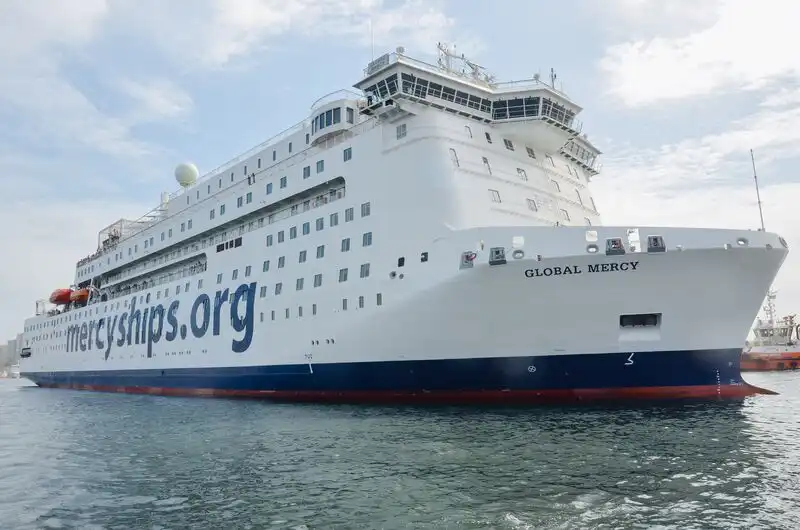
In the vast, unpredictable expanse of the world’s oceans, the Global Mercy stands as a beacon of hope. A groundbreaking creation by Mercy Ships, this state-of-the-art floating hospital is much more than a hospital ship, it is a self-contained medical city. Designed to provide world-class medical care to regions with limited healthcare access, the Global Mercy offers transformative services where they are needed most.
What sets this maritime medical vessel apart is its innovative design and hospital ship infrastructure. In this article, we’ll delve into the anatomy of a hospital ship, exploring the advanced technology, operational systems, and architectural features that make the Global Mercy a cornerstone of humanitarian healthcare. From surgical theatres to specialised wards, every element of this floating hospital is designed with one goal in mind: to save lives and improve health outcomes in some of the world’s most underserved areas.
The Vision Behind the Global Mercy
The Global Mercy is not simply a technological marvel; it embodies the essence of compassion and innovation. As part of Mercy Ships, the vessel was created to bridge the gap in healthcare access for some of the world’s most underserved populations. The mission of the Global Mercy is clear: to provide high-quality medical care where it is most needed, offering a lifeline to those who may otherwise have no access to life-saving treatments.
Beyond medical procedures, the Global Mercy is dedicated to medical education and training, empowering local healthcare workers with the skills and knowledge needed to improve their communities’ healthcare systems long after the ship departs. The ship’s mission goes far beyond just treating patients; it strives to create sustainable improvements in global health by fostering medical expertise and providing long-term support to vulnerable regions. Through this commitment, the Global Mercy plays a pivotal role in transforming healthcare on a global scale.
Hospital Ship Design: A Blueprint for Success
The design of the Global Mercy is a testament to careful planning and innovation, enabling it to function as a fully equipped hospital ship in diverse and often challenging conditions. Every detail, from its structural layout to the specialised medical equipment, has been tailored for maximum efficiency and flexibility. This ensures that the ship can deliver high-quality care, regardless of the geographical or environmental constraints it encounters.
Within the floating hospital, several distinct areas have been created to meet the complex medical needs of the communities it serves. There are fully equipped operating rooms, dedicated wards for patient care, a well-stocked laboratory, and even a medical training centre for local professionals. The ability to adapt to changing needs and provide a range of services, from life-saving surgeries to professional development, makes the Global Mercy’s design truly exceptional, reinforcing its role as a self-sufficient maritime medical facility.
The Global Mercy: A Floating Medical City
What sets the Global Mercy apart is its capacity to operate as a fully self-contained medical city. This incredible vessel is designed to meet every need of both patients and medical staff, offering a wide range of medical services, from surgeries to outpatient care. The floating hospital is equipped with state-of-the-art facilities, including operating theatres, ICUs, and patient wards, all of which can accommodate a high volume of cases in a variety of specialties.
In addition to its medical capabilities, the Global Mercy provides accommodation for doctors, nurses, and volunteers, ensuring they have everything needed for long-term humanitarian missions. With its innovative hospital ship infrastructure, the Global Mercy is more than just a hospital on water; it is a key element of Mercy Ships’ global mission, providing essential care to underserved communities worldwide. This remarkable ship brings modern healthcare to regions that would otherwise lack access to such services.
The Role of the Global Mercy in Humanitarian Aid
The Global Mercy plays a pivotal role in humanitarian aid by providing more than just medical treatment. It acts as a mobile healthcare facility, delivering essential care to communities with limited access to healthcare services. Through Mercy Ships, this floating hospital brings life-saving procedures and expert medical care to regions where healthcare infrastructure is minimal or non-existent. It ensures that people in desperate need can receive high-quality care, often in life-threatening situations.
Equipped with state-of-the-art medical technology and a skilled team of professionals, the Global Mercy has the capacity to treat thousands of patients each year. From routine surgeries to highly complex procedures, it offers comprehensive medical services that transform lives. Its presence is a beacon of hope for many, providing not only physical healing but also a sense of dignity and care for people who may otherwise have no access to medical attention.
The Hospital Ship Infrastructure: Engineered for Efficiency
The hospital ship infrastructure of the Global Mercy is a key factor in its ability to provide exceptional care in remote areas. The vessel is thoughtfully organised across multiple decks, each dedicated to specific functions such as medical treatment, crew accommodation, and storage. This careful design ensures that every part of the ship serves a clear purpose, allowing for the seamless flow of medical operations.
The maritime hospital design optimises space and functionality, enabling staff to move efficiently between different departments while maintaining high standards of care. With state-of-the-art equipment and dedicated spaces for patient care, the Global Mercy’s infrastructure supports everything from complex surgeries to basic medical consultations. The careful engineering of the ship allows for effective hospital ship operations, ensuring that resources are utilised to their maximum potential and that the team can focus on delivering timely care to those in need.
The Global Mercy Hospital Layout: Space for Care and Healing
The Global Mercy hospital layout is designed to maximise space while providing comprehensive medical care in a confined environment. It includes state-of-the-art surgical theatres, intensive care units (ICUs), and patient wards, all carefully planned to accommodate both inpatient and outpatient care. Each medical area is equipped with advanced technology and resources, ensuring that the ship can meet a wide range of medical needs, from routine procedures to complex surgeries. This meticulous design allows for seamless patient flow and efficient care delivery, even in the most remote locations.
In addition to its medical facilities, the layout also prioritises the well-being of the crew. Recreational areas for staff are thoughtfully integrated into the design, providing spaces for relaxation and socialisation during lengthy missions. These areas are essential in promoting a healthy work-life balance, helping to prevent burnout and ensuring that the medical professionals on board can continue to provide high-quality care throughout the ship’s humanitarian missions.
The Technology Behind the Global Mercy
The technology behind the Global Mercy is a critical aspect of its ability to deliver world-class care in challenging environments. Equipped with cutting-edge floating hospital technology, the vessel boasts a range of advanced hospital ship equipment and medical vessel systems. This ensures that the ship is not only functional but also capable of offering a comprehensive range of medical services. The ship’s design integrates advanced diagnostic tools and imaging technology, enabling accurate and efficient assessments for a wide variety of conditions.
Furthermore, the Global Mercy is equipped with state-of-the-art surgical facilities and equipment to carry out complex procedures across multiple specialties. From surgical theatres to intensive care units, every area of the ship is designed to deliver high-quality care, even in the most remote locations. This maritime medical vessel is a symbol of technological innovation, providing life-saving care to those who need it most.
Hospital Ship Operations: From Logistics to Medical Care
Hospital ship operations are at the heart of the Global Mercy’s success, ensuring it can deliver high-quality care in even the most challenging environments. The operations team meticulously manages every aspect, from coordinating the delivery of essential medical supplies to organising patient intake. A well-structured workflow ensures the ship operates smoothly, enabling healthcare professionals to focus on providing life-saving treatment to those in need. In addition to its medical services, the Global Mercy engages in crucial community outreach efforts, raising awareness of available care and ensuring local populations are supported.
Efficient logistics play a vital role in the smooth running of the hospital ship, including the management of surgical procedures, medical equipment, and staff rotations. The team works in close collaboration, adapting to the evolving needs of each community the ship visits. By aligning all operations with the humanitarian goals of Mercy Ships, the Global Mercy maximises its impact, transforming lives through timely and effective healthcare delivery.
The Global Mercy’s Contribution to Local Healthcare
A central aspect of the Global Mercy’s mission is its ability to support and strengthen local healthcare systems. By partnering with local medical professionals, Mercy Ships brings immediate care while also fostering long-term improvements. The presence of the Global Mercy helps enhance the capabilities of healthcare facilities in under-resourced regions, ensuring that communities receive sustained benefits well after the ship departs.
In addition to providing direct medical care, the Global Mercy plays a vital role in medical education and training. Through its comprehensive training programmes, local healthcare workers gain valuable skills and knowledge that enable them to continue offering high-quality care. This focus on capacity-building ensures that the impact of Mercy Ships extends far beyond the ship itself, improving the standard of care in these regions for years to come. Through collaboration and education, the Global Mercy empowers local healthcare professionals, making a lasting contribution to global health.
The Mercy Ships Model: A Humanitarian Medical Vessel in Action
Mercy Ships has built a strong reputation for delivering innovative humanitarian medical care to some of the most remote and underserved regions in the world. With a fleet of floating hospitals, the organisation brings essential surgical procedures, medical treatments, and health education to communities facing critical shortages in healthcare services. Its model not only addresses immediate health needs but also focuses on improving local healthcare infrastructure through training and capacity-building.
The Global Mercy, the latest and largest vessel in the Mercy Ships fleet, enhances this model by expanding the organisation’s reach and increasing its capacity for care. Equipped with advanced medical facilities and the latest floating hospital technology, the Global Mercy is designed to provide a wide range of services, including specialised surgeries, and support health systems in local communities. This humanitarian medical vessel helps Mercy Ships deliver high-quality care while empowering local healthcare professionals to sustain improvements long after the ship departs.
Future of Floating Hospitals: The Global Mercy’s Lasting Impact
The Global Mercy, as the largest hospital ship in the world, represents the future of maritime healthcare. Its innovative design, which includes state-of-the-art medical facilities and technology, is a game-changer for global health initiatives. Through its unique floating hospital infrastructure, the vessel is able to reach remote and underserved regions, providing essential care where it is needed most. This groundbreaking vessel showcases the power of hospital ship operations, enabling Mercy Ships to provide life-saving treatments, children’s surgeries in Africa, and health education worldwide.
Looking ahead, the Global Mercy will continue to play a significant role in transforming healthcare delivery in developing regions. As a self-contained medical city, it not only delivers immediate care but also supports long-term improvements to local health systems through training and education. The Global Mercy’s humanitarian mission ensures that this floating hospital will leave a lasting impact, improving access to healthcare and raising the standard of care for millions of people in need.
Final Thoughts …
The Global Mercy represents an extraordinary advancement in the world of hospital ships. Its design, from its hospital ship architecture to its floating medical city infrastructure, has set new benchmarks in maritime healthcare. With cutting-edge technology and comprehensive medical facilities, the Global Mercy is reshaping the global health landscape. For the communities it serves, this humanitarian hospital vessel is far more than just a place for medical care; it is a lifeline that brings both treatment and hope for a brighter, healthier future.
Through its innovative features and forward-thinking design, the Global Mercy showcases the immense potential of floating medical cities and their transformative impact on global health. It serves as a powerful reminder of the strength of Mercy Ships’ mission, as well as the collective efforts of medical professionals, volunteers, and donors working together to bring lasting change to some of the most vulnerable communities around the world.
FAQs
What is a hospital ship?
A hospital ship is a specially equipped vessel that provides medical and surgical care, often in regions with limited access to healthcare. They operate as fully functional floating hospitals.
Who operates the Global Mercy hospital ship?
The Global Mercy is operated by Mercy Ships, an international charity dedicated to offering free medical care and surgical services to those in need.
What is the purpose of a hospital ship like the Global Mercy?
Its main purpose is to deliver safe, high-quality surgical and medical care to people in developing nations who lack access to proper healthcare facilities.
How does a hospital ship get its power?
Hospital ships are self-sufficient, generating their own electricity through diesel-powered generators, allowing them to function independently of local infrastructure.
What medical facilities are on board the Global Mercy?
The Global Mercy includes six operating theatres, hospital wards, an intensive care unit, a lab, and specialised clinics for eye and dental procedures.
How do patients get medical care on a hospital ship?
Patients are screened on land before boarding the ship for surgery and recovery. This ensures that those with the greatest need receive appropriate treatment.
Are the medical services on a hospital ship free?
Yes, all medical services provided by Mercy Ships are completely free to patients, supported by donations and volunteer staff.
How is the water purified on board?
The ship uses desalination technology to purify seawater, producing clean drinking water for patients, crew, and medical operations.
How long does a hospital ship stay in one port?
Typically, a hospital ship remains in port for several months to provide long-term care and perform thousands of surgeries before moving on.
What types of staff work on a hospital ship?
The crew includes medical professionals such as surgeons, nurses, and anaesthetists, as well as maritime, technical, and administrative volunteers.
What is the difference between the Global Mercy and the Africa Mercy?
The Global Mercy is newer and larger, with expanded facilities and greater patient capacity than the Africa Mercy, which continues to serve alongside it.
How does a hospital ship handle waste?
They use advanced systems to treat sewage and safely dispose of medical waste, including on-board incinerators to ensure environmental responsibility.
What kind of surgeries are most common on the Global Mercy?
Common procedures include cataract removal, facial reconstruction, orthopaedic operations, and obstetric fistula repair, all restoring health and dignity to patients.
Is the Global Mercy a permanent hospital?
No, it’s a mobile hospital that travels to developing nations, delivering medical care where it’s most urgently needed.
How do hospital ships find patients?
Mercy Ships works with local governments and health organisations to identify, screen, and schedule patients in advance of the ship’s arrival.
How is a hospital ship a “self-contained medical city”?
It functions independently with its own power, water supply, housing, and full hospital facilities—everything needed to operate without external support.
Can a hospital ship operate in a storm?
Ships are moored in protected harbours and surgeries are suspended during rough conditions to ensure the safety of patients and crew.
How are the hospital facilities sterilised?
Dedicated sterilisation departments use autoclaves and strict hygiene protocols to ensure all instruments are sterile and safe for surgery.
What is the training centre on the Global Mercy for?
The training centre provides education and hands-on training to local medical professionals, helping to build sustainable healthcare capacity.
How does the Global Mercy help a country after it leaves?
It leaves a legacy by training healthcare workers and reducing surgical backlogs, strengthening local health systems long after departure.
Recent Comments