
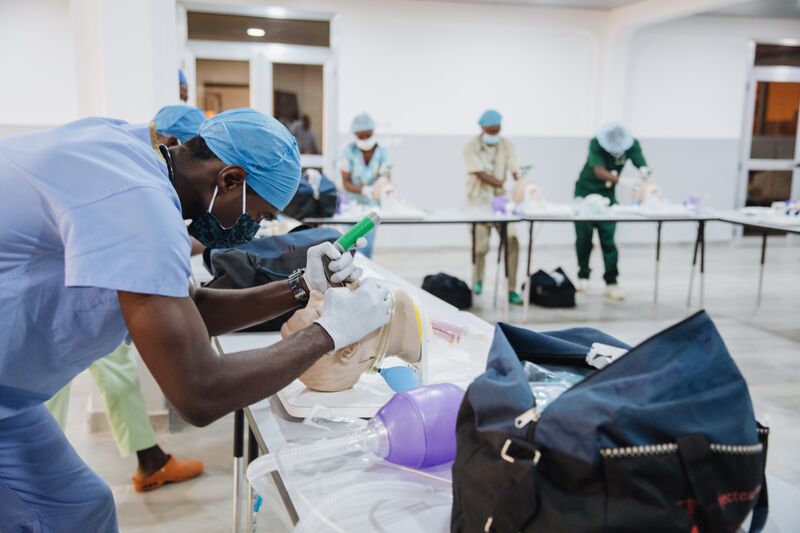
Building a clinic is not the same as building a health system. Donating equipment is not the same as ensuring someone knows how to use it, maintain it, or teach others to do the same. Real, lasting progress in African healthcare comes from something harder and more deliberate: training people, strengthening institutions, improving infrastructure, and backing local leaders so that progress continues long after outside organisations have packed up and gone home.
For Australians, this is not a distant concern. Australia has hard-won experience in rural health delivery, remote care models, clinical training, and public health planning. Those strengths can directly support African-led healthcare progress, provided they are applied with genuine respect, cultural awareness, and a long-term commitment to local ownership rather than ongoing dependence. Organisations like Mercy Ships in Australia have been doing exactly that for decades, working across sub-Saharan Africa to build sustainable health capacity alongside free surgical care.
Across Africa, medical capacity building is becoming one of the clearest foundations for lasting healthcare improvement. Strengthening clinical skills, supporting medical education in Africa, improving health service delivery, and investing in healthcare workforce training all contribute to a healthcare legacy that is practical, measurable, and deeply human.
Understanding Sustainable Healthcare Development in Africa
Sustainable healthcare development means building health services that continue to function, improve, and respond to community needs over time, not just during or immediately after a funded programme. In the African context, that often means stronger primary healthcare investment, better hospital systems, improved maternal and paediatric care, sustainable diagnostic services, and more reliable access to essential medicines.
The focus is not only on solving today’s problems. Sustainable health models must also handle tomorrow’s. Population growth, disease outbreaks, workforce shortages, regional inequality, climate pressure, and the need for stronger public health capacity are all realities African health systems face. A system that is truly sustainable can protect progress even when funding shifts, leadership changes, or social conditions become unstable.
For healthcare professionals, NGOs, policymakers, and development organisations, sustainable healthcare development offers a more responsible pathway forward. It places real value on local ownership, practical skills, institutional strengthening in Africa, and healthcare system resilience. When those elements work together, communities are far better equipped to deliver consistent, safe, and dignified care.
Why Medical Capacity Building Matters
Medical capacity building is one of the most direct ways to create long-term healthcare improvement. It focuses on developing the knowledge, skills, systems, and leadership that local healthcare teams need to deliver better care on their own. That includes clinical training, medical leadership training, healthcare organisational development, and clinical competence development.
A hospital can receive modern equipment, but if staff are not trained to use, repair, and manage it, the benefit fades fast. A clinic can receive outside support, but if local health workers are not properly equipped, the service often collapses once the project ends. Capacity building addresses that gap by making people and systems stronger from within.
Done well, this approach supports healthcare self-sufficiency and builds real confidence across African healthcare systems. It also helps retain talent by giving clinicians a clearer professional path. When local doctors, nurses, midwives, technicians, and health managers are supported through continuous professional clinical development, the benefits reach patients, families, and future generations.
Moving From Short-Term Aid to Lasting Impact
Short-term medical support has its place, particularly during emergencies or when communities face urgent healthcare needs. However lasting change depends on what stays behind once the immediate intervention is complete.
A sustainable medical mission does not simply arrive, treat patients, and leave. It works with local professionals, shares knowledge, supports clinical mentoring programs, and strengthens health service delivery systems. The key question it asks is not “what did we achieve?” but “what can the local team now do independently, with confidence and practical resources?”
Making that shift from temporary service to genuine capacity development creates stronger outcomes. It turns a single visit into a platform for medical knowledge transfer. It turns outside support into local capability development. For Australian organisations engaged in global health, this approach reflects responsible, respectful, and long-term thinking. Understanding how medical missions build lasting capacity rather than short-term relief is an important starting point for anyone considering international health engagement.
The Train-the-Trainer Medical Model
The train-the-trainer medical model is one of the most effective methods for building sustainable clinician training at scale. Rather than training a small group of health workers once and moving on, it prepares selected local professionals to teach others. Knowledge then spreads through hospitals, universities, clinics, and community-based health systems at a pace that no outside organisation could achieve alone.
The multiplication effect is where the power lies. One trained clinician becomes a mentor. One mentor supports a team. One team improves care across an entire facility. Over time, this creates sustainability skills and strengthens local health leadership in a way that is organic and self-reinforcing.
Across Africa, where healthcare workforce scaling is a constant priority, the train-the-trainer model can support medical education, nursing education, surgical capacity building, diagnostic skills, maternal health sustainability, and paediatric healthcare development. It also respects local expertise by placing African professionals at the centre of teaching, decision-making, and future growth rather than positioning them as passive recipients of outside knowledge.
Strengthening African Healthcare Systems
Strong African healthcare systems need more than individual clinical skill. They require effective governance, reliable facilities, trained staff, supply chains, referral pathways, health data, quality standards, and practical leadership at every level. That is why institutional strengthening in Africa sits at the heart of sustainable healthcare development.
Health system fortification can include better hospital management, clinical governance frameworks, healthcare quality improvement, sustainable medical logistics, and stronger health sector governance. These areas may not generate headlines, but they are essential to safe and reliable care. A strong system helps a patient move from a community clinic to a district hospital and on to tertiary healthcare support when needed. It helps medicines arrive on time. It helps staff understand their roles. It helps communities trust the care they receive. Permanent healthcare benefits rarely come from one project or one facility. They come from the system that surrounds and supports them. The Australian Government’s development assistance in sub-Saharan Africa recognises this, prioritising long-term partnerships that build governance and institutional capacity rather than simply delivering aid.
Building a Skilled and Confident Healthcare Workforce
The healthcare workforce is the heart of sustainable healthcare development. Doctors, nurses, midwives, allied health workers, laboratory staff, community health workers, and health administrators all play a vital role in patient care. When their skills are strengthened, the whole system becomes more capable.
Healthcare workforce training can improve clinical judgement, communication, patient safety, infection control, emergency response, diagnostics, surgery, maternity care, and chronic disease management. It can also support healthcare workforce retention by helping professionals feel valued, equipped, and able to grow in their careers. A nurse who has completed specialist training and been mentored through real clinical challenges is far more likely to stay in the public health system than one who feels unsupported and under-resourced.
For many African healthcare settings, human resources for health remain one of the greatest challenges. Sustainable medical outreach should therefore include medical staff upskilling, talent development, medical professionalisation, and clinical service expansion. These investments do not only change individual careers. They change the quality and reach of healthcare for entire communities.
Supporting Medical Education in Africa
Medical education in Africa is central to long-term health viability. Universities, teaching hospitals, nursing colleges, and professional training bodies shape the future of healthcare across the continent. Supporting these institutions strengthens local medical expertise and creates a stronger pipeline of skilled professionals for decades to come.
Capacity development in medical education can include curriculum support, faculty mentoring, simulation training, clinical placements, research collaboration, and continuing professional development. It can also support specialist medical training in surgery, paediatrics, maternal health, diagnostics, anaesthesia, emergency care, and public health. These are the areas where African health systems often face their most significant gaps.
Australian universities, hospitals, and healthcare organisations can contribute meaningfully when partnerships are built around African priorities rather than donor preferences. The most useful support reinforces local systems rather than replacing them. This creates medical development, healthcare autonomy, and sustainable clinician training that stays grounded in local needs and realities. Volunteering with Mercy Ships offers Australian healthcare professionals a direct way to contribute to this kind of capacity-focused medical education in the field.
Sustainable Medical Infrastructure and Equipment Readiness
Healthcare infrastructure matters more than it often gets credit for. Clinics, hospitals, laboratories, maternity wards, theatres, pharmacies, and diagnostic services all need reliable buildings, equipment, power, water, and maintenance systems. Without those foundations, even highly skilled health workers struggle to provide safe care.
Sustainable medical infrastructure means planning for long-term use rather than immediate convenience. That includes medical equipment maintenance training, health facility optimisation, sustainable pathology services, and sustainable medical logistics. It also means choosing technology and equipment that can be maintained locally, with parts, training, and support available within the country or region rather than depending on overseas suppliers.
Renewable energy in healthcare plays an important role, especially in rural and remote facilities where power supply is unreliable. When infrastructure is designed for local conditions, it becomes a platform for lasting health improvement rather than a liability requiring constant outside maintenance.
Improving Equitable Healthcare Access
Equitable healthcare access is one of the most important goals of sustainable healthcare development, and one of the most frequently overlooked. Across Africa, many communities face barriers to care due to distance, cost, workforce shortages, limited transport, or a lack of specialist services. Sustainable health models must address these barriers in practical ways.
Health system decentralisation can bring care closer to where people actually live. Primary healthcare investment reduces pressure on hospitals and allows earlier treatment of conditions that, if caught late, become far more costly and complicated to manage. Community health workers can support prevention, education, referrals, and follow-up care.
Equity is not only about availability. It is about dignity, safety, cultural understanding, and trust. When healthcare systems are designed around community needs, they deliver more sustainable patient outcomes. How community engagement shapes children’s health outcomes is a useful read for understanding how this plays out in practice for maternal health sustainability and paediatric healthcare development.
Community Health Resilience and Local Ownership
Community health resilience means that local communities are better equipped to prevent, respond to, and recover from health challenges. It includes disease prevention, health education, maternal support, vaccination, nutrition, sanitation, mental wellbeing, and early access to care, all working together rather than in isolation.
Community-based health systems connect formal healthcare services with everyday life. They help identify risks earlier. They support families who might otherwise delay treatment until a condition becomes serious. They build trust between health workers and communities. They also make health services more responsive to cultural, social, and practical realities that outsiders rarely fully understand.
Local healthcare ownership is not optional if the goal is genuinely sustainable healthcare development. Communities, local leaders, and health professionals must be involved in planning, delivery, and evaluation. Without that, even well-resourced programs tend to fade once external support is withdrawn. A community healthcare legacy built from the inside out is far more durable than one designed elsewhere and delivered as a package.
Clinical Mentoring and Specialist Medical Training
Clinical mentoring programs are a practical way to build medical capability. Mentoring allows experienced professionals to guide less experienced clinicians through real clinical challenges, decision-making under pressure, patient safety, and professional confidence. The value is not just in the technical knowledge transferred but in the confidence built over time through supported practice.
Specialist medical training can address gaps in surgery, anaesthesia, emergency medicine, maternity care, paediatrics, diagnostics, oncology, and other priority areas. Surgical capacity building, in particular, can reduce treatment delays and improve outcomes for patients who need urgent or complex care. According to DFAT’s global health initiatives, building clinical capacity in developing countries is a recognised priority within Australia’s international development commitments.
Over time, clinical mentoring leads to measurable clinical competence development, better health service delivery, and stronger healthcare system maturity. It turns isolated skill into embedded practice. That is where real, lasting change takes hold.
Healthcare Technology and Sustainable Innovation
Technology can support sustainable healthcare development when it is practical, affordable, and suited to local conditions. Sustainable health technology may include digital records, telehealth platforms, mobile health tools, diagnostic systems, training technology, and supply chain tracking.
However, ttechnology alone is never the answer. It must be backed by training, maintenance plans, governance structures, data protection, and genuine local ownership. A digital health system that local staff cannot maintain or adapt will not create lasting value. A well-planned, locally supported system, on the other hand, can improve communication, strengthen referrals, support public health planning, and enhance clinical mentoring at scale.
Australia’s experience with distance care and remote service delivery offers practical insight for global health partnerships. The lessons from rural and remote Australian healthcare, where clinicians must sometimes work with limited resources and cover vast geographic areas, translate well to African healthcare settings facing similar pressures. The best technology partnerships adapt to local realities rather than importing solutions that work well elsewhere but fail in the field.
How Partnerships Create a Healthcare Legacy in Africa
A genuine healthcare legacy in Africa is built through partnership, not dependency. It is visible when local clinicians lead training programmes, hospitals manage stronger systems, communities trust their health services, and patients receive safer care closer to home.
Australian healthcare organisations, NGOs, universities, researchers, and ethical businesses can support this legacy through long-term relationships rather than one-off projects. Those partnerships may involve clinical training, research collaboration, public health capacity development, medical equipment maintenance training, healthcare policy development, and sustainable medical outreach. Exploring volunteer opportunities in Africa is one way Australian health professionals can begin that engagement practically and meaningfully.
The most effective partnerships listen first. They respect African leadership, align with local priorities, and focus on capability development. When that happens, outside support stops being aid and starts being a shared investment in sustainable health ecosystems, local health leadership, and an enduring medical heritage built by and for African communities.
Final Thoughts …
Sustainable healthcare development in Africa is one of the most meaningful ways to create long-term medical impact. Better health outcomes depend on people, systems, infrastructure, education, leadership, and community trust all working together, not on any single intervention, however well funded.
Medical capacity building is central to making that happen. By strengthening clinical skills, supporting healthcare workforce training, improving sustainable medical infrastructure, and encouraging local healthcare ownership, capacity building creates permanent healthcare benefits. It supports healthcare self-reliance and gives African health systems the tools to grow with confidence.
For Australians, the opportunity is clear and the responsibility is real. Responsible global health engagement means prioritising respectful partnership, practical support, and long-term value over short-term visibility. When Australian organisations contribute to African-led healthcare progress with that mindset, they help build more than services. They help build confidence, resilience, and a healthcare legacy in Africa that genuinely lasts.
FAQs
What is medical capacity building in the context of Australian aid?
Medical capacity building focuses on strengthening healthcare systems through clinical training, infrastructure support, and long-term workforce development rather than short-term emergency relief alone.
How does Australia support sustainable healthcare in Africa?
Australia supports healthcare development through DFAT funding, NGO partnerships, clinical education programmes, and infrastructure projects designed to strengthen local health systems.
Which Australian NGOs focus on medical training in Africa?
Australian organisations involved in healthcare training include Mercy Ships Australia and Australian Doctors for Africa, both of which support clinical mentoring and specialist education initiatives.
Are Australian medical volunteers required to have specific qualifications?
Yes, volunteers are generally required to maintain current professional registration through bodies such as AHPRA and usually need relevant post-graduate clinical experience.
What is the role of hospital ships in healthcare development?
Hospital ships provide advanced surgical care while also acting as training environments where local clinicians gain hands-on experience alongside international medical specialists.
How does medical capacity building create a lasting legacy?
Training local healthcare professionals creates long-term healthcare improvements by allowing communities to continue delivering specialised treatment independently.
What are the ethical considerations for Australian medical missions?
Australian organisations focus on culturally respectful partnerships, sustainable healthcare delivery, and strengthening local systems without undermining existing providers.
Does DFAT provide funding for healthcare projects in Africa?
Yes, DFAT funds a range of international development projects that support healthcare access, maternal health, sanitation, and workforce training across Africa.
How is clinical skill transfer measured for sustainability?
Success is often measured through increased local surgical capacity, staff retention, equipment maintenance capability, and the continued delivery of services after volunteers depart.
Can Australian nurses participate in capacity-building programs?
Absolutely. Australian nurses play a major role in training programmes focused on infection control, patient care standards, and clinical ward management.
What is the “Australia-Africa Regional Development Partnership Plan”?
It is a strategic partnership framework supporting long-term cooperation between Australia and African nations across healthcare, education, gender equality, and resilience initiatives.
How do Australian specialists manage medical equipment donations?
Modern aid programmes prioritise training local biomedical technicians so donated equipment can be maintained and repaired sustainably within the host country.
What impact does Australian aid have on African maternal health?
Australian-supported programmes help improve maternal outcomes through midwifery education, emergency obstetric training, and expanded neonatal healthcare services.
Is there a focus on mental health in Australian medical missions?
Yes, many organisations now integrate mental health support and trauma-informed care training into broader healthcare development programmes.
How do volunteers handle cultural sensitivity during training?
Volunteers receive preparation focused on cultural awareness, respectful communication, and understanding local healthcare practices before deployment.
What is the Australian Non-Government Organisation Cooperation Program (ANCP)?
The ANCP is a partnership programme that provides Australian NGOs with matched government funding for approved international development projects.
Do Australian missions provide dental healthcare training?
Yes, some programmes include dental outreach, preventative oral health education, and practical training for local healthcare workers.
What is the importance of “Specialist Medical Training” in Africa?
Specialist training increases local capacity to manage complex medical conditions without relying on external international support.
How does renewable energy link to sustainable healthcare?
Renewable energy systems such as solar power help rural clinics maintain reliable refrigeration, lighting, and operating theatre functionality despite unstable power grids.
How do Australian organisations ensure they aren’t creating aid dependency?
Many programmes operate with long-term transition plans focused on transferring leadership, training, and operational responsibility to local healthcare authorities.
Are there opportunities for non-medical Australian volunteers?
Yes, organisations often require logistics staff, IT specialists, project managers, educators, and administrators to support healthcare operations.
How does surgical capacity building reduce the “burden of disease”?
Providing access to safe surgery helps individuals return to work, education, and community life, improving both public health and economic productivity.
How can I donate to Australian medical missions in Africa?
You can donate through Australian charities and NGOs that hold DGR status and support sustainable healthcare and medical training programmes across Africa.
Recent Comments