
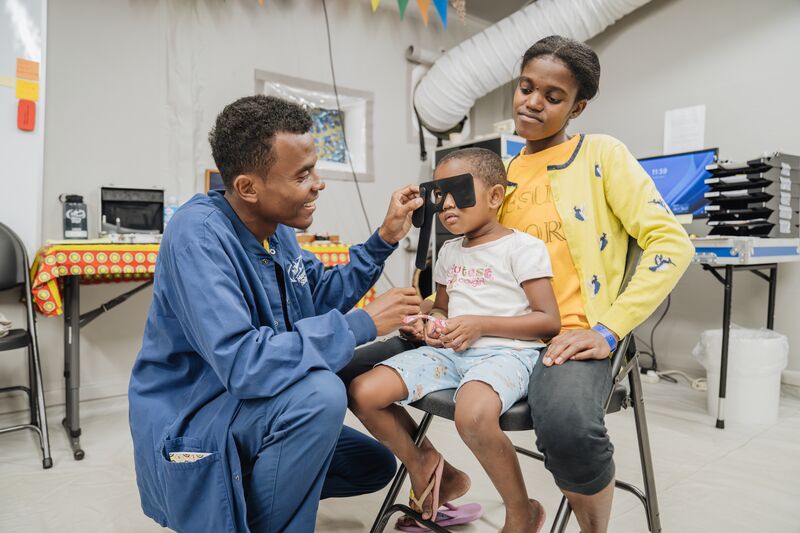
Sight loss from cataracts is almost always fixable, and that’s exactly what makes it such a frustrating problem. A person can go blind, stay blind for years, then have their vision restored in a single operation that often takes less than half an hour. Cataracts preventable blindness sits at an odd intersection: the medicine is simple, but getting that medicine to the people who need it is not.
A cataract forms when the proteins in the eye’s natural lens start to clump together, clouding a structure that’s normally clear. Light can no longer pass through properly, so vision blurs, colours fade, and night driving becomes harder. Left long enough, a cataract can block vision almost completely. None of this is exotic or rare. It’s one of the most common eye conditions on earth, and one of the most treatable.
For readers in Australia, the global scale of this problem is easy to miss because local access to surgery is good. But awareness and support from countries like ours make a real difference in places where that access simply doesn’t exist yet.
What a Cataract Actually Does to Your Vision
The eye’s lens sits behind the iris and focuses light onto the retina, much like a camera lens. Cataracts occur when proteins within that lens break down and form cloudy patches, and unlike many eye conditions, this damage is usually reversible with the right care.
Common warning signs include blurred or hazy vision, colours that look washed out, trouble reading small print, difficulty driving at night, glare from headlights or bright sun, and needing new glasses more often than usual. Most people ignore these changes at first because cataracts develop gradually. Left untreated, though, they eventually interfere with reading, driving, working, and everyday independence. Regular eye checks and basic cataract awareness go a long way toward catching the condition before it takes hold.
Why Cataracts Remain the Leading Cause of Preventable Blindness
Cataracts sit at the top of global blindness statistics for one simple reason: the resulting vision loss can almost always be reversed. Someone who has gone blind from a cataract can, in most cases, have their sight fully restored after surgery. That single fact is why cataract treatment does more to reduce global preventable blindness than almost any other medical intervention available today.
The obstacle isn’t medical knowledge. Cataract removal is a well-established, low-risk procedure that surgeons have performed safely for decades. The obstacle is access. Millions of people, particularly in remote or low-income regions, simply cannot reach a trained surgeon, a functioning clinic, or the money required to get there. Mercy Ships Australia works specifically in that gap, sending surgical teams to countries where eye care is scarce or non-existent.
The Wider Cost of Untreated Cataracts
Blindness doesn’t just affect eyesight. It changes what a person can do for the rest of their life. Someone who loses their vision to cataracts often loses their ability to work, to care for children, to travel unaided, or to take part in community life. In lower-income countries, this can tip a family from getting by into genuine hardship.
Cataract blindness hits hardest in regions where hospitals and specialists cluster in major cities, leaving rural populations with nowhere nearby to turn. Older people are especially vulnerable, since age-related cataracts are common and reduced mobility makes travel to a clinic even harder. Programs supporting ophthalmic eye care volunteers overseas exist to close exactly this gap, bringing surgical skill directly to underserved communities rather than waiting for patients to reach a city hospital that may be days away.
Why Blindness Persists Despite a Proven Cure
Modern cataract surgery succeeds in the overwhelming majority of cases, so it’s worth asking why so many people still go without it. Distance is one answer. Many patients live hours, sometimes days, from the nearest eye clinic, and that alone rules out treatment for people without reliable transport or spare income.
Cost is the other major barrier. Even where surgery is technically available, the price of consultations, travel, and the operation itself can be more than a family earns in months. This is exactly why low-cost and charity-funded cataract surgery programs matter so much. Without them, treatable blindness simply continues, generation after generation, in communities that have no other pathway to care.
How Cataract Surgery Actually Works
Cataract surgery is one of the more straightforward procedures in modern medicine. The surgeon removes the clouded natural lens and replaces it with a clear artificial one, restoring the eye’s ability to focus light properly. Most patients notice a dramatic improvement in vision within days, and recovery is typically quick.
The impact goes well beyond eyesight. Restored vision means people can return to paid work, look after grandchildren, walk to market without help, and simply get on with life. Across Mercy Ships’ cataract surgery missions in developing nations, this kind of surgery has helped thousands of patients regain independence they’d assumed was gone for good.
What Causes Cataracts in the First Place
Age is the biggest risk factor. As the eye ages, the lens naturally becomes more prone to clouding, which is why cataracts are so common in people over 60. But age isn’t the only cause worth knowing about.
Other recognised risk factors include prolonged exposure to ultraviolet radiation, diabetes, eye injuries, long-term use of certain medications, smoking, and poor nutrition. On the UV front, Australia’s own radiation regulator has been clear that sun exposure over a lifetime contributes directly to lens clouding, and recommends wearing sunglasses that meet the Australian UV protection standard as a simple, practical way to cut that risk. Not every cataract can be prevented, but good sun protection and regular eye checks make a genuine difference over a lifetime.
Why Regular Eye Checks Matter More Than People Think
Most serious eye conditions, cataracts included, progress slowly enough that people don’t notice the change until it’s significant. That’s the whole argument for routine screening. A basic eye exam every couple of years can pick up early clouding long before it affects daily life.
According to the Australian Institute of Health and Welfare, cataracts are already one of the most common chronic eye conditions reported by older Australians, and it’s also one of the most treatable when caught early. That local data point is a useful reminder that even in a country with good healthcare access, prevention and early detection still matter. In places without that access, the same early check can be the difference between a routine operation and permanent blindness.
Australia’s Role in Global Eye Health
Australia has a long track record of contributing to international health efforts, and eye care is no exception. Individuals and businesses here support global programs in a few practical ways: direct donations, workplace giving, awareness campaigns, and partnerships with organisations that deliver surgery on the ground.
These contributions fund real outcomes rather than abstract goals. A single donation can cover transport, screening, surgical supplies, or a nurse’s training, all of which add up to more people regaining sight who would otherwise have gone without. For Australians looking to structure their giving efficiently, it’s also worth checking guidance on how to maximise EOFY charity donations, since timing a gift well can improve both its impact and its tax outcome.
How Charities Turn Donations Into Sight Restored
Eye health charities generally run a mix of services: screening clinics, surgical outreach, training for local medical staff, and community education campaigns. The training component matters as much as the surgery itself, because it builds local capacity that outlasts any single medical visit.
Mobile clinics and outreach teams bring treatment to communities that would otherwise have no realistic path to a hospital. Supporting donating for cataract surgery in Africa through Mercy Ships funds exactly this kind of work, covering both the immediate operation and the broader system that keeps care available after the ship or team has moved on.
Breaking Down the Cost Barrier
Affordability is the single biggest reason cataract surgery doesn’t reach everyone who needs it. The procedure itself is relatively inexpensive by global health standards, but transport, lost income during recovery, and basic medical fees can still put it out of reach for a family living on very little.
Charitable funding removes that barrier directly. Where a surgery costs a patient nothing, the only remaining question is whether a surgical team can physically reach them, and that’s a logistics problem charities are actively solving through ships, mobile units, and long-term regional partnerships.
Technology and Training Are Closing the Gap
Surgical technique, lens materials, and training methods have all improved steadily, making cataract removal safer and more consistent than it was even a decade ago. Digital tools now let specialists support remote clinics from a distance, which stretches scarce expertise further than it could reach before.
None of this replaces the need for surgeons on the ground, but it does mean fewer resources are wasted and more patients get treated per surgical team. Continued investment in training local ophthalmologists remains one of the most durable ways to shrink the global backlog of untreated cataracts.
Awareness Changes Outcomes
A surprising number of people delay treatment simply because they think losing their sight is a normal part of getting older. It isn’t, and cataract awareness campaigns exist to correct exactly that assumption. Once people understand that their vision loss is treatable, they’re far more likely to seek help early, when outcomes are best.
Community education, run well, does more than inform. It shifts expectations, encourages people to act on early symptoms, and increases demand for the services that already exist but sit underused.
How Australians Can Help Right Now
There’s no single right way to contribute, but a few options stand out for practical impact. Learning the basics of cataract prevention and sharing that information matters more than people assume. Supporting charities with a track record in surgical outreach matters even more, since funding translates directly into operations performed. Even modest, regular donations add up to real numbers of restored sight over a year.
If you’re weighing up where a donation goes furthest, look for organisations that combine surgery with training and community follow-up, since that combination is what actually reduces long-term reliance on outside help.
The Bottom Line
Cataracts remain one of the biggest causes of preventable blindness worldwide, but “preventable” is the operative word. Surgery works, recovery is fast, and the barriers that keep people blind are logistical and financial rather than medical. Closing that gap doesn’t require new science. It requires funding surgical teams, training local staff, and reaching the communities that current health systems don’t.
For Australians who want to help, the clearest next step is simple: pick an organisation doing this work on the ground, understand exactly what your donation funds, and give in a way you can sustain. That’s how avoidable blindness actually gets rarer, one restored sight at a time.
FAQs
What is a cataract and how does it affect vision?
A cataract is the gradual clouding of the natural lens inside the eye, which sits directly behind the pupil. As proteins in the lens break down over time, light becomes scattered or blocked, causing blurry vision, poor night vision, and increased glare sensitivity.
Why are cataracts considered the world’s leading cause of preventable blindness?
Cataracts account for around half of all global blindness cases. They are classified as “preventable” or “avoidable” blindness because a brief, highly effective 20-minute surgical procedure can completely restore sight, yet millions in developing nations lack access to trained eye doctors or medical facilities.
How common are cataracts among older Australians?
Cataracts are exceptionally common in Australia, affecting over 70% of Australians aged 80 and above. While typically associated with ageing, they can also develop earlier due to UV radiation exposure, diabetes, or eye injuries.
What are the primary symptoms of cataracts to watch out for?
Common early signs include faded or yellowing colours, cloudy or misty vision, halos appearing around headlights at night, needing brighter light for reading, and frequent changes to your prescription glasses.
Can cataracts be cured with eye drops or medication?
No, there are currently no medically approved eye drops, lifestyle changes, or medications that can reverse or dissolve cataracts. The only proven clinical treatment is surgical removal of the cloudy lens and its replacement with an artificial intraocular lens (IOL).
How does Australia’s Medicare cover cataract surgery?
Medicare provides full coverage for standard cataract surgery performed as a public patient in a public hospital. For private patients, Medicare covers 75% of the Medicare Benefit Schedule (MBS) fee for the surgeon’s costs, while private health insurance helps cover private hospital facility fees and intraocular lenses.
How much does a sight-restoring cataract operation cost in developing countries?
Through Australian overseas aid initiatives and non-governmental organisations, a life-changing cataract operation can cost as little as $25 in many developing countries. This low cost is achievable due to local surgical training, simplified techniques, and affordable intraocular lenses.
How does Australia help address eye health in remote Indigenous communities?
Australian government programmes and outreach organisations fund visiting ophthalmology services, regional eye clinics, and mobile eye health teams to address higher rates of vision loss and cataract access barriers among Aboriginal and Torres Strait Islander populations.
Why is sun protection particularly important for cataract prevention in Australia?
Australia experiences exceptionally high ambient UV radiation levels. Cumulative, unprotected exposure to solar UV-A and UV-B radiation damages lens proteins in the eye, accelerating the onset and progression of age-related cataracts.
What type of sunglasses should Australians wear to protect against cataracts?
Australians should choose close-fitting sunglasses rated as Lens Category 2, 3, or 4 under Australian Standard AS/NZS 1067.1, ensuring 100% protection against both UV-A and UV-B rays.
What is the difference between a monofocal and a premium intraocular lens (IOL)?
A standard monofocal IOL (covered by Medicare/private health cover) corrects vision at one primary distance, usually clear distance vision, requiring reading glasses afterwards. Premium lenses, such as multifocal or extended depth-of-focus (EDOF) lenses, reduce reliance on glasses altogether but require additional out-of-pocket payment.
How long does it take to recover from cataract surgery in Australia?
Most patients experience noticeable visual improvement within 24 to 48 hours following day-surgery. Full healing usually takes around four to six weeks, during which anti-inflammatory and antibiotic eye drops must be used.
Are both eyes operated on at the same time during cataract surgery?
In standard Australian ophthalmic practice, cataract surgeries are performed on separate days, usually 1 to 4 weeks apart, to allow the first eye to heal completely and minimise the risk of bilateral complications.
Can children develop cataracts?
Yes. While less common, congenital cataracts can be present at birth, or juvenile cataracts can develop due to genetic conditions, eye trauma, or metabolic disorders. Early surgical intervention is crucial to prevent permanent developmental vision loss (amblyopia).
What happens if a cataract is left completely untreated?
If left untreated, a cataract will continuously dense and harden, eventually leading to total loss of functional sight (legal blindness). Severe, hyper-mature cataracts can also lead to secondary eye complications like glaucoma or intraocular inflammation.
How does restoring sight through cataract surgery boost global and local economies?
Research by Australian institutions shows that every $1 spent on cataract surgery yields an economic return of up to $20.50 in developing nations. Restoring sight enables individuals to return to work, reduces burden on family carers, and allows children to return to school.
Can diabetes cause cataracts to develop faster?
Yes. High blood sugar levels associated with unmanaged diabetes cause fluid accumulation and structural protein changes inside the eye’s lens, leading to earlier and faster cataract development in diabetic patients.
What lifestyle factors increase the risk of developing cataracts?
Key risk factors include long-term UV radiation exposure, cigarette smoking, excessive alcohol consumption, prolonged use of corticosteroid medications, diabetes, and previous eye injuries or surgeries.
What is “secondary cataract” or posterior capsule opacification (PCO)?
Months or years after successful cataract surgery, the membrane holding the new artificial lens can become cloudy. This is known as a secondary cataract (PCO) and is quickly and painlessly treated in an Australian specialist clinic using a YAG laser procedure.
How can everyday Australians support global efforts to end avoidable blindness?
Australians can support global eye care by donating to registered Australian eye health charities, advocating for foreign aid funding, raising community awareness, or fundraising for surgical outreach initiatives.
Are cataract surgery consultations bulk-billed by Australian optometrists?
Initial eye exams and cataract assessments performed by optometrists are typically bulk-billed to Medicare for eligible patients. Specialist visits with an ophthalmologist usually attract a fee with a partial Medicare rebate.
Is cataract surgery considered safe for elderly patients in Australia?
Cataract surgery is one of the most frequently performed and safest surgical procedures in Australia, boasting a success rate exceeding 98%. Advanced local anaesthetic techniques and gentle sedation make it safe for elderly patients with pre-existing health conditions.
Recent Comments