
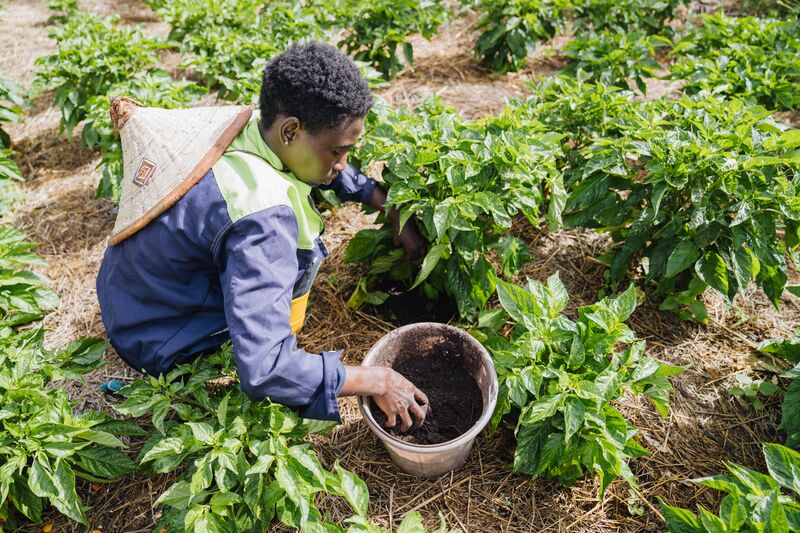
Food security and healthcare are inseparable. When families cannot reliably access nutritious food, the effects show up in clinics, schools, and communities long before anyone declares a crisis. Mercy Ships connects Australian generosity with on-the-ground programs that address both sides of this equation, bringing surgical care to people who would otherwise go without, while supporting the agricultural training and community development work that helps African communities stay healthier in the first place.
This article looks at how Mercy Ships Africa food programs contribute to long-term food security, why that matters to Australian donors, and what a genuinely sustainable approach to humanitarian aid actually looks like.
Why Food Security Matters in African Communities
Food insecurity does far more damage than hunger alone. When families struggle to access affordable, nutritious food consistently, children arrive at school unable to concentrate, adults find it harder to maintain steady work, and older people lose the support buffers that sustain them through illness. Malnutrition in early childhood causes permanent developmental harm, weakened bones, impaired cognition, and compromised immunity that no amount of catch-up care fully reverses.
In sub-Saharan Africa, this is not a background problem. It is the daily reality for millions of families. Poor nutrition feeds directly into the surgical caseload Mercy Ships encounters at every port: babies born with conditions worsened by maternal malnutrition, children with orthopaedic complications linked to vitamin deficiencies, adults whose recovery from surgery is complicated by bodies that have been chronically undernourished. Addressing food security is not peripheral to Mercy Ships’ medical mission, it runs straight through the middle of it.
Understanding the Link Between Health and Nutrition
Recovery from surgery depends on more than a skilled surgeon. A patient who returns home to food insecurity faces a harder road: slower wound healing, higher infection risk, and greater chance of complications. This is why the most effective humanitarian health models treat nutrition and clinical care as part of the same system rather than separate concerns.
Mercy Ships’ work tackling malnutrition in West Africa reflects this understanding. Surgical teams work alongside community health education programmes because the organisation recognises that a healed patient returning to a food-insecure household has not been fully served. Getting nutrition right before and after surgery changes outcomes. It also changes what becomes necessary in the first place.
For Australian supporters familiar with preventive health thinking, this integrated approach will feel familiar. Australia’s own public health system has long recognised that clinical medicine alone cannot carry the full burden of population health.
Mercy Ships’ Broader Role Beyond Hospital Ships
Most Australians know Mercy Ships for its hospital ships, floating surgical theatres that bring free operations to people with no other access to care. That reputation is well earned. But the organisation’s work extends beyond the operating room.
Mercy Ships builds lasting healthcare capacity by training local doctors, nurses, anaesthetists, and biomedical technicians. It renovates hospital facilities, donates carefully selected equipment, and runs structured clinical mentorship programs so that skills remain in communities after the ship leaves port. The same philosophy drives its agricultural and nutrition work: transfer knowledge, strengthen local systems, then step back.
For Australian churches, schools, workplaces, and community groups supporting Mercy Ships, this broader scope matters. A donation is not just funding a single operation, it is contributing to a model that values dignity, local ownership, and outcomes that continue beyond the immediate intervention.
Supporting Sustainable Agriculture for Long-Term Change
Since 1997, Mercy Ships has run agricultural education initiatives in African communities, including its Food for Life program, which has trained more than 800 participants across nine African countries. The program combines in-depth agricultural training with nutrition knowledge and basic business skills, giving participants the tools to grow food more reliably, eat better, and build small-scale income.
Australia brings genuine expertise to this space. Through institutions like the Australian Centre for International Agricultural Research, the Australian Government has committed $76.4 million to agricultural research and capacity development programmes focused on climate resilience and food security in Africa. Australian experience in dryland farming, water-efficient irrigation, and sustainable soil management offers real lessons for African communities dealing with drought, unpredictable rainfall, and land degradation.
Mercy Ships’ agricultural programs fit within this broader framework of practical, skills-based development, getting knowledge into the hands of farmers who can use it.
Encouraging Sustainable Food Production
Short-term food aid keeps people alive during a crisis. It does not build the farming knowledge, soil health, or supply chain resilience that keeps communities fed year after year. That distinction matters enormously when assessing the actual impact of humanitarian food programs.
Sustainable food production in African contexts involves composting and soil conservation, crop rotation, improved seed selection, post-harvest storage techniques that reduce spoilage, and water management practices adapted to local conditions. These are learnable skills. When communities have them, they are less vulnerable to seasonal shocks and less dependent on outside assistance every time conditions turn difficult.
For Australian donors, the practical parallel is familiar ground. Australia’s own farming culture places enormous value on Landcare principles, regenerative soil management, and climate-smart agriculture. Supporting programs that bring this same practical, knowledge-based approach to African communities is consistent with how Australians think about good land stewardship.
Strengthening Local Knowledge Through Training
Training works when it connects to real life. Agricultural education that sits in a classroom and never reaches a field produces few results. The most effective programs get participants growing, processing, and selling food, learning by doing, with mentorship along the way.
Mercy Ships’ Food for Life model covers crop management, food processing, soil conservation, and small enterprise development. Participants gain confidence alongside skills. The goal is not compliance with a program schedule but genuine capacity: people who can produce more food, feed their families better, and pass what they know to neighbours and the next generation.
For Australian supporters, this mirrors the hands-on vocational and agricultural education Australia values in its own communities, training for real outcomes, not theoretical benchmarks.
Building Capacity for Future Generations
The most durable measure of any development program is what remains after the external support ends. Does the community have more knowledge than it started with? Are local leaders better equipped to make decisions about food, farming, and health? Can the skills taught during the programme be adapted, shared, and improved without outside help?
Capacity building, as opposed to service delivery, requires a different mindset. It asks organisations to invest in people and systems rather than outputs alone. Mercy Ships applies this logic to both healthcare and food security: train the trainer, mentor the mentor, and build structures that can function independently.
Australian development policy, particularly as expressed through DFAT and ACIAR, places high value on exactly this approach. Partnership, local ownership, and long-term resilience are the foundations of responsible international development, not just emergency relief.
Nutrition as Part of Community Health
Good nutrition underpins nearly every health outcome that matters: healthy pregnancies, infant growth, children’s ability to learn, recovery from illness, and healthy ageing. In communities facing chronic food insecurity, these outcomes are all compromised simultaneously.
Mercy Ships works in environments where malnutrition is not a rare complication but a widespread baseline condition. Babies and children with malnutrition-related conditions make up a significant part of the patient population at every port of call. Addressing this through community nutrition programmes, teaching families about food groups, preparation, and storage, is part of the broader mission to improve health outcomes that persist after the ship moves on.
Community nutrition education works best when it is practically grounded, culturally appropriate, and connected to what people can actually grow or afford. Mercy Ships’ approach reflects this, linking nutrition knowledge to agricultural training so that the two reinforce each other.
Supporting Maternal and Child Wellbeing
Maternal and child nutrition is where food insecurity causes some of its most lasting harm. Malnutrition during pregnancy and the first two years of life can affect brain development, immune function, and physical growth in ways that are difficult or impossible to reverse later. Getting nutrition right in this window matters more than almost any other single intervention.
Mercy Ships’ community development work targets this period deliberately. By combining healthcare support with practical nutrition education and agricultural skills, the organisation gives families better tools to protect the health of mothers and young children. Training local health workers to recognise and address malnutrition extends the reach of these programs well beyond what any visiting ship crew could deliver alone.
The Importance of Local Partnerships
No outside organisation can understand a community’s land, climate, cultural food practices, and economic constraints better than the people who live there. Effective development programs recognise this. They are designed with local partners, not imposed on them.
Mercy Ships works with community leaders, local health workers, farmers, and development organisations in each country it serves. This partnership approach shapes what programs are offered, how they are delivered, and what success actually looks like in context. It also means that when Mercy Ships’ direct involvement ends, local partners have the skills and relationships to continue.
For Australian donors evaluating where their money goes, this model reflects the accountability and transparency expected of well-run Australian charities registered with the Australian Charities and Not-for-profits Commission. Australians can support Mercy Ships through a number of ways of giving or consider volunteering your skills directly.
Community-Led Solutions for Lasting Results
Outside organisations can bring resources, knowledge, and connections. What they cannot bring is legitimacy in the eyes of local communities, that has to be earned through respect, listening, and genuine collaboration. Community-led agriculture initiatives succeed because they are owned by the people implementing them.
Mercy Ships’ Food for Life program works because it trains participants to make decisions about their own land and livelihoods. Graduates become advocates within their communities. Some go on to train others. The knowledge multiplies rather than stalling when the programme formally ends.
Australia’s approach through ACIAR reflects the same understanding, real agricultural development happens through partnership with local researchers, farmers, and extension workers who know their contexts intimately.
Building Stronger Food Systems Rather Than Short-Term Aid
Food parcels matter in a crisis. They keep people alive when harvests fail or conflict disrupts supply chains. But they do not build the farming knowledge, storage infrastructure, market connections, or nutritional understanding that make communities genuinely food secure over time.
Mercy Ships’ food security work across African communities takes the longer view. Rather than measuring success in kilograms of food distributed, the focus is on whether communities are more capable, more connected, and more resilient than they were before. That means better crop production, stronger nutrition knowledge, improved food safety practices, and local leaders who can keep building progress without ongoing external support.
This is the same logic that drives Australia’s most effective international development investments: not dependency but capability.
Why This Matters to Australian Supporters
Australian donors are, on the whole, a practical and sceptical audience. They want to know where their money goes, what it achieves, and whether the results last. Short-term emergency relief satisfies none of those tests on its own. Capacity-building programs that improve health outcomes, food security, and local skills for years after funding ends, those do.
Supporting Mercy Ships Australia means backing an organisation that ties surgical care to community development, food production to health outcomes, and training to long-term independence. Every dollar contributes to a model that values lasting impact over visible immediacy.
The Long-Term Impact of Mercy Ships Africa Food Programs
Over time, food education and agricultural training reduce dependence on external assistance. Families who understand nutrition make better choices. Farmers who have learned better techniques produce more reliably. Communities with trained health workers can identify and address malnutrition before it becomes a medical emergency.
These outcomes build on each other. A child who grows up better nourished is healthier, learns more readily, and is more productive as an adult. A farmer who adopts better soil management practices protects not just this year’s harvest but the land’s fertility for the next generation. Food security is not a project with an end date, it is a condition that communities either build toward or slide away from, depending on the investments made in knowledge and systems today.
Mercy Ships contribute to that long-term trajectory, and Australian supporters are part of making it possible.
Final Thoughts …
Mercy Ships is worth supporting not because the need is dramatic but because the approach is sound. Hospital ships deliver free surgery to people who would otherwise suffer or die without care. Local health workers trained to carry that care forward. Communities equipped with agricultural knowledge and nutrition skills to keep families healthier over time. Each element reinforces the others.
For Australians looking for a way to contribute that produces measurable, durable results, Mercy Ships offers exactly that. Donations, professional volunteering, school fundraising, and community advocacy all help expand the work. The goal is communities that are genuinely better equipped to manage their own health and food security long after the ship has left port.
FAQs
How does Mercy Ships Australia support food security in Africa?
Mercy Ships Australia funds and facilitates specialised community development projects on the ground, such as the Food for Life program. While the hospital ships deliver surgical care, the Australian office actively secures donations and corporate partnerships to deploy sustainable agroecology training, which addresses the nutritional root causes of poor community health.
What is the Food for Life program run by Mercy Ships?
The Food for Life program is an intensive nutritional agriculture course that equips local African trainers with sustainable, organic farming skills. Over a multimonth period, participants learn how to maximize crop yields using local, natural resources rather than expensive chemical inputs, preparing them to return home and train their own communities.
Are donations to Mercy Ships Australia tax-deductible for food programs?
Yes, donations made by Australian taxpayers to Mercy Ships Australia are fully tax-deductible. The organisation holds Deductible Gift Recipient (DGR) status under Australian tax law, meaning any contribution of two dollars or more towards their African medical and nutritional programs can be claimed on your annual tax return.
How do sustainable agriculture initiatives impact healthcare outcomes in Africa?
Malnutrition compromises the human immune system and complicates surgical recovery. By investing in sustainable farming practices, the organization ensures that patients have access to chronic malnutrition solutions, meaning individuals have the nutritional health required to heal from complex surgeries and avoid preventable diseases.
Can Australian agricultural specialists volunteer for Mercy Ships food programs?
Yes, Australian agronomists, community development managers, and nutritional educators can apply for volunteer roles. While the floating hospitals require maritime and medical staff, land-based outreach teams regularly seek specialists to assist with capacity building, agroforestry training, and ecological agriculture program delivery.
What specific food security projects has Mercy Ships Australia funded recently?
Mercy Ships Australia partnered with international bodies like the Food and Agriculture Organisation (FAO) to deliver major agricultural and livestock projects in sub-Saharan regions, such as the Falaba District. These projects involve developing inland valley swamps for crop cultivation and establishing solar-powered boreholes for reliable irrigation.
How does ecological agriculture differ from traditional farming methods used in Africa?
Traditional methods often rely on slash-and-burn clearing or cost-prohibitive chemical pesticides that degrade soil quality over time. Ecological agriculture focuses on organic pest control, natural composting, and crop rotation to produce up to five times the yield at a lower cost, preserving the local environment.
How does the organisation measure the long-term success of its African food programmes?
Success is evaluated through structured impact assessments tracking community health indicators, crop yield stability, and the financial independence of local farmers. By utilising a train-the-trainer model, the program ensures that agricultural knowledge self-perpetuates within the region long after the hospital ships change ports.
What is the connection between food sovereignty and the charity work done by Mercy Ships?
Food sovereignty means empowering local communities to control their own sustainable food production and distribution systems. The organisation supports this by training smallholder farmers to cultivate indigenous crops, process food into nutritious products like infant-feeding porridge, and establish independent local cooperatives.
How does maternal and child nutrition feature in these African food initiatives?
A major objective of the agricultural training centers is reducing infant mortality linked to nutrient deficiencies. Graduates are taught how to produce specialized, high-nutrient weaning flours and cultivate vitamin-rich vegetables, directly improving maternal health and child development outcomes in rural villages.
How do food preservation training programs reduce waste for African farmers?
Without adequate storage or processing infrastructure, a large percentage of African harvests go to waste. Training courses teach smallholder farmers food handling and preservation techniques—such as creating shelf-stable ginger syrups, dried fruit, and natural yoghurts—allowing them to store food safely and reduce post-harvest losses.
How do African smallholder farmers benefit economically from sustainable training?
When smallholder farmers switch to low-cost, high-yield organic methods, their production costs drop significantly. The excess produce can be sold at local markets, generating a stable income that allows families to pay for medicines, supplement their diets, and afford school fees for their children.
Recent Comments