
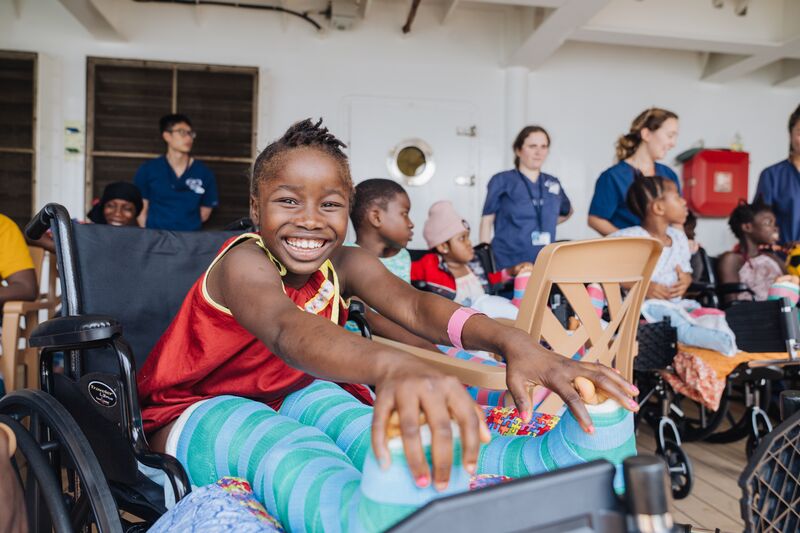
For patients treated through Mercy Ships, life after surgery isn’t the end of the story. It’s the start of a carefully managed recovery process that can run for weeks, months, or occasionally years. Many of the people who come aboard have lived with untreated injuries, congenital conditions, or complex deformities for a decade or more, conditions that have chipped away at their mobility, their independence, and their place in their own community. Surgery fixes the underlying problem. Rehabilitation is what turns that fix into a life that actually works.
The Mercy Ships rehabilitation journey blends medical recovery, physiotherapy, functional training, nursing care, and psychosocial support into one coordinated program. The goal isn’t just to get a joint moving again. It’s to rebuild the confidence and social standing that illness or injury can strip away. In parts of Africa where formal rehabilitation services are thin on the ground, this kind of structured aftercare is often the difference between a successful operation and a genuinely changed life.
What Recovery Actually Looks Like After Surgery
Recovery starts the moment surgery ends, when the body kicks into a biological repair process: inflammation, tissue healing, and the slow return of function. Clinically, the first priority is keeping things stable and heading off complications such as infection, swelling, uncontrolled pain, or a sudden drop in mobility.
Patient recovery after surgery hinges on getting movement started early, even if that movement is small. Nurses will have patients doing breathing exercises, gentle limb movement, and supported position changes within the first day or two. These aren’t token gestures. They keep blood flowing, cut the risk of clots, and stop muscles wasting away from disuse. Whatever happens in this first stretch sets the tone for how well the rest of rehabilitation goes.
Post-Operative Care on the Hospital Ship
Onboard the Mercy Ships hospital vessel, post-operative care happens in a tightly controlled, multidisciplinary setting. Once surgery is done, patients move into recovery areas, the post-anaesthesia care unit first, then the inpatient wards, where nurses and clinicians keep a close eye on them around the clock.
Medical ship post-operative care covers wound management, infection control, hydration, nutrition, and pain relief, each tailored to the individual depending on how complex the surgery was and what other health issues they’re carrying. Because the whole system sits on one vessel, any complication can be picked up and treated fast, and patients aren’t cleared for rehabilitation until they’re genuinely stable.
Moving Into Rehabilitation
Once a patient is medically steady, the team assesses whether they’re ready for rehabilitation. This is the shift from acute surgical recovery to rebuilding function, and it’s where physiotherapists and rehab specialists check strength, joint range, balance, and general physical capacity.
This is when the post-surgery rehabilitation program properly kicks off. No two programs look the same. Age, the type of surgery, and any pre-existing disability all shape the goals set for each patient, whether they’ve had orthopaedic correction, reconstructive surgery, or a paediatric procedure. Allied health teams working through supported placements for occupational therapists and physiotherapists play a central role at this stage, translating a surgical result into a functional one.
Early Movement and Mobility Restoration
Getting patients moving early is one of the single biggest factors in a good outcome. Left too long in bed, patients stiffen up, lose muscle, and develop circulation problems, and there’s often a psychological knock too: the longer someone stays still, the more nervous they get about moving at all.
Mobility restoration after surgery usually starts with assisted positioning and passive range-of-motion work, small movements a therapist guides the patient through. From there it’s a gradual climb: sitting up, standing, then walking with support. Each stage is watched closely for safety before the next one begins, and that structured pathway is what actually restores functional independence rather than just physical healing.
Orthopaedic Rehabilitation and Getting Alignment Right
Patients with musculoskeletal conditions, limb deformities, old fractures, congenital abnormalities affecting posture or gait, need longer rehabilitation focused on alignment, strength, and how they actually move day to day.
Orthopaedic deformity rehabilitation means gait training, balance work, and targeted muscle strengthening. Physiotherapists keep checking biomechanics throughout to catch problems before they become a relapse. The endpoint is straightforward: walking independently and managing daily tasks without help.
Clubfoot Treatment and Ongoing Ponseti Follow-Up
Children treated for clubfoot need years of follow-up to hold the correction achieved through casting or surgery. The Ponseti method, widely used across humanitarian orthopaedic work, depends heavily on what happens after the initial treatment, not just the treatment itself.
Ponseti method clubfoot rehab involves structured casting, bracing schedules, and regular check-ins to catch any regression early. Parents and caregivers are trained to keep brace routines going at home, since a missed few months of bracing can undo years of correction. Mercy Ships supports this through initiatives such as its clubfoot mentoring program, which trains local clinicians to keep this follow-up running long after the ship has moved on.
Burn Injury Rehabilitation and Scar Management
Burns bring their own set of rehabilitation challenges: scar tissue that tightens over time, contractures that limit movement, and skin that’s lost much of its natural give. This is one area where recovery genuinely needs years, not weeks.
Burn contracture physical therapy focuses on keeping joints mobile and stopping scar tissue from pulling tight as it heals. Burn reconstruction physiotherapy adds stretching routines, compression garments, and functional training so patients can get back to ordinary tasks like dressing, feeding themselves, and walking. Skip the structured rehab and burn survivors are left with long-term disability that the surgery itself never caused.
Cleft Lip and Facial Reconstruction Recovery
Cleft lip and maxillofacial surgery come with a recovery that goes well beyond the surgical wound. Feeding support, speech development, and facial muscle coordination all need attention afterwards.
Cleft lip post-surgery care includes feeding guidance for infants, speech therapy as children grow, and ongoing scar management. Maxillofacial recovery through Mercy Ships also tackles the social side of things, helping patients push past stigma and regain the confidence to be seen in public again, something that matters just as much as the physical repair.
Therapeutic Exercise and Gait Training
Structured exercise sits at the centre of recovery for almost every patient group, aimed at restoring normal movement patterns, rebuilding strength, and sharpening coordination.
Therapeutic exercise and gait training work on retraining how someone walks, correcting posture, and improving balance. Patients move from assisted walking to full independence in careful stages, and therapists adapt each exercise to match the environment the patient is actually going home to, so the gains hold up once professional support isn’t there every day.
Functional Independence and Daily Living Skills
Rehabilitation isn’t only clinical. It extends into the practical stuff: walking to the market, dressing, bathing, carrying water or firewood, tasks that define whether someone can genuinely live independently again.
Functional training after surgery is what turns clinical healing into real-world ability. Without it, a patient might have a perfectly repaired joint and still struggle to manage daily life. This stage is where quality of life actually gets measured.
Outpatient Rehabilitation and Continued Monitoring
Once a patient is discharged from the hospital ship, recovery continues through outpatient follow-up. These sessions track progress, adjust therapy plans, and make sure improvement holds steady rather than sliding backwards.
Outpatient follow-up care includes mobility checks, wound reviews, and functional assessments. Patients and their families get updated exercise plans and guidance to keep rehabilitation going at home, which matters because the gains made on the ship only stick if someone keeps the momentum going after discharge.
Long-Term Recovery and Therapy Completion
Some patients need extended rehabilitation stretching over months or years, depending on how complex the surgery was and what conditions they started with.
Long-term therapy completion marks the point where a patient hits their maximum functional recovery: independence, mobility, and the ability to take part fully in community life again. It’s as much a marker of sustained rehabilitation effort as it is a medical outcome, and for many patients, it’s the moment the whole process finally feels finished.
Community Reintegration and Social Recovery
Getting back into community life is one of the biggest milestones in the whole process. Plenty of patients have dealt with years of stigma, isolation, or being shut out of normal social life before they ever reached the ship.
Community reintegration after surgery focuses on restoring access to school, work, and everyday social contact. Patients go home with better physical function and, just as importantly, the confidence to take up their old roles in family and community life again. You can read more about the emotional and social impact surgery has on children in underserved communities, which covers this side of recovery in more depth.
Restoring Confidence and Personal Dignity
Rehabilitation deals with more than the physical. Emotional and psychological healing run alongside it, and many patients see a real shift in self-esteem once treatment succeeds.
Restoring patient dignity after surgery sits at the heart of what Mercy Ships is trying to achieve. People who were pushed to the margins because of a visible condition regain not just function but acceptance, and that change tends to last well beyond the treatment itself.
Allied Health Volunteers and the Teams Behind Recovery
None of this happens without the physiotherapists, occupational therapists, and rehabilitation specialists who volunteer their time and skills. These allied health teams work directly alongside patients through every stage of recovery.
Allied health volunteers make quality rehabilitation possible even in settings with very few resources. Medical volunteer physical therapists in particular add real capacity, especially for the more complex recovery cases like burns or major orthopaedic correction.
Building Healthcare Systems That Outlast the Ship
Beyond individual patients, Mercy Ships puts real effort into building lasting capacity within the countries it serves. Training programs and mentoring relationships are designed to strengthen local healthcare systems long after the vessel has sailed on.
Healthcare capacity building in Africa means rehabilitation services keep running once the ship departs. Local clinicians are trained in physiotherapy technique, surgical aftercare, and rehabilitation management. This work is covered in more detail in the article on how Mercy Ships builds lasting healthcare capacity beyond immediate aid.
A Clear Takeaway
The rehabilitation journey after surgery on Mercy Ships doesn’t stop at the operating table. It runs through physiotherapy, gait training, outpatient follow-up, and community reintegration, each stage building on the last until a patient can genuinely live independently again. If there’s one thing worth remembering, it’s that surgery buys the opportunity, rehabilitation is what actually delivers the outcome.
Support for this work, whether through donations or volunteering your own clinical skills, goes directly into keeping that second half of the process funded. You can find out more about the full scope of the mission at Mercy Ships Australia.
FAQs
How does Mercy Ships manage patient rehabilitation after surgery?
Mercy Ships provides a comprehensive, structured rehabilitation program on board and at specialised outpatient facilities. Australian allied health volunteers, including physiotherapists and occupational therapists, design tailored recovery plans to ensure patients safely regain mobility and strength after complex reconstructive or orthopaedic procedures.
What role do Australian physiotherapists play in the post-operative journey?
Australian physiotherapists are crucial to the surgical ecosystem, volunteering to lead rehabilitation teams. They assess patients in the post-anaesthesia care unit, conduct therapeutic exercise and gait training, and guide individuals through the intensive physical therapy required to fully restore joint range of motion and functional independence.
How long does the rehabilitation process take for a hospital ship patient?
The rehabilitation timeline varies significantly depending on the clinical setting and the surgical case. While some minor general surgeries require only a few days of outpatient follow-up care, major interventions like paediatric orthopaedic corrections or burn contracture releases require months of ongoing, rigorous physical rehabilitation.
What types of surgical conditions require the most intensive rehabilitation?
Maxillofacial reconstructions, congenital conditions like clubfoot, severe burn contractures, and paediatric orthopaedic deformities demand the most comprehensive postoperative aftercare. These conditions require intensive musculoskeletal outpatient therapy to prevent tissue tightening and ensure a safe, long-term patient outcome.
How does Mercy Ships support children recovering from orthopaedic surgery?
For children undergoing life-altering orthopaedic deformity correction, the rehabilitation journey includes precise casting, splinting, and functional training. Australian paediatric physiotherapy volunteers use play-based therapeutic exercises to help young patients adapt to their straight limbs, learn to walk correctly, and reach vital recovery milestones.
What is the Ponseti method used by volunteer rehabilitation teams?
The Ponseti method is a highly effective, non-surgical clubfoot correction technique utilized by the medical charity. It involves sequential manipulation and plaster casting, followed by minor surgical tendon release and specialised outpatient follow-up therapy to ensure correct foot alignment and long-term mobility restoration.
How do patients overcome social disfigurement during their recovery journey?
Holistic patient healing processes address both physical and emotional wounds. Reconstructive surgery and subsequent physical therapy help restore basic functional capabilities, while dedicated counselling, community support, and celebration ceremonies help individuals overcome the deep psychological trauma of social disfigurement and isolation.
What happens during a Mercy Ships reintegration ceremony?
A reintegration ceremony, often referred to as a ‘new dress ceremony’ for women recovering from vesicovaginal fistula surgery, marks the completion of long-term therapy. It is a joyful milestone celebration where patients receive new clothing, celebrate their physical healing, and prepare for confident community reintegration.
Can Australian allied health professionals volunteer for short-term rehabilitation roles?
Yes, Australian allied health volunteers can apply for short-term placements through Mercy Ships Australia, based in Queensland. While some specialised medical roles accept commitments as brief as four weeks, standard physical therapist and hand therapist roles typically require a minimum commitment of three months to ensure continuity of care.
How does the humanitarian surgery rehab process differ from Australian clinical settings?
Volunteering in sub-Saharan Africa requires adapting clinical expertise to resource-limited environments. Australian practitioners often manage advanced, severe pathologies rarely seen in domestic healthcare settings, requiring creative problem-solving, deep cross-cultural empathy, and a strong focus on sustainable, local capacity building.
How do volunteer physical therapists handle burn contracture rehabilitation?
Post-operative care for burn reconstruction physiotherapy focuses on preventing the tightening of newly transplanted skin and scar tissue. Volunteers utilise custom splinting, aggressive scar tissue massage, and consistent joint range of motion restoration exercises to ensure the patient retains functional use of their limbs.
What outpatient follow-up care is provided after a patient leaves the hospital ship?
Before discharge, patients and their caregivers receive detailed patient follow-up instructions. Mercy Ships operates land-based outpatient clinics and coordinates with local healthcare networks to monitor wound healing, manage pain, and continue necessary musculoskeletal therapy after the ship departs.
How does surgical rehabilitation contribute to local healthcare capacity building?
A core mission of the organisation is sustainable mentoring. Australian medical volunteers work side-by-side with local healthcare professionals, training them in advanced rehabilitation techniques, therapeutic exercise protocols, and post-operative management to strengthen the host nation’s independent healthcare ecosystem.
Are all rehabilitation services provided by the medical charity free to the patient?
Yes, every aspect of the medical care, including the life-altering surgery, inpatient ward stays, custom orthotics, medication, and months of specialised physical rehabilitation, is provided completely free of charge to the patients and their families.
What qualifications do Australian therapists need to join a hospital ship crew?
Australian applicants must hold a current, unrestricted professional registration with the Australian Health Practitioner Regulation Agency (AHPRA), possess a minimum of two years of post-graduate clinical experience, meet strict medical and vaccination criteria, and demonstrate proficiency in professional English.
How does post-operative care ensure a safe patient outcome in developing nations?
Without rigorous follow-up, complex surgical wounds can become infected or joints can freeze up, rendering the operation unsuccessful. Dedicated post-operative care units and continuous rehabilitation therapy mitigate these risks, ensuring the surgical intervention results in permanent, life-altering mobility restoration.
What is the role of a Rehabilitation Team Leader on a Mercy Ship?
The Rehabilitation Team Leader is a long-term volunteer role, typically requiring a two-year commitment. This professional manages the daily operations of the onboard and outpatient therapy departments, coordinates volunteer schedules, oversees complex clinical cases, and directs local healthcare system mentoring initiatives.
How does cleft lip and cleft palate post-surgery care work?
Following maxillofacial or cleft surgery, the rehabilitation journey focuses on nutritional support, wound care to protect the delicate facial sutures, and specialised speech therapy. Volunteers help patients learn how to swallow, eat, and speak properly using their newly reconstructed palates.
How do patients regain their dignity through the rehabilitation process?
Restoring patient dignity after surgery goes beyond physical healing. By regaining the ability to walk, feed themselves, or smile without shame, individuals are freed from the stigma of disability, allowing them to return to school, secure employment, and actively participate in community life.
What safety protocols are in place for patients in the inpatient ward?
The hospital ship inpatient wards maintain identical clinical and safety standards to modern Australian tertiary hospitals. This includes round-the-clock nursing care, strict infection control measures, regular assessment by the post-anaesthesia care unit team, and early, safe mobilization protocols directed by physical therapists.
How do Australian volunteers fund their time on a maritime medical mission?
Mercy Ships operates on a unique self-funded volunteer model. Australian professionals donate their time and skills, paying for their own flights, visas, travel insurance, and crew fees. Many volunteers raise funds through personal networks, community groups, or professional healthcare associations across Australia.
What unique clinical skills do Australian health professionals gain from volunteering?
Working in an international humanitarian setting exposes clinicians to advanced musculoskeletal conditions and congenital deformities rarely seen in Australia. Volunteers return home with enhanced adaptability, advanced cross-cultural communication skills, and extensive experience in complex, multidisciplinary trauma rehabilitation.
How does the Ponseti method avoid invasive surgery for clubfoot?
The Ponseti method relies on the natural elasticity of a child’s ligaments and tendons. By gently stretching the foot into alignment and securing it in a series of plaster casts over several weeks, the deformity is corrected non-surgically, requiring only a minor outpatient procedure to lengthen the Achilles tendon.
What is the long-term impact of sustainable surgical aftercare training?
By mentoring local practitioners and providing sustainable surgical aftercare training, Mercy Ships ensures that high-quality rehabilitation continues long after the vessel leaves port, leaving behind a stronger, more capable local healthcare workforce to manage ongoing community needs.
How can the Australian public support the rehabilitation of Mercy Ships patients?
Australians can make a direct impact by donating to Mercy Ships Australia, sponsoring specific rehabilitation equipment or patient care packages, fundraising within local communities, or volunteering their professional clinical skills aboard the world’s largest non-governmental hospital ships.
Recent Comments