
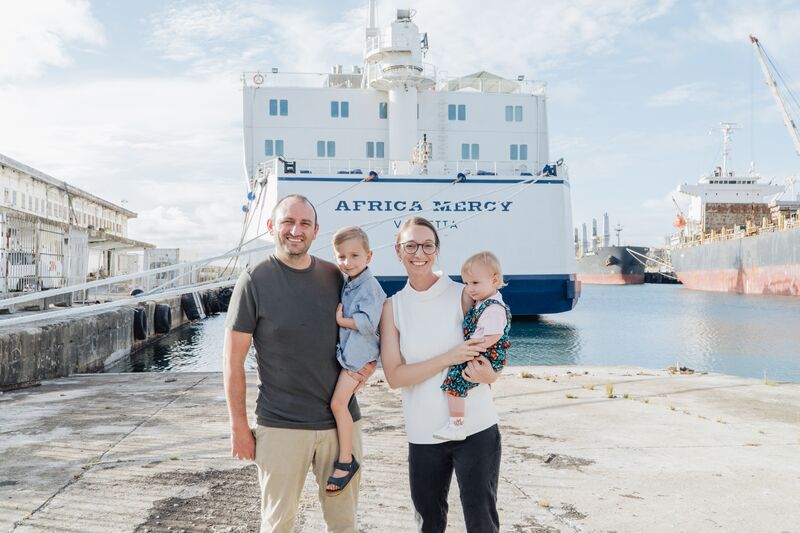
A hospital ship needs far more than surgeons. It needs cooks, electricians, deck crew, accountants and IT specialists, which means two partners with completely different careers can serve on the same vessel. For Australian couples who want to volunteer overseas together, a floating hospital is one of the few options where a nurse and a carpenter, or a dentist and a bookkeeper, both have a genuine role. Mercy Ships Australia is one example of the charities that recruit Australians for this kind of work. This guide covers the roles on offer, the costs, the application process and what daily life aboard involves, so you can decide whether it suits you both.
Why Couples Choose to Volunteer Overseas Together
Most couples who volunteer abroad together aren’t after a holiday. They want work that matters, and they want to do it side by side. A placement on a medical mission ship tests teamwork, communication and patience in ways a normal week at home never will.
The structure of a hospital ship helps. Volunteers from dozens of countries work towards the same goal, but each person has their own department and their own responsibilities. You and your partner can contribute different skills to one mission, then compare notes over dinner.
The experience also changes how you see global health. Working alongside local clinicians and patients who have waited years for surgery gives you a clear picture of what limited access to healthcare means in practice.
How Hospital Ships Deliver Essential Healthcare
A hospital ship is a working hospital that docks in a port where surgical care is scarce. Depending on the charity and the mission, a floating hospital can offer surgery, dental care, rehabilitation and training for local health workers. Staying power matters here. The best programs spend months in one country, running clinics and teaching local staff, so the benefit continues after the ship sails.
Doctors and nurses are the visible part of the operation. Behind them sit the people who keep the ship running: the engineers who maintain the generators, the logistics team that moves supplies, the galley crew who feed hundreds of people three times a day, and the administrators who coordinate it all. Without them, no operating theatre opens.
Hospital Ship Volunteering for Couples: Exploring Available Roles
Serving together doesn’t mean doing the same job. Many couples work better in separate departments, and most ships assign roles by skill and vacancy, not by relationship.
Medical roles suit registered health professionals such as doctors, nurses, dentists, pharmacists and allied health specialists. Australian clinicians need current registration with the Australian Health Practitioner Regulation Agency, and the charity will ask for proof of qualifications and recent experience.
Non-medical roles cover a much wider range of trades and professions. Typical positions include administration, finance, IT, engineering, maintenance, teaching, hospitality and deck work. Our guide to support staff roles on medical mission ships shows how many of these jobs sit behind every operation.
Vacancies change between missions, and some roles need a longer commitment or specific certification. Check each listing carefully, and ask whether both of you can be considered for the same period.
Can Couples Work Together in the Same Department?
Sometimes, but don’t plan around it. Ships staff according to patient numbers, safety rules and specialist needs, so partners often end up in different teams on different shifts. One of you may get an offer while the other waits for a suitable vacancy.
When you apply, say clearly that you want to serve together and ask how the charity handles joint applications. Then decide beforehand what you’ll do if only one of you is accepted, or if your rosters rarely overlap. Couples who settle this question early avoid a lot of stress later.
How Partners Can Serve Together on a Hospital Ship
Start with an honest conversation about what each of you can offer. List your qualifications, your trade or professional experience, how long you can be away and what you want from the placement. Gaps and overlaps in those lists point to the roles worth chasing.
A common pairing is one clinician and one support worker. The nurse works on the ward while their partner keeps equipment running or manages supplies. Couples with similar qualifications, such as two nurses or two teachers, can apply for related positions if the vacancies exist.
Treat the application as two separate processes. Each of you will be assessed on your own skills, references and suitability. The shared mission is a bonus, not a qualification.
Mercy Ships: Maritime Volunteering
Mercy Ships runs two dedicated hospital ships, the Global Mercy and the Africa Mercy, which provide surgery and training in partnership with host countries. Its crew includes medical and non-medical volunteers.
Living on a Hospital Ship as a Couple
Ship life is communal. You’ll share dining areas, corridors and laundry facilities with hundreds of crew from around the world. Days follow a structured routine shaped by surgical schedules, safety drills and shift patterns. Cabins are compact, and privacy is limited compared with life at home.
Couples often find the adjustment harder than they expected, and the friendships easier. You’ll meet people from dozens of countries, and many volunteers say the crew community becomes the best part of the placement. Our overview of life at sea as a volunteer gives a realistic picture of what Australians can expect.
Before you accept a placement, ask these questions in writing:
- Can couples share a cabin, or will you be housed separately?
- What are the internet arrangements, and how often can you call home?
- How much leave do volunteers get, and when?
- What are the rules about relationships and conduct on board?
Accommodation, Meals and Everyday Costs
Costs vary by organisation, role and length of service. Some charities cover accommodation and meals on board but expect volunteers to fund their own flights, insurance and personal spending. Others have different arrangements. Mercy Ships has changed its support for volunteers in the past, so read the current terms on its volunteer financial support program update before you build a budget.
Budget for two of everything. That means two sets of flights, two travel insurance policies, two rounds of vaccinations, two visa applications and two lots of lost income if you’re taking unpaid leave. Add a buffer in Australian dollars for emergencies, because a cancelled flight or a family issue at home can cost thousands.
Ask the charity for a written breakdown of what it covers and what you pay. If a program is vague about costs or pressures you to pay before sharing details, walk away.
Preparing for Overseas Service from Australia
Start at least six months before your planned departure, and earlier if you need to arrange extended leave. Check that both passports have enough validity, look up visa requirements for the destination and gather the documents your charity asks for.
Book a travel medicine consultation with your GP or a travel clinic well ahead of time. Some vaccinations need several doses over weeks. Read your insurance policy carefully too. Standard travel cover often excludes volunteer work, medical evacuation from a ship or specific destinations, so confirm in writing that your policy covers all three.
The Australian Government’s Smartraveller site publishes destination advice and lets you subscribe to updates for the country you’re heading to. Check it again in the weeks before you leave, because advice can change.
Finally, sort out home. Arrange someone to manage your mail, bills, pets and property, and leave copies of key documents and emergency contacts with family.
Cultural Sensitivity and Respectful Humanitarian Work
You’re a guest in someone else’s country, and the best volunteers act like it. Local colleagues know their communities, languages and health systems far better than any visiting crew. Listen first, ask questions and let local staff lead where they can.
On board, patient dignity and confidentiality are non-negotiable. Never photograph patients or share their stories without proper consent and the charity’s approval. Learn a few phrases in the local language before you arrive. Small efforts like that build trust faster than most people expect.
Good aid work also builds local capacity. Programs that train local surgeons, nurses and technicians leave something behind when the ship leaves.
Balancing Your Relationship with a Demanding Mission
Long shifts, tight quarters and emotionally heavy days can strain even strong relationships. The mistake many couples make is trying to spend every free minute together. Give each other room. Build your own friendships, protect your own rest and keep work disagreements at work.
Agree on a few ground rules before you leave. Decide how you’ll handle tiredness, how you’ll raise a problem without turning it into an argument and what you’ll do if one of you struggles more than the other. One partner often settles in quickly while the other needs weeks to find their feet. That’s normal, and patience matters more than speed.
Hospital ships also deal with illness and hardship every day. Look into the mental health and wellbeing support the charity offers its crew, and use it if you need it.
Short-Term or Long-Term Volunteering Abroad for Couples
Placement length shapes everything else: which roles you can apply for, what it costs and what it does to your careers. Short-term hospital ship volunteering suits Australians with limited leave, but some roles require longer commitments, especially skilled positions that need training on board.
Long-term placements of several months or more give you time to settle into the team, take on bigger responsibilities and see the results of your work. They also cost more in lost income, and they’re harder to arrange around mortgages, children or ageing parents.
Talk to your employers early. Many Australian employers will consider unpaid leave or a sabbatical for the right reason. Our guide to taking leave to volunteer on a hospital ship covers how to raise the conversation. Pick the length that both of you can sustain without resentment, not the one that sounds most impressive.
How to Choose the Right Hospital Ship Volunteer Program
Look for a charity that can answer hard questions clearly. Ask about its recruitment process, safeguarding standards, supervision, emergency procedures, partnerships with local health services and how it measures results. Strong organisations publish this information and are happy to talk through it.
Read each role description against your actual qualifications. Ask about working hours, training and what support volunteers receive. If serving together matters to you, ask specifically about joint applications and how couples have been placed before.
How to Apply for a Hospital Ship Volunteer Placement
The process usually runs in a set order. Find the vacancies that match your skills, submit an application with your CV and references, complete interviews and checks, then finish medical and documentation requirements. Health professionals will also need to supply registration details and evidence of recent practice.
Each of you should submit your own application, explaining your experience and why you want to serve. You can mention your wish to serve together, but each application is judged on its own merits.
For a step-by-step look at one charity’s process, read how to volunteer for a medical charity that travels abroad. Before you accept any offer, get the dates, duties, costs, accommodation and cancellation terms in writing. Apply early, because background checks, medicals and references take longer than most people expect.
The Personal and Professional Benefits of Couples Volunteering
Couples come home with skills that transfer straight back to work: adaptability, problem-solving, communication across cultures and the ability to perform under pressure with limited resources. Clinicians often gain experience with conditions and cases they rarely see in Australia. Non-medical volunteers learn how a complex operation functions when supplies are tight and every system matters.
Shared experience also changes a relationship. You see your partner at work, under strain and at their best. Many couples say the placement gave them a shared reference point that still shapes how they make decisions years later.
The main benefit, though, goes to the patients and local health teams who receive the care and training. Go with realistic expectations and a willingness to learn, and the placement is worth more to everyone involved.
Challenges to Consider Before You Commit
Expect demanding schedules, limited privacy, unfamiliar food, patchy internet and spells of homesickness. Ship life adds strict safety rules and shared facilities.
Only one of you might be accepted for a particular vacancy, because ships fill roles by operational need. Decide in advance whether you’d go separately, wait for matching opportunities or pass. Neither choice is wrong, but you should make it together before you apply.
The emotional load is real too. Working with patients who have lived with untreated conditions for years can be confronting. Know your limits, talk to each other and use the support the charity provides.
Making a Lasting Contribution Beyond the Voyage
Your involvement can continue after you disembark. Returning volunteers often fundraise, speak at community events, mentor new applicants or return for another placement. Many couples find that sharing what they learned inspires friends and colleagues to get involved.
Your Next Step
Sit down together this week and write two lists: what skills and qualifications each of you has, and how long you could realistically be away. Then pick two organisations, read their current vacancy pages and send each one the same short email asking how they handle couples, what costs volunteers cover and when the next recruitment round opens. Their answers will tell you quickly whether the program fits.
FAQs
Can Australian couples volunteer together on a hospital ship?
Yes, Australian partners can apply to serve together on board international floating hospital ships operated by humanitarian organisations such as Mercy Ships Australia. Couples are regularly placed in dual roles ranging from medical positions to maritime deck crew, technical maintenance, IT, teaching, and administrative support.
Do both partners need medical qualifications to volunteer?
No, it is not essential for both individuals to hold healthcare credentials. Whilst there is a continuous demand for Australian AHPRA-registered doctors, nurses, and allied health staff, hospital ships rely on diverse non-medical personnel to function. One partner can work in a clinical capacity while the other serves in logistics, maritime operations, communications, or galley services.
What accommodation options are available for married couples on board?
Couples who commit to medium- or long-term volunteer placements are typically allocated private, shared cabins on board. Accommodation arrangements depend on the ship’s layout, duration of service, and cabin availability at the time of deployment.
Are volunteer allowances or payments provided to Australian couples?
No, serving on a hospital ship is entirely voluntary. Volunteers are responsible for their own travel costs, personal insurance, and monthly crew fees that cover living expenses, including meals and accommodation on board. Many Australian couples conduct community fundraising or rely on personal savings to finance their deployment.
Are crew fees paid by Australian volunteers tax-deductible?
Tax deductibility depends on the specific humanitarian organisation and how payments are structured under Australian tax regulations. Many Australian-registered charities, such as Mercy Ships Australia, hold Deductible Gift Recipient (DGR) status with the Australian Taxation Office (ATO). Donations made towards a volunteer’s support fund by third-party donors may qualify for tax deductions, but individual crew fees paid for personal living costs typically do not. Couples should consult a registered Australian tax agent for guidance.
What medical registration is required for Australian healthcare workers?
Australian healthcare professionals, including nurses, doctors, dentists, and physiotherapists, must maintain active registration with the Australian Health Practitioner Regulation Agency (AHPRA). The host ship’s medical oversight board verifies these qualifications alongside reference checks before granting clinical privileges on board.
How do Australian nurses manage AHPRA Continuing Professional Development (CPD) while serving overseas?
AHPRA requires registered nurses and midwives to complete a minimum of 20 hours of CPD annually. Australian nurses serving on hospital ships can log clinical hours, case discussions, and cross-cultural healthcare training undertaken during their deployment to fulfill their annual AHPRA registration standards.
What is the minimum service commitment for couples on a hospital ship?
Minimum deployment periods vary according to the specific role and organisation. Short-term placements for specialized medical personnel can range from two weeks to a month. However, to secure couples’ accommodation and coordinated roles, organisations generally prefer commitments ranging from three months to two years.
How far in advance should an Australian couple submit their application?
Couples are advised to start the application process 6 to 12 months prior to their preferred departure date. This allows sufficient time for dual application assessments, background checks, Australian Federal Police (AFP) clearances, medical evaluations, and visa processing.
What travel documentation and visas do Australians need?
Australian passport holders require a passport with at least six months’ validity beyond their planned return date. Entry visas, entry permits, and maritime crew documentation vary depending on the host nation where the hospital ship is docked. The recruiting charity’s Australian national office assists accepted crew members in securing the necessary entry paperwork prior to travel.
What vaccinations are required before departing Australia?
Volunteers must meet strict health criteria established by the ship’s medical directorate and maritime health regulations. Required immunisations generally include Yellow Fever, Hepatitis A and B, Typhoid, Tetanus, and routine childhood vaccines. Australian couples can visit a specialized travel health clinic or GP prior to departure to ensure all requirements are fulfilled.
How does Australian Medicare work while living and serving overseas?
Medicare provides health coverage within Australia but does not cover medical treatment, emergency evacuations, or healthcare expenses incurred outside the country. Australian citizens living overseas for extended periods remain enrolled in Medicare, but couples must secure comprehensive international travel and maritime medical insurance before departing Australia.
Is travel insurance compulsory for Australian volunteers?
Yes, all crew members must possess comprehensive international travel insurance that includes emergency medical evacuation, repatriation, and coverage for maritime environments. Proof of insurance must be provided to the organisation before boarding the vessel.
Can Australian self-employed couples or freelancers work remotely from the ship?
Volunteering on a hospital ship requires a full-time commitment, with typical working weeks covering 40 hours or more. Additionally, shipboard satellite internet bandwidth is prioritized for medical operations and ship communication. While limited personal internet is available for contacting family, it is generally insufficient for running a remote Australian business or freelancing.
What safety measures are implemented on board for volunteers?
Hospital ships operate under strict International Maritime Organisation (IMO) safety standards and International Ship and Port Facility Security (ISPS) codes. Onboard security personnel manage access control at port locations, and comprehensive emergency protocols are maintained for all crew members.
How do couples balance shift work and shared time on board?
Shift patterns depend on each partner’s department. Surgical and ward staff may work rotational or night shifts, while administrative, technical, and galley staff usually work standard day hours. Couples often plan shared activities during scheduled days off and evenings to maintain a work-life balance within the shipboard community.
Are background checks mandatory for Australian applicants?
Yes, due to the vulnerable patient populations served on board, including children and undergoing surgical patients, all Australian volunteers must undergo a national criminal history check through the Australian Federal Police (AFP) and hold a valid state-based Working with Children Check (WWCC) or equivalent.
Can couples with school-aged children volunteer on a hospital ship?
Yes, family placements are possible for long-term commitments (typically one to two years or more). Selected hospital ships feature accredited on-board schools that deliver structured educational curricula for children of long-term crew members, alongside family-sized cabin accommodations.
What happens if a volunteer becomes unwell while deployed?
Hospital ships feature fully equipped onboard clinics staffed by medical crew to treat general illnesses and injuries among the crew. If a serious medical condition arises that cannot be managed on board, protocols are in place for local hospital care or emergency medical evacuation back to Australia.
How do Australian superannuation contributions work while volunteering?
Because hospital ship volunteers are not employees of the charity, no Superannuation Guarantee (SG) contributions are paid by the organisation. Australian couples taking extended leave should plan for this pause in superannuation growth or consider making voluntary personal super contributions during their time overseas.
What physical fitness levels are required for shipboard service?
Volunteers must undergo a thorough medical examination by an Australian doctor prior to acceptance. Life on board involves navigating steep gangways, tight companionways, and heavy watertight doors, as well as carrying out physical duties in tropical environments. A moderate level of physical fitness and mobility is essential.
How is food and dietary requirements managed for couples on board?
Meals are prepared by the onboard galley crew and served in a central dining room. Common dietary requirements, such as vegetarian, gluten-free, or dairy-free options, are routinely accommodated.
Can couples take leave to travel locally during their service?
Yes, volunteers receive scheduled rest days and weekends off depending on their shift arrangements. Long-term crew members also accrue scheduled leave, allowing couples to travel off-ship and explore host nations together during designated leave periods.
Does serving on a hospital ship count towards Australian medical training programs?
In many instances, yes. Australian junior doctors, registrar trainees, and specialist trainees may seek approval from their respective specialist medical colleges (such as RACS or RANZCOG) to count international humanitarian service towards prospective training credits or global health electives.
How can Australian couples start the application process?
Couples can begin by visiting the official websites of recruiting organisations in Australia, such as Mercy Ships Australia or YWAM Ships Australia. The first step involves reviewing current urgent role openings, submitting an online inquiry, and attending an information session or speaking with an Australian volunteer coordinator.
Recent Comments